
Jewellery Hallmarking UK: Weights, Exemptions and Packaging
In the UK, jewellery described as gold, silver, platinum or palladium must carry a hallmark from an Assay Office unless it is exempt. The main exemption is weight: under 1 g of gold, 7.78 g of silver, 0.5 g of platinum or 1 g of palladium, with conditions that tighten when metals are mixed.
The law bites on the description rather than the metal alone. Describing an unhallmarked piece as precious metal is the offence, and the description counts wherever it is applied, including the box, the earring card, the tag and the online listing. “Gold plated”, “rolled gold” and “gold colour” remain legal when they are true.
This guide sets out jewellery hallmarking for makers and sellers in Great Britain, from the weight test to the wording on your packaging, the dealer’s notice and the metal safety limits. The Business Companion guidance it uses covers England, Scotland and Wales. For advice on a single piece, an Assay Office or local Trading Standards officers can help.
When a piece needs a hallmark
The British Hallmarking Council’s summary on GOV.UK states the rule plainly. Above the weight thresholds, a piece described as precious metal and sold without a hallmark breaks the law, whether the sale is in a shop or online.
| Metal | Exempt when the metal weighs less than | Conditions that take the exemption away |
|---|---|---|
| Gold | 1 g | Platinum of minimum fineness in the piece; any precious metal below minimum fineness |
| Silver | 7.78 g | Gold, platinum or palladium of minimum fineness in the piece; any precious metal below minimum fineness |
| Platinum | 0.5 g | Any precious metal below minimum fineness |
| Palladium | 1 g | Gold or platinum of minimum fineness in the piece; any precious metal below minimum fineness |
Those conditions sit in paragraphs 12A to 12D of Schedule 1 to the Hallmarking Act 1973. The silver row is the one that catches makers. A silver ring with a 9 carat gold detail is assessed under the gold rule, so it is exempt only if all its metal weighs under 1 g.
Two more conditions apply to every metal. Any precious metal solder must meet the fineness that hallmarking would require, and a piece that also contains other materials qualifies only if it meets separate conditions set in Schedule 2 to the Act.
The London Assay Office’s hallmarking FAQs explain how it counts. Each earring or cufflink is a separate article, weighed on its own. A pendant fixed to its chain is one article, while a pendant that slides off is a separate article from the chain.
Schedule 1 also exempts some pieces outright. They include coins, unfinished work intended for further manufacture, and articles too small or thin to mark, chainwork excepted. Paragraph 10 also exempts some articles made before 1950 and not altered since, depending on their gold and silver content.
What counts as a hallmark
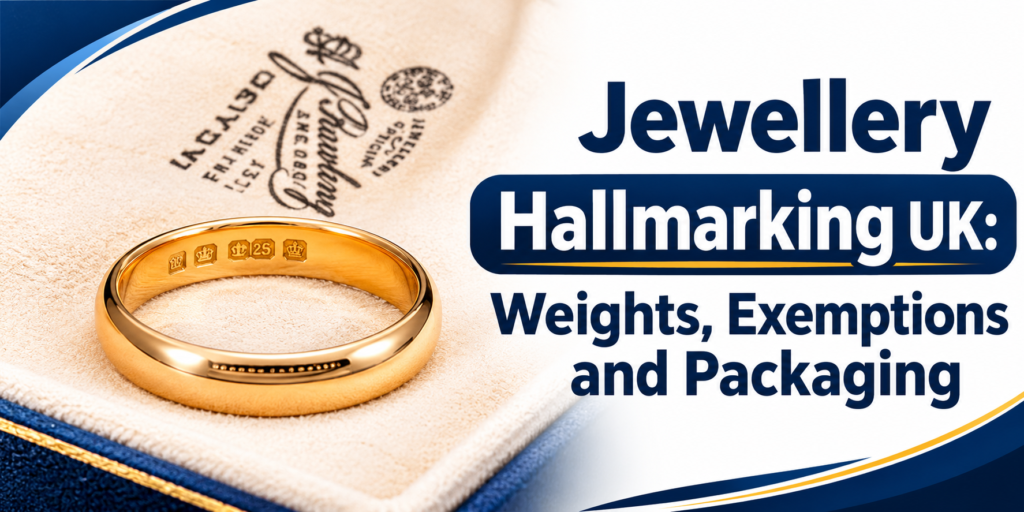
A full hallmark has three compulsory marks, struck by one of the four UK Assay Offices: the sponsor’s mark of whoever sent the piece in, the fineness mark, and the Assay Office mark. A date letter and a traditional symbol, such as the lion for sterling silver, are optional extras.
Business Companion’s hallmarking guide adds that Convention marks from member countries of the Hallmarking Convention are accepted. Hallmarks from other European countries are accepted only if they were applied before 31 December 2020.
A “925” stamped by the maker is not a hallmark, because an approved hallmark is one applied by an Assay Office. The sponsor’s mark has to be registered with an Assay Office before it can form part of one.
Plated pieces can be hallmarked too. The London Assay Office notes that plating applied after hallmarking must leave the mark visible and must not exceed 2 micrometres on any part of the piece.
Descriptions on the piece, the box, the card and the listing
Section 1 of the Act sets out the offence for businesses. It is an offence to apply to an unhallmarked article a description indicating that it is wholly or partly gold, silver, platinum or palladium, or to supply or offer such an article.
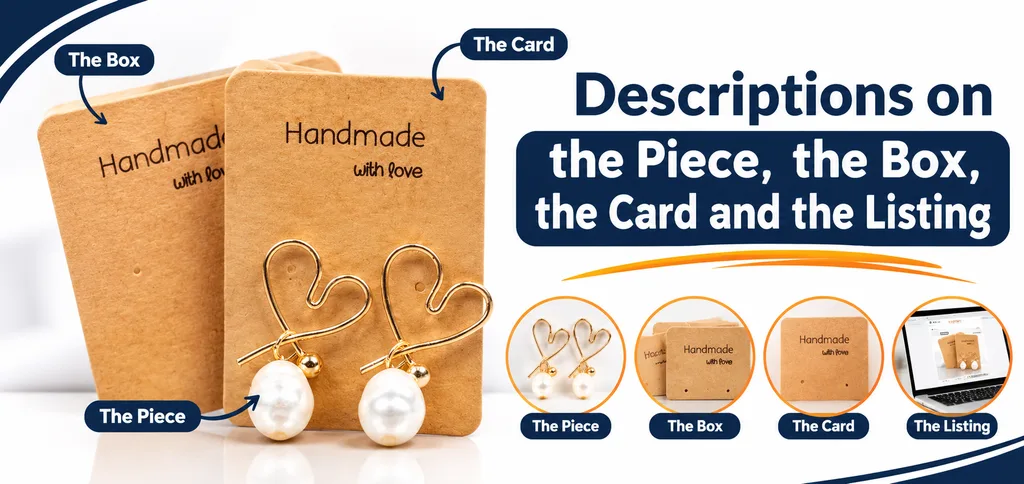
What “applies” means comes from section 4 of the Trade Descriptions Act 1968, which the Hallmarking Act adopts. A description is applied when it is marked on the goods or on “anything in, on or with which the goods are supplied”, or used in any way likely to be taken as referring to them. A printed box, an earring card, a swing tag or a product listing all qualify.
Some wording stays legal on an unhallmarked piece, under Part I of Schedule 1:
- Plated: “gold plated”, “silver plated”, “platinum plated” or “palladium plated”, when true.
- Rolled: “rolled gold”, when true.
- Lettering: in writing, “plated” or “rolled” must be at least as large as any other lettering in the description.
- Colour: a description confined to colour, such as “gold colour”.
Part III gives some words a fixed meaning. A number of carats means gold of the matching fineness, so “9 carat” means at least 375 parts per thousand and “18 carat” at least 750. “Sterling” means silver of 925, and “Britannia” silver of 958.4. Under section 1, a false fineness description is also treated as a misleading action under the 2024 Digital Markets, Competition and Consumers Act.
The dealer’s notice
Section 11 requires every dealer to keep the British Hallmarking Council’s notice on display, in a conspicuous position in the part of the premises customers are admitted to. A dealer includes anyone making, supplying, selling or exchanging articles of precious metal.
Business Companion says the notice can be downloaded from any of the Assay Offices. A printed copy must be in black and white, clearly legible, complete and unaltered, and at least A4. A second version, known as dealers’ notice B, was developed for websites, where the full notice does not work well.
Nickel, lead and cadmium
Business Companion’s guide to jewellery metal content sets limits that apply to fashion and fine jewellery alike.
- Nickel: items in direct and prolonged contact with the skin may release no more than 0.5 micrograms per square centimetre per week, and piercing posts less than 0.2.
- Lead: less than 0.05% by weight in any part.
- Cadmium: no more than 0.01% by weight of metal.
Retailers are expected to check with their suppliers, for example by asking for test certificates, while manufacturers and importers would normally have their products tested.
Boxes, earring cards and tags
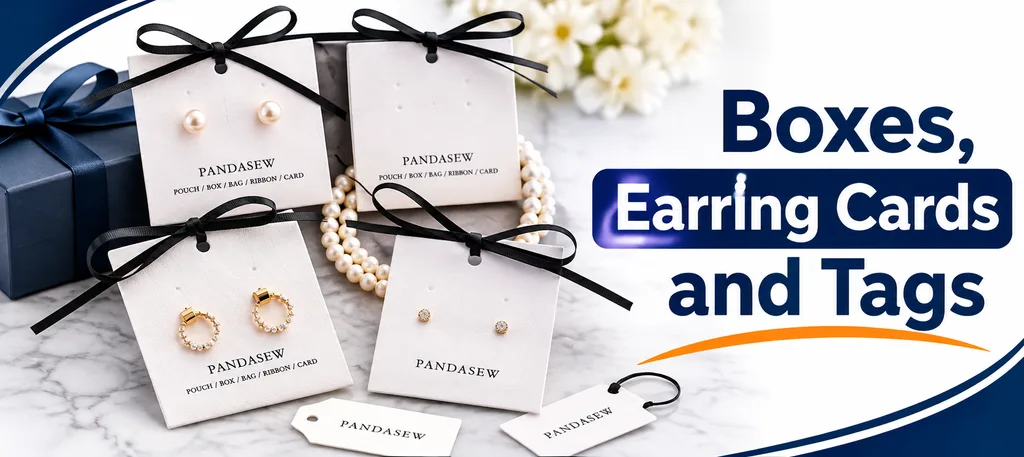
Because wording on packaging counts, the safest stock box carries your brand and no metal claim. A box printed “925 sterling silver” and used across a range applies that description to every piece in it, including any unhallmarked silver over 7.78 g.
Put metal descriptions on packaging printed for a specific line instead, and only where every piece in that line is hallmarked or exempt. Our custom jewellery boxes and jewellery gift boxes can carry the brand on the outside, with any line-specific wording kept to a card or tag.
Earring display cards and jewellery swing tags are the natural place for “gold plated” or “sterling silver” wording, printed to the lettering rule and matched to a piece that is hallmarked or exempt.
For Christmas gifting, necklace gift boxes and ring boxes with your logo finish the presentation.
Our guide to gift box sizes helps fit a box to the piece, with room for any insert or card.
The artwork layout can reserve clear panels for the information the product is required to display. All Custom Packaging can help organise the available print space, but the brand or its regulatory adviser remains responsible for confirming the accuracy and completeness of the required product information.
Common mistakes
- Treating a self-stamped “925” as a hallmark.
- Weighing a pair of earrings together to get under the threshold.
- Assuming a silver piece with a gold accent keeps the 7.78 g silver exemption.
- “Gold” on a card with “plated” in smaller letters.
- Stock boxes printed “sterling silver” used for unhallmarked pieces.
- Listing a piece as “solid silver” when it is unhallmarked and over the weight.
- No dealer’s notice on display at the shop or other premises.
- Fashion earrings sold without checking nickel release.
Frequently asked questions
Can I sell gold without a hallmark in the UK?
Only if the piece is exempt, for example because its metal weighs under 1 g and it meets the conditions, or if you describe it in a permitted way such as “gold plated” or “gold colour”. Otherwise, a piece described as gold needs a hallmark.
Do I need to hallmark silver jewellery under 7.78 g?
Not if silver of at least the minimum fineness is the only precious metal in it, any solder meets the fineness rule, and other materials meet the Schedule 2 conditions. Adding a gold detail moves the piece onto the gold rule’s 1 g limit.
Can I stamp 925 on my own jewellery?
You can mark it, but it is not a hallmark. Above the weight threshold, a piece described as silver still needs a hallmark struck by a UK Assay Office or a recognised Convention mark.
Do I need a dealer’s notice if I only sell online?
The Act requires the notice at premises customers are admitted to. For websites, Business Companion points to a second version, dealers’ notice B, developed because the full notice does not suit online display.
Can I call my jewellery gold plated without a hallmark?
Yes, if it is true and the word “plated” is at least as large as the rest of the lettering. Without “plated” or “rolled”, “gold” on an unhallmarked piece over the threshold breaks the Act.
Do a pair of earrings count as one piece?
No. The London Assay Office treats each earring, and each cufflink, as a separate article weighed on its own.
Building a jewellery range for Christmas? Our cardboard jewellery boxes and jewellery swing tags carry your brand on the outside and each line’s own wording on the tag. Orders start from 100 units. Design support is free. A digital 3D mock-up is free. For the quote, send the artwork, the quantity, the delivery postcode and the date the order is needed by.