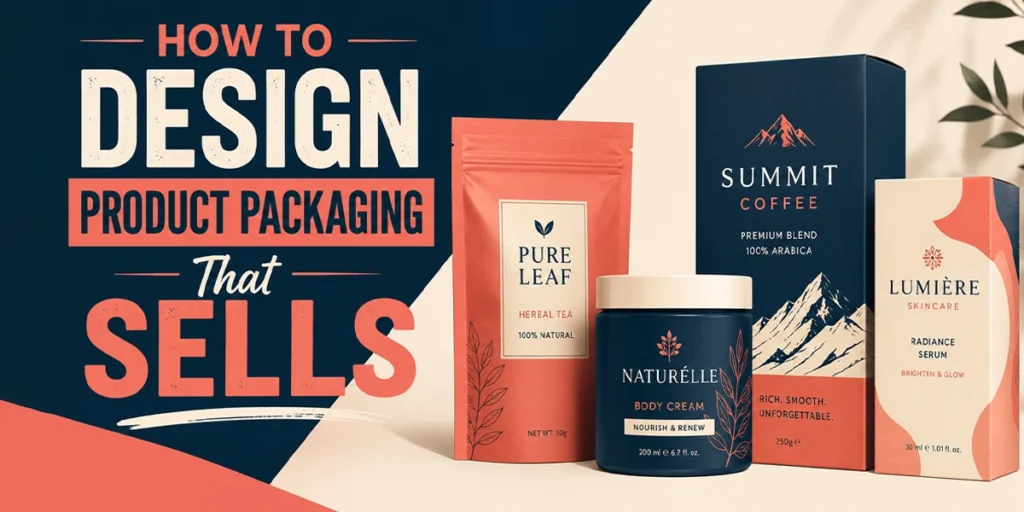
How to Design Product Packaging That Sells
Packaging is the first thing a customer touches, and often the first thing they photograph. Good design does three jobs at once: it protects the product, it communicates who you are, and it prints cleanly at a sensible cost.
What product packaging design really means
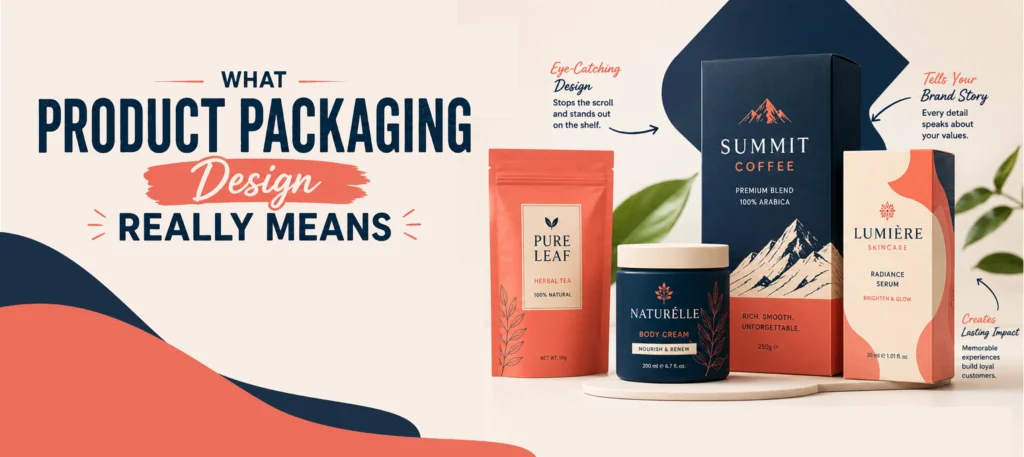
Packaging design is the whole exterior of your product: the structure, the material, the artwork and the finish. Together these tell a shopper what the product is, who it’s for and whether it feels worth the price, usually before they read a word.
Three questions to answer before you design anything
What is the product?
Its size, weight, fragility and whether it’s perishable or liquid all decide the material and structure. A candle, a bottle of serum and a knitted jumper need very different boxes.
Who is buying it?
Be specific about your customer. A design that lands with a premium skincare buyer won’t be the same one that lands with a value grocery shopper.
How are they buying it?
A box that will be posted to a doorstep needs to survive couriers and look good on camera. A box that sits on a shelf needs to win a glance from an arm’s length away. Design for the journey your product actually takes.
The three layers of packaging
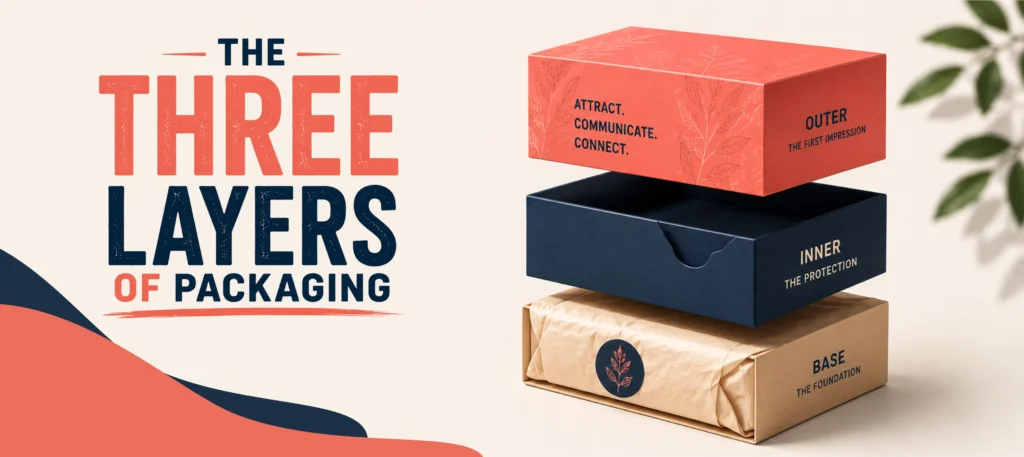
Outer layer: The shipping protection: corrugated mailers or shipping cartons that take the knocks, carry the labels and, increasingly, carry the branding too.
Inner layer: The cushioning that stops movement: tissue, kraft void fill, moulded pulp trays or fitted inserts. This layer is where a lot of the unboxing feeling is made.
Primary layer: The box, jar, pouch or carton that holds the product and does most of the selling. This is where your logo, colour and finish do their work.
Choosing a box style
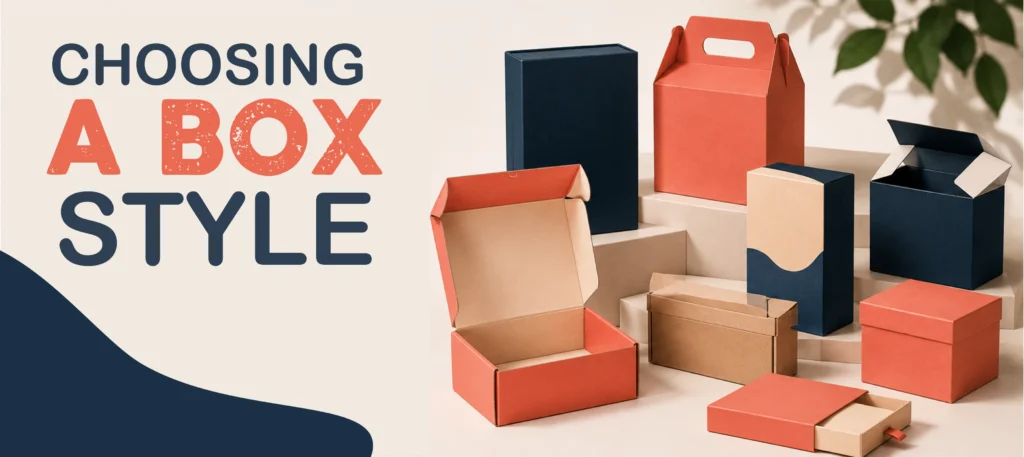
Mailer boxes: Self-locking corrugated boxes that ship flat and fold up without tape. They are the standard for e-commerce because they protect well, store flat and give a strong unboxing moment.
Rigid boxes: Made from thick greyboard, these are the premium option for jewellery, electronics and luxury cosmetics. They arrive pre-assembled, feel substantial in the hand and hold finishes like foil and embossing beautifully.
Tuck-end cartons: Lightweight folding boxes with flaps that tuck in, ideal for retail lines like cosmetics, supplements and confectionery.
Folding cartons: Versatile printed cartons for food, health and beauty and general retail, cost-effective at volume.
Colour, type and finish: the details shoppers notice
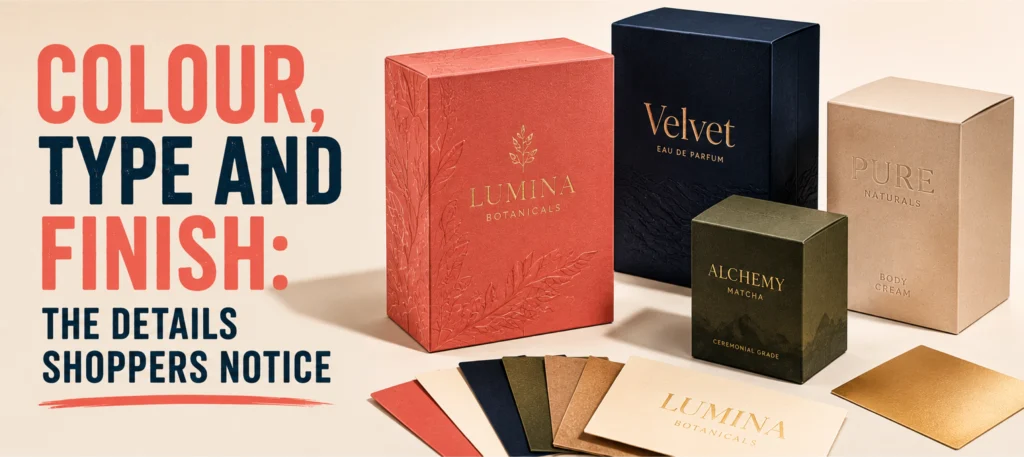
Colour does a lot of the early work in a purchase decision because research shows that packaging colour can influence consumer perception on a crowded shelf or a busy product page. Pick a palette that fits your category and stays consistent across every pack so people recognise you. Keep typography legible at real size, not just on a large screen. Use finishes with intent: matte laminate for a calm, premium feel, spot UV or foil to make a logo catch the light. More isn’t better; restraint usually reads as quality.
Getting your design print-ready
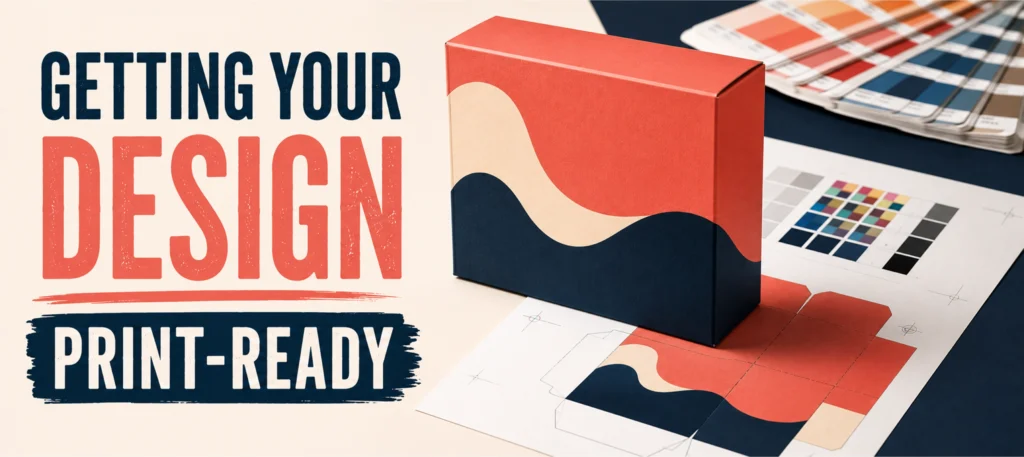
This is where good ideas fall over, so it matters. Work in CMYK, not RGB, because screens show more colours than a press can reproduce. Keep images at 300 DPI at their real printed size. Supply artwork as vector files where you can, and outline your fonts so they don’t get swapped for a default typeface. Build your artwork onto the dieline your printer supplies, extend backgrounds 3mm past the trim as bleed, and keep logos and text at least 3mm inside the trim so nothing important gets cut. If in doubt, ask your printer for their template and a quick proof.
Common packaging design mistakes to avoid
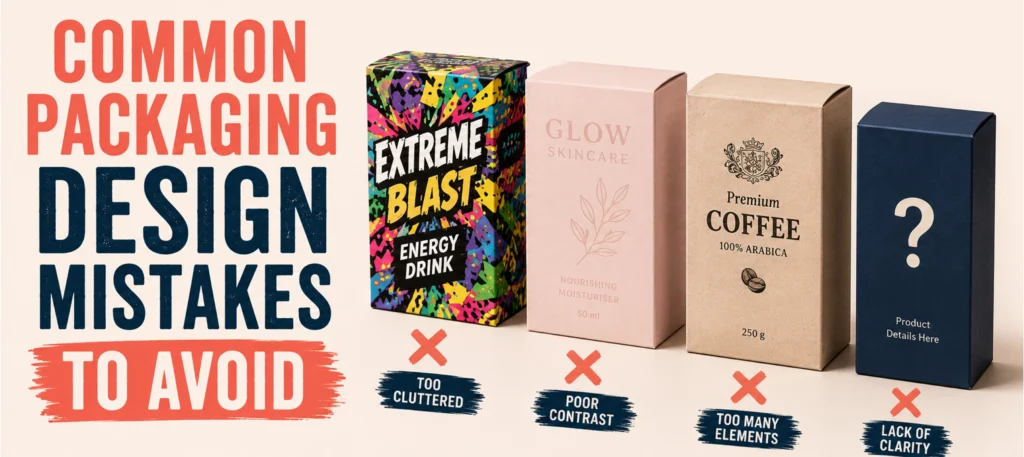
- Cramming in too much text and too many graphics.
- Poor readability of the important information.
- Structure too weak for the product or the postal journey.
- Ignoring how the pack will actually be recycled or disposed of.
- Approving a design on screen without a physical mockup.
Print, cut and fold a real sample with your product inside before you commit to a full run. It catches problems no screen will show you.
Frequently asked questions
What makes packaging design effective?
It protects the product, communicates the brand at a glance, and prints accurately at a cost that fits your margins.
Which box style is best for e-commerce?
For most direct-to-consumer brands, a custom mailer box gives the best mix of protection, flat storage and unboxing impact.
How do I design for a premium feel without overspending?
Use a rigid box only where the product value justifies it. For mid-range products, a corrugated box with a matte finish and a spot UV logo delivers most of the premium feel for far less.
What files does my printer need?
A print-ready vector PDF built on the supplied dieline, in CMYK, with 300 DPI images, outlined fonts and 3mm bleed.