How to Create a Memorable Unboxing Experience on a Small Business Budget
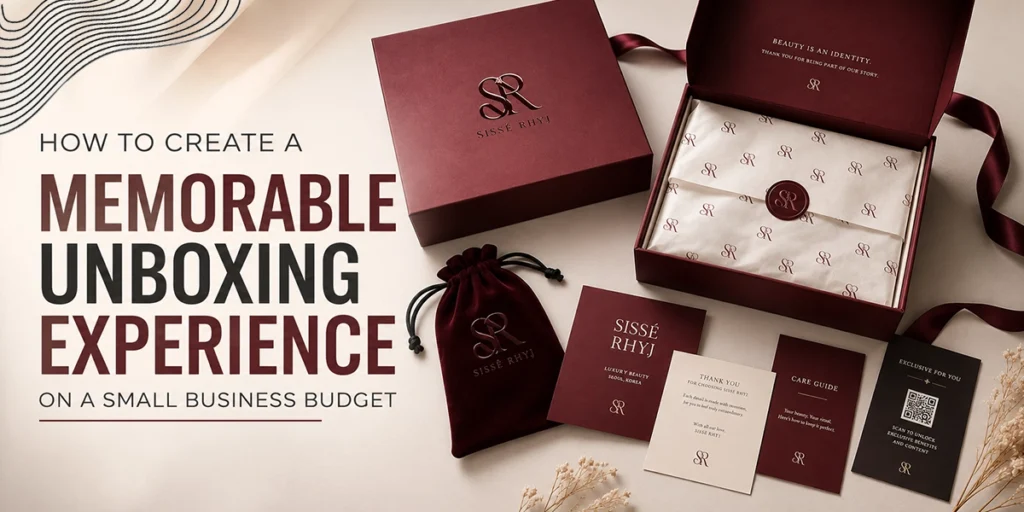
You don’t need a fully printed box to make unboxing memorable. Start with a right-sized plain mailer, add a printed thank-you card and a branded sticker, and you’re at roughly 15p–40p per order. Custom tissue and branded paper tape take you to about 50p–£1.20. A fully printed mailer box, from 100 units, lands most small UK brands at £1.50–£3.50 per order all-in. Prices vary by size, quantity and print method, but the order of upgrades matters more than the budget.
Somewhere right now, a customer is opening a parcel from a shop like yours. The product is lovely. The parcel is a grey poly bag with a receipt stuffed inside. That’s the whole experience.
The box is the first physical thing a customer touches from your brand. For an online shop, it’s often the only thing besides the product itself. The good news: making that moment feel considered costs far less than most sellers assume. We supply packaging to hundreds of UK small businesses, and the brands that get unboxing right are rarely the ones spending the most.
This guide gives you real £ cost bands, a good/better/best ladder you can climb as you grow, and an honest look at what customers actually share online. It also covers what to skip, because half the “unboxing ideas” lists out there will quietly waste your margin.
Get the box right before you buy any extras
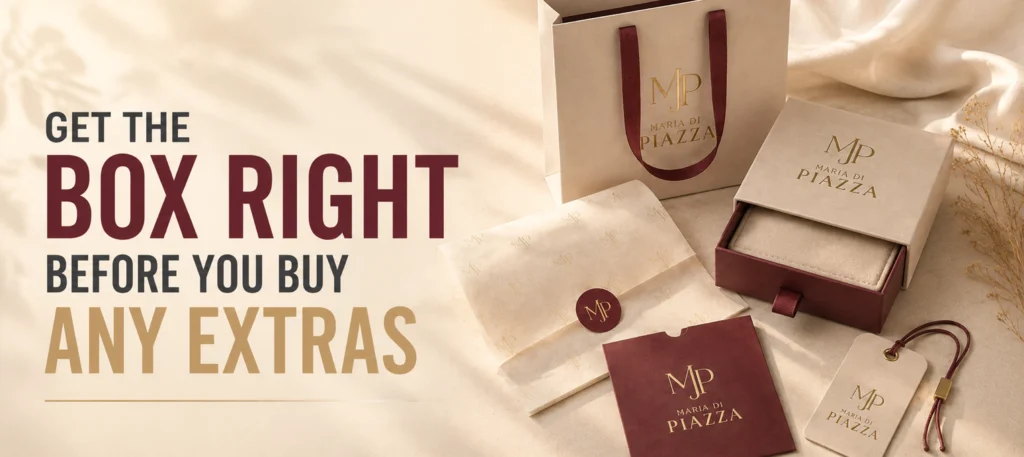
Before you spend a penny on tissue or stickers, check your box size. An oversized box with a small product rattling around in void fill undoes every other effort you make. It also costs you real money on postage.
Royal Mail’s Small Parcel rate covers anything up to 45 x 35 x 16 cm and 2 kg. A Large Letter must be no bigger than 35.3 x 25 x 2.5 cm and 750 g, and posting a Large Letter-sized item at parcel rates means overpaying on every single order. Check Royal Mail’s current size guide before you commit to a box size, as rates and limits change.
Worth knowing: a snug box isn’t just cheaper to post. It protects better, needs less void fill (that’s the padding material filling empty space), and it reads as considered rather than careless. Customers notice when a small candle arrives in a box built for a kettle.
Right-sizing also matters for the UK’s extended producer responsibility (EPR) rules, which make larger businesses pay fees based on the packaging they place on the market. Most micro-sellers sit below the thresholds, but the direction of travel is clear: less material, lower cost. Check GOV.UK for the current rules.
The budget ladder: good, better, best
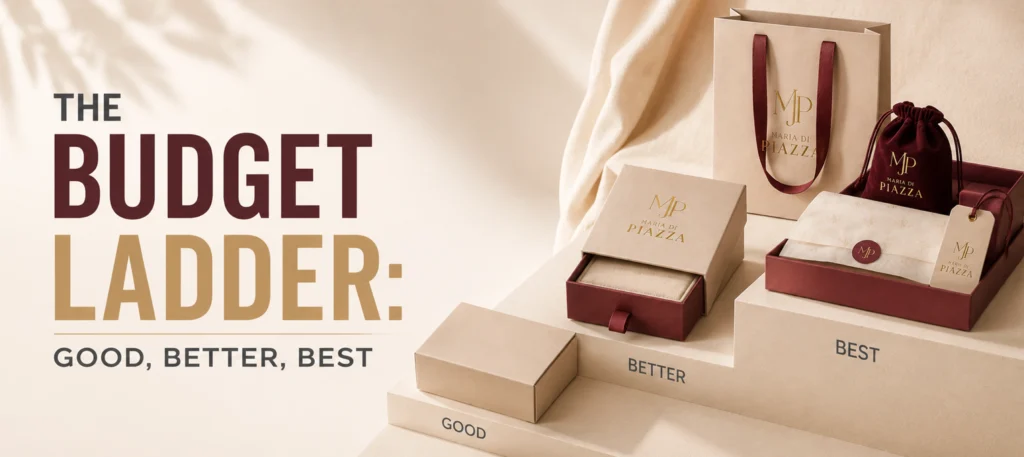
Here’s the honest version of what each tier costs per order. These are illustrative July 2026 bands for typical small-format e-commerce orders at run sizes of 100–250 units. Your exact costs will vary by box size, quantity and print method larger runs push every per-unit figure down.
| Tier | What’s in the parcel | Illustrative cost per order | Best for |
|---|---|---|---|
| Good | Right-sized plain kraft mailer, printed thank-you card, branded sticker sealing one sheet of plain coloured tissue | ~15p–40p | First 100 orders; testing whether presentation shifts repeat purchases |
| Better | As above, but custom printed tissue and branded paper tape replace the plain versions | ~50p–£1.20 | Established shops posting 50+ orders a month |
| Best | Custom printed mailer box, printed tissue, thank-you card, swing tag on the product | ~£1.50–£3.50 | Gifting products, subscription boxes, higher-priced items where the parcel is part of the product |
The ladder logic: each tier reuses everything from the tier below. Nothing you buy at “good” gets binned when you upgrade. That’s deliberate. Buy the card and sticker first, and let sales fund the printed box later.
One caveat here: don’t jump to “best” because it looks nicer on Instagram. If your average order is £12, spending £3 on packaging is a quarter of your revenue gone before postage. Match the tier to your margin, not your ambitions.
Five upgrades, ranked by impact per pound
1. A printed thank-you card (from ~5p per order)
The single best value item in packaging. A standard-sized printed card with a genuine message, your social handle and a discount code for the next order costs pennies at even modest quantities. Handwrite the customer’s name on it while your order volume allows. That ten-second touch is the thing customers mention in reviews.
2. Branded stickers (from ~4p per order)
Stickers are the Swiss Army knife of budget packaging. Seal tissue with them, brand a plain box with them, drop a spare in the parcel customers put spares on laptops and water bottles, which is free advertising. They also let you test your logo treatment cheaply before committing to a printed box.
3. Tissue paper (from ~5p plain, ~15p–30p printed)
Tissue transforms the opening moment. There’s a reveal a pause between lifting the lid and seeing the product and that pause is what makes unboxing feel like unwrapping a gift rather than retrieving an item. Plain coloured tissue in your brand colour does 80% of the job. Printed tissue Paper does the rest when you’re ready.
4. Branded paper tape (from ~10p per parcel)
Tape brands the outside of the parcel, which is the part couriers, neighbours and doorstep camera feeds actually see. Paper tape (gummed or self-adhesive kraft tape) recycles with the box, unlike plastic tape, which contaminates the recycling stream. One roll goes a long way.
5. A custom printed box (from roughly £1 per unit at 100 units)
The printed box is the biggest single upgrade and the biggest single cost. It’s worth it when the parcel is part of what the customer is buying gifts, subscriptions, premium price points. It’s a low minimum order quantity (MOQ the smallest run a supplier will print) that makes this realistic for small shops: we print custom mailer boxes from 100 units, where most trade printers still demand 500 or more.
What customers actually share the honest version
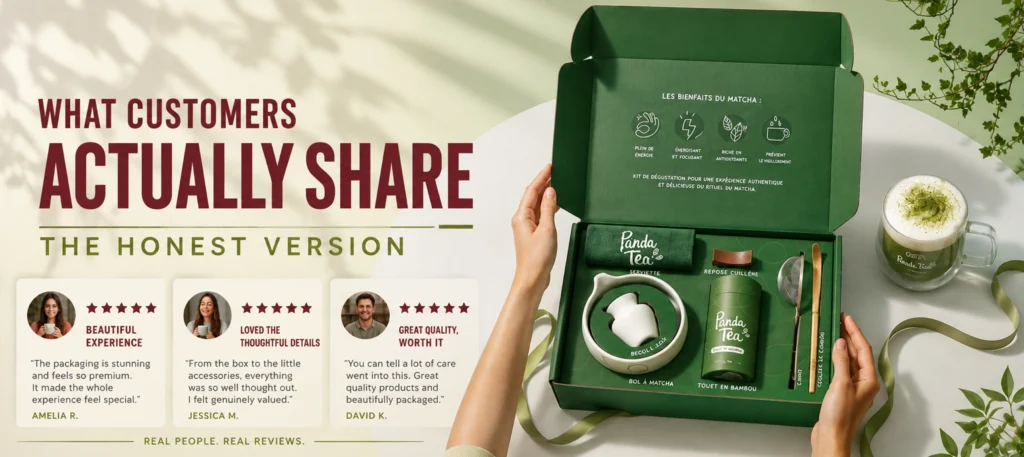
Most articles on this topic quote a statistic claiming around 40% of customers share nice packaging on social media. Trace it back and it comes from a US survey conducted over a decade ago. We’re not going to build your budget on that.
Here’s what’s actually verifiable. Google’s own research found unboxing viewership growing sharply as far back as 2014, and industry reporting in Packaging Dive notes that 62% of unboxing video viewers were researching a product before buying it. Packaging designers now plan the opening sequence around how it looks on camera. The behaviour is real; the precise percentage for your shop isn’t knowable from anyone’s survey.
Our experience from customer photos that come back to us: people share parcels that photograph well in one shot. That means colour contrast (tissue against kraft), a legible logo, and a neat reveal. Nobody shares void fill. A £6 investment in coloured tissue across twenty orders beats a £6 novelty extra in one.
The practical takeaway: make the first three seconds of opening photogenic, put your handle where they can see it, and never demand a share. An insert saying “tag us we repost our favourites” is invitation enough.
What to skip
An honest supplier tells you what not to buy, so here it is.
Glitter and confetti. It gets everywhere, customers actively complain about it, and it renders tissue and card unrecyclable. There’s no polite way to hoover glitter out of a rug.
Excessive void fill. If you need more than a light layer of paper fill, your box is too big. Fix the box, don’t buy more stuffing.
Unrecyclable extras. Plastic ribbon, foil balloons, laminated inserts and plastic-windowed boxes turn a recyclable kraft parcel into a sorting headache. If you want the eco angle to be genuine, say exactly what the customer should do with each element kraft box and paper tape in the recycling, tissue reused or recycled. Our guide to biodegradable packaging types covers the material differences properly, because “biodegradable”, “compostable” and “recyclable” are not the same thing.
Random freebies. A cheap keyring nobody asked for reads as landfill, not generosity. If you include a gift, make it a sample of something you actually sell.
The low-MOQ reality check
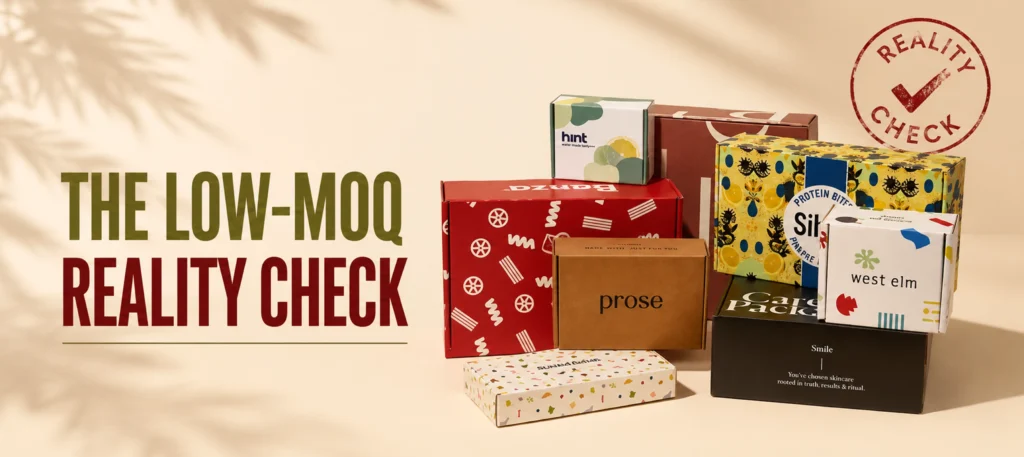
The old objection to custom packaging was maths: with a 1,000-unit minimum, a new shop would sit on boxes for two years. That’s changed. Low-MOQ printing means you can order 100 custom boxes, learn what works, and reorder with tweaks different size, updated design, seasonal version.
For a shop doing ten orders a week, 100 units is ten weeks of stock. That’s a sensible test, not a warehouse commitment. Free design support and proofing (checking an approved sample before the full run prints) should come as standard from a UK supplier, so don’t pay setup fees for the privilege.
If you’re weighing up exact per-unit numbers across quantities, our guide to custom packaging costs and MOQs breaks the economics down properly. This article is about the experience; that one is about the spreadsheet.
Frequently Asked Questions
What should I include in my small business packaging?
Start with three items: a right-sized box or mailer, a printed thank-you card with a discount code, and a branded sticker or tissue wrap. That combination covers protection, repeat purchase and presentation for under 40p per order at typical small-run prices.
How much does a good unboxing experience cost per order?
A considered unboxing experience costs roughly 15p–40p per order using a plain mailer with a card, sticker and tissue. A fully printed custom box setup typically runs £1.50–£3.50 per order at 100-unit quantities. Prices vary by size, quantity and print method.
Do customers really share unboxing photos on social media?
Some do, but the widely quoted “40% of customers share packaging” statistic comes from a decade-old US survey, so treat it cautiously. Unboxing content is genuinely popular industry reporting shows most unboxing viewers are researching before a purchase but shares depend on your parcel being photogenic and your handle being visible.
What’s the cheapest way to make packaging look premium?
Colour contrast and neatness, not spend. One sheet of tissue in a strong brand colour, folded cleanly and sealed with a single sticker inside a snug kraft mailer, looks deliberate and costs around 10p–20p per order.
Is custom printed packaging worth it for a small Etsy shop?
It’s worth it once your margin supports roughly £1–£2.50 per order for the box and your product benefits from presentation gifts boxes, candles, jewellery, cosmetics. With 100-unit minimums now available in the UK, it’s a ten-week test for many shops rather than a year-long commitment.
What should I avoid putting in my packages?
Skip glitter, confetti, excessive void fill, plastic ribbon and random unbranded freebies. They add cost, annoy a meaningful share of customers, and make otherwise recyclable packaging hard to dispose of properly.
Key takeaways
- Right-size the box first it cuts postage, protects better and looks considered. Check Royal Mail’s size bands before choosing dimensions.
- Climb the ladder: card and sticker (~15p–40p), then printed tissue and tape (~50p–£1.20), then a printed box (~£1.50–£3.50). Every tier reuses the last.
- The thank-you card is the best value item in packaging. Handwrite names while you still can.
- Treat viral-share statistics with suspicion; make the first three seconds photogenic instead.
- Skip glitter, oversized boxes and unrecyclable extras. Honesty about disposal beats vague eco claims.
- 100-unit minimums make printed boxes a test, not a gamble.
Ready to try a printed box without committing to a warehouse of them? We print custom mailer boxes from 100 units with free design support and proofing get a quote and we’ll tell you honestly which tier your budget suits.