
Why Do Cats Love Cardboard Boxes? What the Research Says
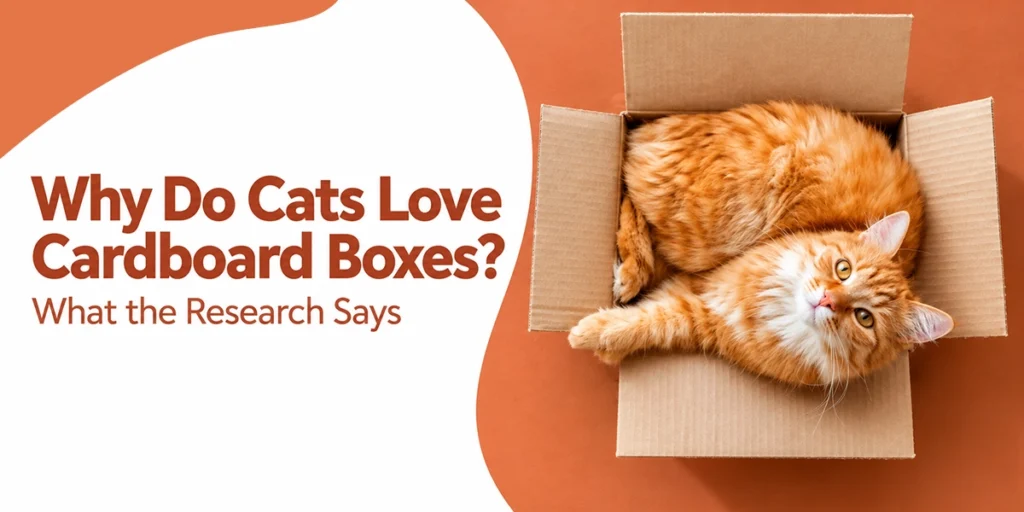
Quick answer: Why do cats love cardboard boxes? Mainly because a box is a safe place to hide. Cats hide to feel secure and to watch without being seen, and research on shelter cats found that those given a hiding box were less stressed in their first days than cats without one. Cats are also drawn to enclosed outlines, so much so that one study found cats sitting inside squares that were only an optical illusion on the floor. A clean box with tape, staples and plastic removed is a cheap, useful hiding place. For carrying a cat, though, a UK cat charity advises a sturdy plastic or wire carrier rather than cardboard.
What the research says
Boxes lower stress in unfamiliar places. A study of newly arrived cats in a Dutch shelter, published in Applied Animal Behaviour Science in 2014, found that cats given a hiding box had lower stress scores in their first week than cats without one. By the second week the two groups were similar, which suggests the box matters most when everything is new. A later randomised controlled trial in Dutch shelters found that cats with a hiding box settled faster, reaching a low stress level about seven days earlier than cats without one.
Cats are drawn to enclosed outlines. In a 2021 citizen science study nicknamed “if I fits I sits“, owners taped shapes on the floor, including a square made only of an optical illusion. Cats sat inside the illusory square about as often as a real one. The sample was small, but it points to something simple: an edge around a space is enough to make it attractive.
Other reasons cats like boxes
These are common explanations rather than tested findings:
- Watching without being seen. A box gives cover on three or more sides and a view out of the opening.
- Scratching and chewing. Cardboard is easy to scratch and tear, which cats seem to enjoy.
- Curiosity. A new object in the home gets investigated.
Cats Protection notes that hiding is a normal part of cat behaviour, and that an empty box your cat hops into is nothing to worry about.
How to make a box safe for your cat
- Remove tape, staples and labels. Cats chew cardboard and can swallow them.
- Take out plastic. Air pillows, bubble wrap, plastic windows, cable ties and bags.
- Check handles and inserts. Remove anything a cat could get a head or paw stuck in, and small loose parts.
- Make sure it is easy to get out. Cats Protection says to make sure your cat can get out of a box easily.
- Keep it dry and clean. Throw away boxes that get wet, dirty or start to fall apart.
- Check before you throw it away. Cats Protection’s advice again: always check for a cat inside before a box goes out.
Make a simple hiding box
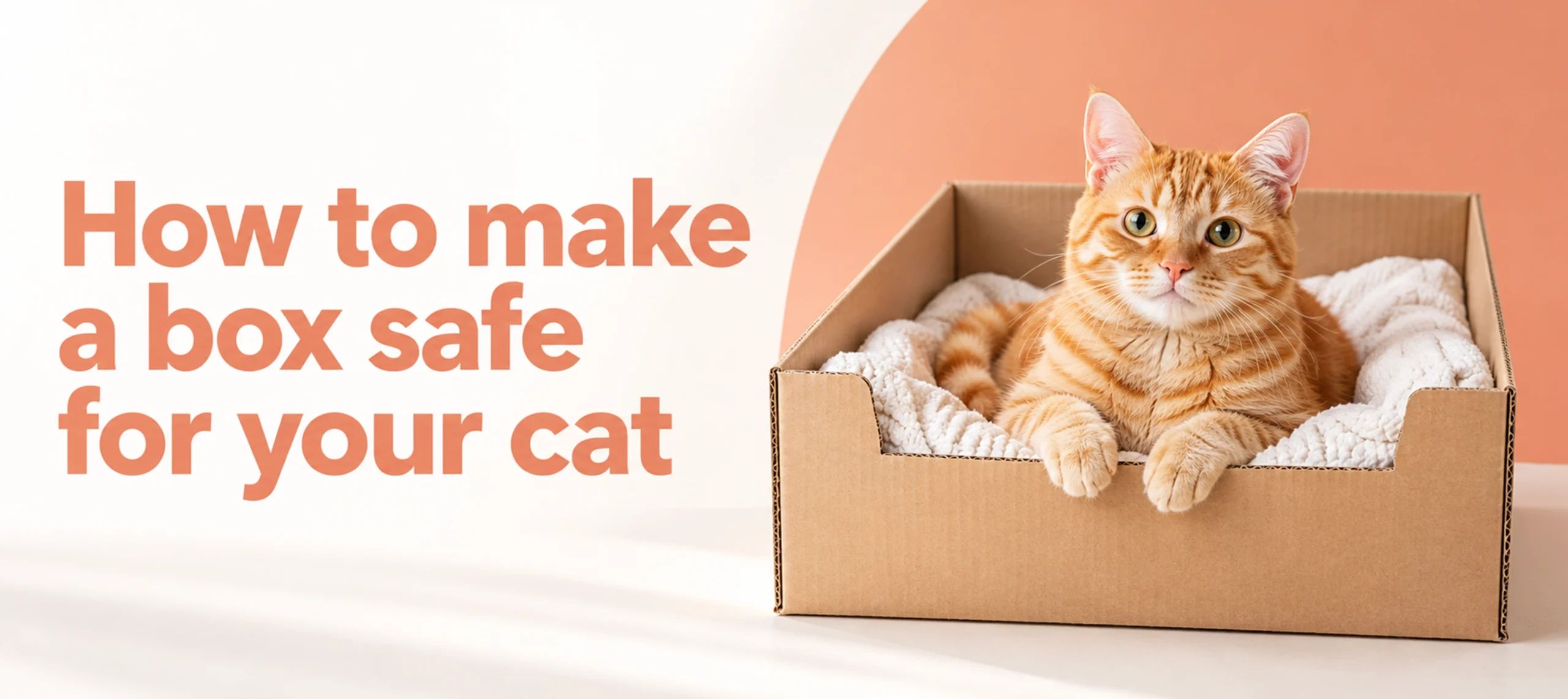
A hiding place can be as simple as a cardboard box on its side, or upside down with a large hole to get in and out. To make one:
- Choose a box your cat can turn around in.
- Tape the box closed on the outside, then cut a cat-sized hole in one side, so the cat can watch the entrance.
- Put a soft blanket inside.
- Place it somewhere quiet, away from busy doorways.
A new or nervous cat benefits most in its first days, which matches the shelter research above.
Cardboard cat carriers: an honest view
Cardboard carriers are cheap, light, easy to store flat and widely sold. But Cats Protection’s advice on choosing a cat carrier is clear: cardboard carriers can get wet easily and most are not strong enough to transport a cat safely, so it recommends a sturdy plastic or metal wire carrier.
If you use a cardboard carrier at all:
- use it only for a short, supervised trip in dry conditions
- check that every flap and the handle lock firmly before lifting
- carry it from underneath, not only by the handle
- move to a sturdy carrier for regular vet visits and longer journeys
For pet brands: packaging that becomes a cat den
If you sell cat products, many of your boxes will end up as a den or a scratching toy. That is a chance to delight customers, but design with the cat in mind:
- Close without tape or staples where you can, using a tuck or tab-lock closure.
- Avoid small detachable parts such as loose inserts, plastic windows or ribbons.
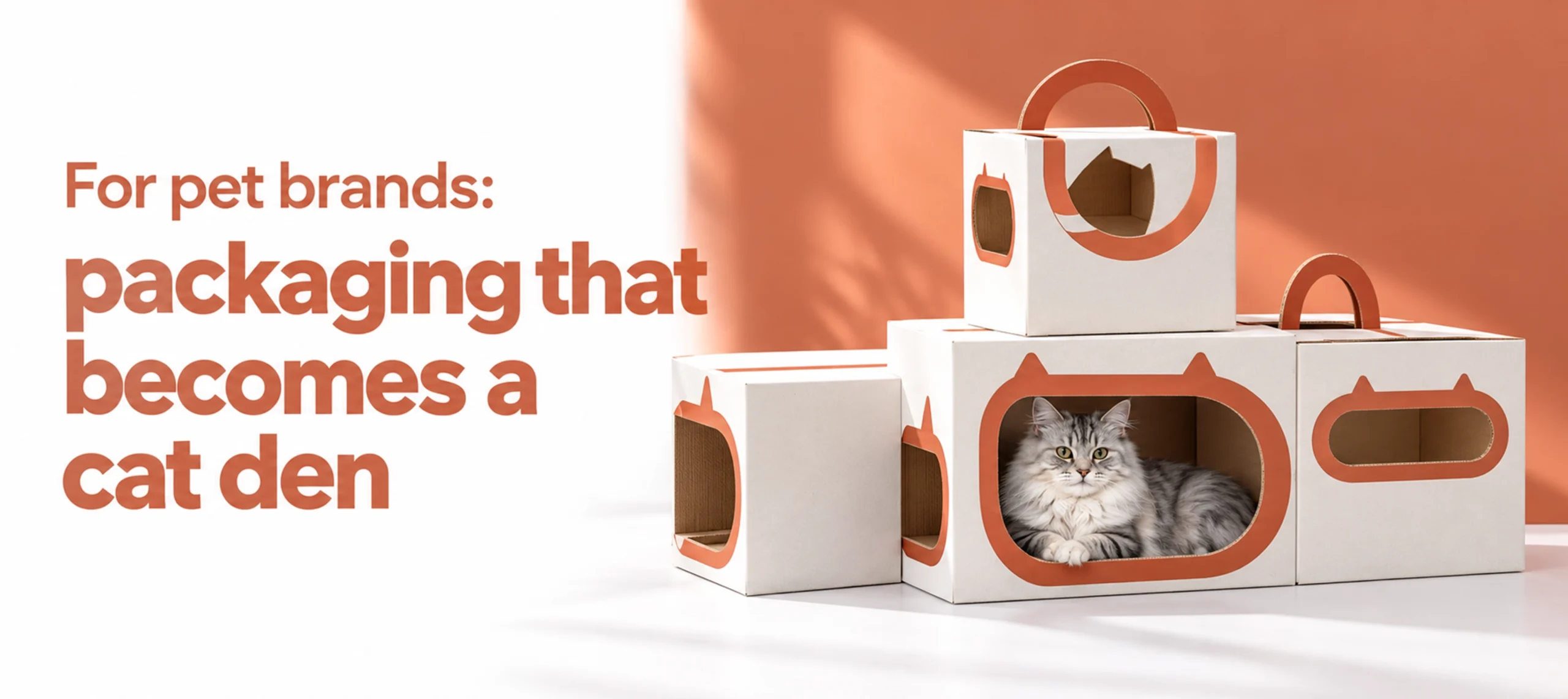
- Consider die-cut openings that turn the box into a den, with no sharp internal edges.
- Say what to remove. A short note inside, such as “remove the tape before your cat moves in”, helps.
- Check materials and finishes for your use with your supplier. Do not describe packaging as safe for pets unless you can support it.
For monthly cat boxes, see our guide to subscription box packaging.
Pet packaging we make
We make packaging for pet businesses, including dry pet food packaging and printed mailers with die-cut shapes, made to your sizes.
We also make a cat carrier cardboard box and cardboard pet carrier boxes for businesses that want branded carry boxes. Please read the carrier advice above before using any cardboard carrier for transport.
- Orders start from 100 units.
- Design support is free.
- A digital 3D mock-up is free.
Cats and boxes questions
Why do cats love cardboard boxes so much?
Boxes give them a safe place to hide and watch. Research on shelter cats found hiding boxes reduced stress in the first days, and cats are drawn to enclosed outlines generally.
Is it good for cats to sit in boxes?
Generally, yes. Hiding is normal behaviour, and a box can help a cat feel secure, especially in a new home. Remove tape, staples and plastic first.
Why do cats sit in squares on the floor?
A 2021 study found cats sat inside squares made of tape, and even inside an illusory square, much as they sit in real boxes. An outline seems to be enough.
Is it safe for cats to chew cardboard?
A little scratching and chewing is common. Remove tape, staples and labels, and throw away boxes that are wet or falling apart. If your cat eats cardboard, ask your vet.
Are cardboard cat carriers safe?
Cats Protection advises against them for transport: they can get wet easily and most are not strong enough. It recommends a sturdy plastic or metal wire carrier.
How do I make a cardboard hiding box for my cat?
Tape a box closed, cut a cat-sized hole in one side, add a blanket and place it somewhere quiet.
Making boxes for a pet brand? Tell us your product and how the box should open, and we will design one around it.