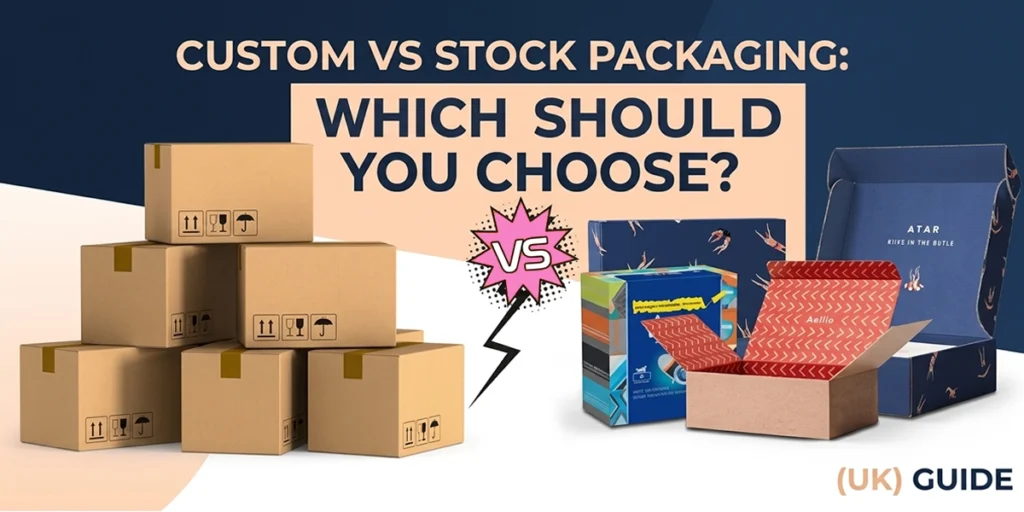
Custom vs Stock Packaging: Which Should You Choose? (UK)
choose stock packaging when speed and budget matter more than a perfect fit or branding, such as a first small batch, a trade show sample run or testing a new product line. Choose custom packaging once branding, an exact product fit or a proper unboxing experience matter, and you can commit to a real production run. What most guides skip is that “stock” is not one single thing: even a genuinely ready-to-go product can carry different order terms depending on exactly how it is listed, which matters the moment you actually try to order it.
Most custom-vs-stock guides give you the general trade-offs and stop there. This one adds the part that actually catches people out: what “stock” really means once you are looking at a real supplier’s catalogue rather than a generic description of the category.
The real trade-off, in plain terms
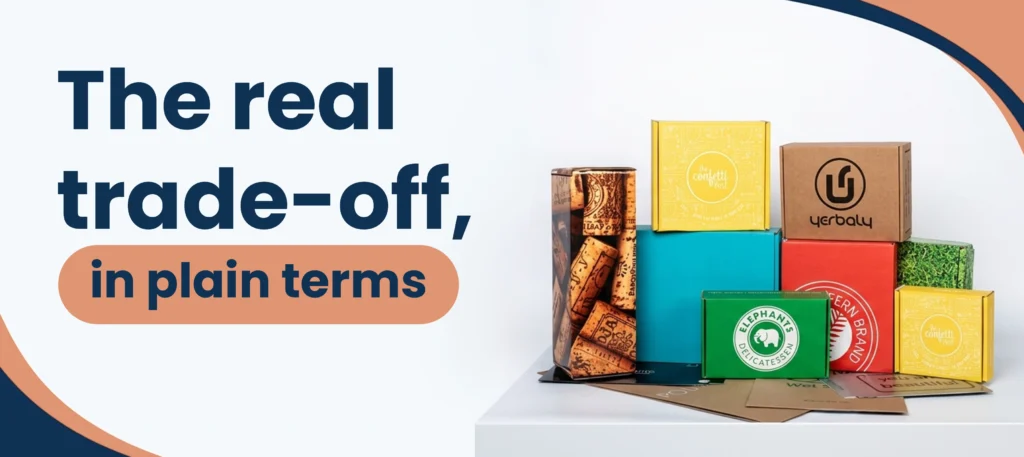
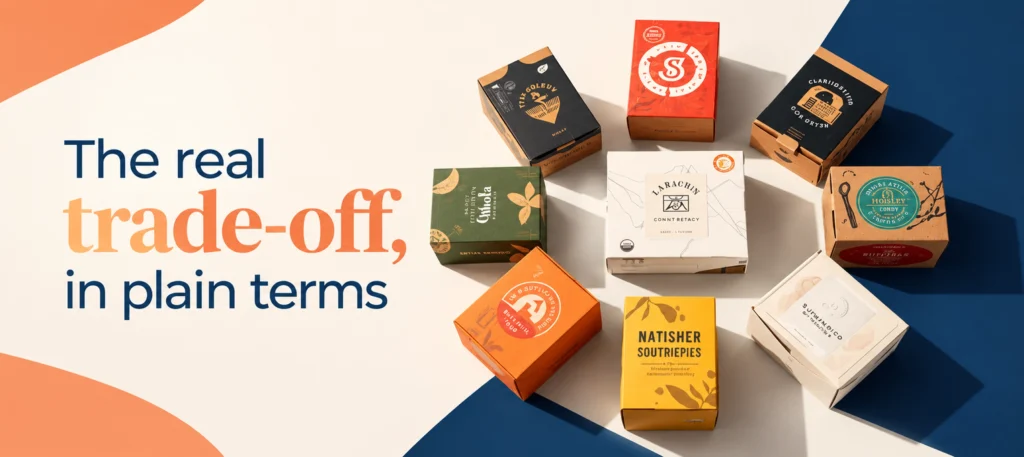
Stock packaging is pre-made to standard sizes, held ready, and can move fast because no new tooling, artwork or print run has to happen first. That speed and low commitment come at a cost: a generic fit, minimal or no branding, and a look that any competitor buying the same stock item can match. Custom packaging is built to your product’s dimensions and your brand’s design, which is exactly why it needs a print run, a specification and, usually, a minimum order to make that setup worthwhile.
Neither is simply “better.” A trade show giveaway does not need a bespoke box; a flagship product that defines how customers first experience your brand usually deserves one.
When stock is the right call
- You are testing, not scaling yet. A new product, a trial batch or a market test does not justify committing to a full custom print run before you know it will sell.
- Budget or timeline is the binding constraint. Stock removes the setup cost and the wait for artwork approval and a production slot.
- The box is a secondary carrier, not the brand moment. An inner box or a shipping-only layer rarely needs to be bespoke when a printed outer or insert is already doing the branding work.
When custom earns its cost
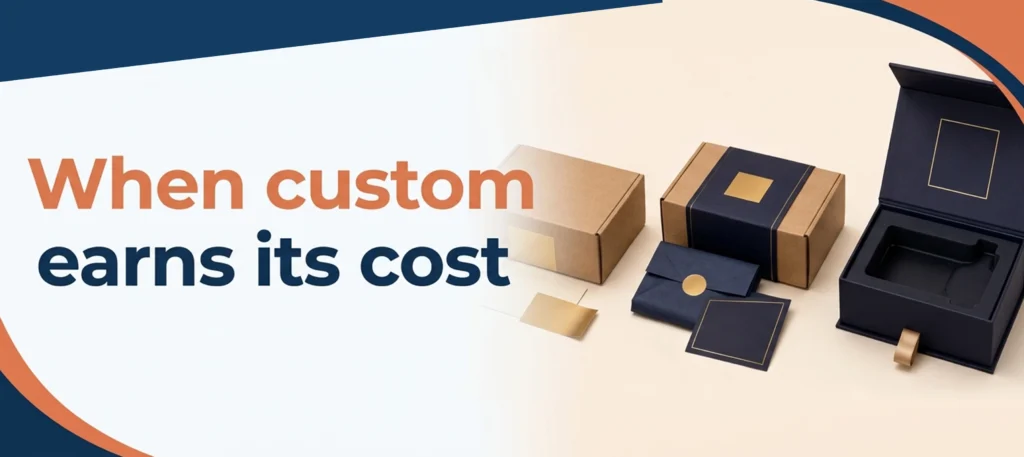
- The unboxing is part of the product experience. Cosmetics, gifting, subscription boxes and anything premium lean on packaging as a deliberate piece of the purchase, not an afterthought once the product itself is decided.
- Fit genuinely protects the product. A box built to your product’s exact dimensions holds it snugly, which a generic stock size often cannot.
- You are ordering at a volume where the setup cost amortises. The per-unit cost of a custom run falls as quantity rises; below a certain volume, stock or a smaller custom run both deserve a second look.
What “stock” actually means once you look at a real catalogue
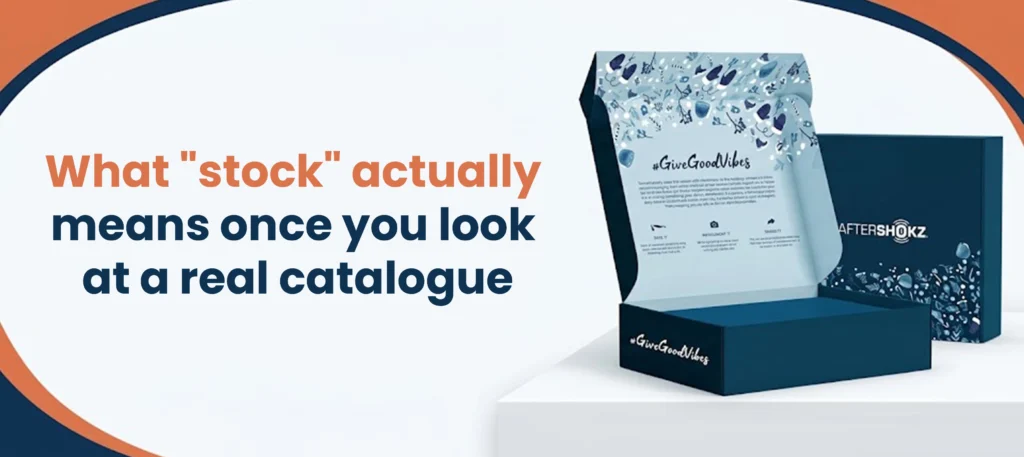
Here is the part generic comparisons leave out, and it matters the moment you go to actually place an order. “Stock” is often described as if it is always the same thing: no minimum, ships immediately, one flat category. In practice, even genuinely ready-to-go packaging lines can carry meaningfully different order terms from one another, and assuming they are all identical is how a buyer ends up surprised at checkout.
On ACP’s own catalogue, for example, products named “Empty [Product]”, such as Empty Food Boxes or Empty Macaron Boxes, are a genuine ready-to-go stock offering, available as either blank, unprinted stock or a pre-made generic design. But they still carry the same order mechanics as a custom run: the 100-unit minimum and the 6 to 8 business days production window, because they are a confirmed, standing design rather than an item pulled off a shelf that afternoon. Products named “Blank [Product]” are a separate line again: also genuine ready-to-go stock, but their availability and timing are quote and stock specific, not the fixed custom figures. Treating either as “instant, no minimum, whatever generic stock advice says” is the mistake a reader following only general guidance would make.
The lesson generalises beyond ACP: when a supplier’s site says “stock” or “ready-to-go,” ask specifically what order terms apply to that exact line, rather than assuming the category behaves the way stock packaging is described in general.
A quick way to decide
| Ask yourself | Leans toward |
|---|---|
| Is this a test batch or a trial product? | Stock |
| Does the unboxing matter to the customer experience? | Custom |
| Is budget or turnaround the hard constraint right now? | Stock |
| Will you be reordering the same design repeatedly? | Custom |
| Does the product need an exact-fit box to stay protected? | Custom |
| Is this a secondary or inner layer, not the branded moment? | Stock |
Frequently asked questions

Is stock packaging always cheaper than custom?
Usually cheaper upfront and per unit at low volume, since there is no setup or tooling cost to amortise. That advantage narrows as order volume rises, since custom packaging’s per-unit cost falls with quantity, and it can disappear entirely once a bespoke fit or genuine branding need is factored in rather than just the sticker price of the box itself.
Does stock packaging always ship faster than custom?
Not automatically, and this is worth checking rather than assuming. A genuinely off-the-shelf item can move quickly, but a “ready-to-go” line that is really a standing design, rather than physical inventory sitting on a shelf, can still carry a real production window. Ask what specifically applies to the exact product you are looking at.
Can I get custom branding on a smaller order without going fully bespoke?
Sometimes, depending on the supplier and the product. A ready-to-go design line, where one exists, can sometimes be a middle ground between a generic stock box and a full bespoke run, though its own order terms need checking rather than assumed.
What’s the minimum order for custom packaging?
At ACP, orders start from 100 units, applied per design; ordering several different designs each carries its own 100-unit minimum rather than one combined total across them.
Should a small or new brand start with stock or custom?
Often stock or a smaller ready-to-go line for the first run, while the product and demand are still being proven, then a move to a full custom specification once volume and branding genuinely justify the setup. There is no fixed rule; it depends on how much the packaging itself is doing for the brand at that stage.
Whether you land on custom or a ready-to-go line, we can talk you through what actually applies to your order. Browse Custom Product Boxes for a fully bespoke build, or ask about our Empty Food Boxes and similar ready-to-go lines if you want to move faster on a first run. Design support is free, and a digital 3D mock-up is provided before anything is produced.