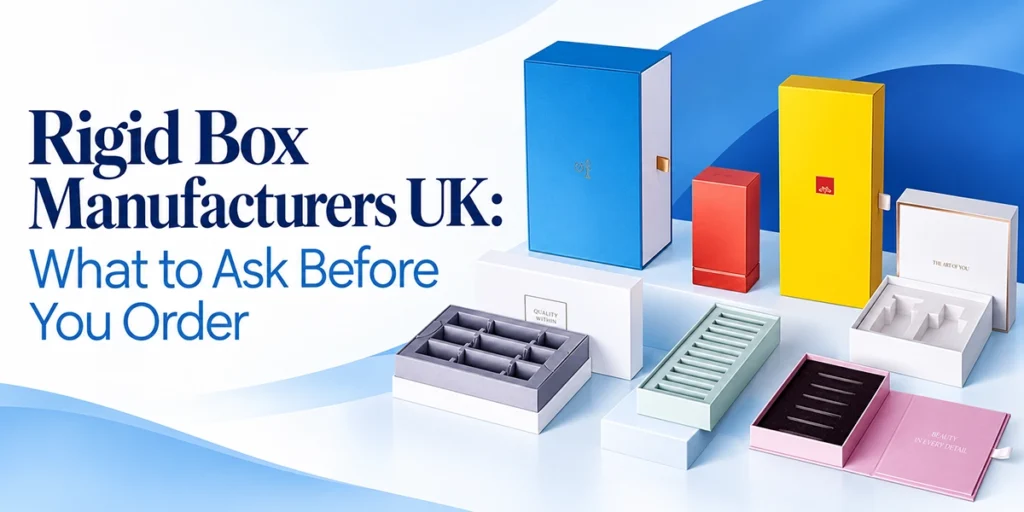
Rigid Box Manufacturers UK: What to Ask Before You Order
Quick answer: when comparing rigid box manufacturers in the UK, judge them on five things: the minimum order they will actually take, how they separate production time from total delivery time, whether a sample and a clear approval step come before your full run, whether your specification is kept on file for a reorder, and how honestly they talk about colour consistency. A manufacturer who answers all five clearly, in writing, is worth far more than one with the glossiest photos.
Plenty of pages that promise to be a “rigid box manufacturers UK” guide are really just another explanation of what a rigid box is. This one is not that. It is a working checklist for the actual buying decision.
One correction before the checklist
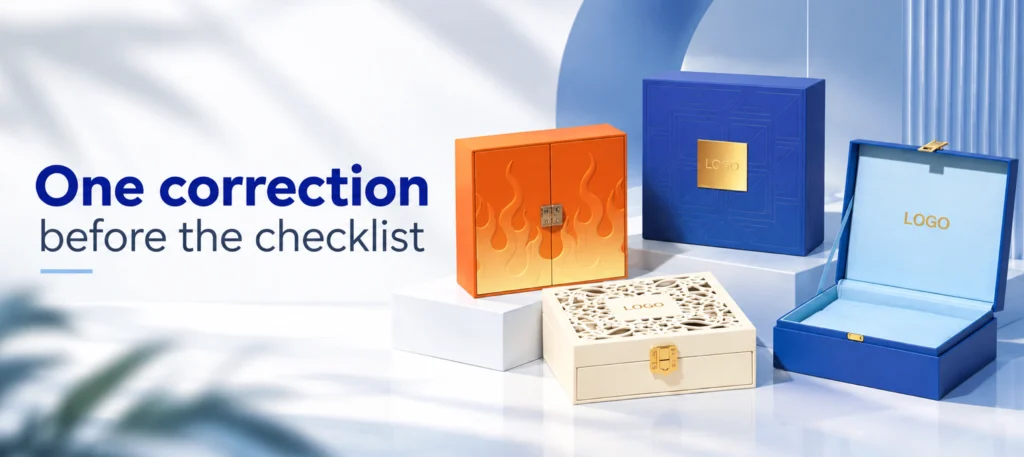
Some sites blur rigid boxes with corrugated board, but they are not the same thing. Corrugated is a fluted, layered material built for shipping and transit, made to absorb impact. A rigid box uses a solid, non-folding greyboard or chipboard core with no flute at all, chosen for a premium hand-feel rather than cushioning. If a manufacturer’s own marketing calls their rigid boxes corrugated, that mismatch is worth a follow-up question, because the two behave very differently under print and finish.
MOQ: what is actually reasonable

Minimum order quantities vary a lot by finish complexity. As general orientation, a plain, unprinted rigid box commonly starts in the low hundreds of units at many suppliers, while a printed, foiled or heavily finished box often sits in the low thousands, and a handful of UK suppliers offer lower minimums than that. Treat any MOQ figure as a starting point to confirm against your own specification, not a fixed industry number.
For reference, ACP’s minimum applies per design: orders start from 100 units, and that figure cannot be split across several different designs to reach it. If you want two designs, each carries its own 100-unit minimum.
Production time versus total lead time: the distinction that matters
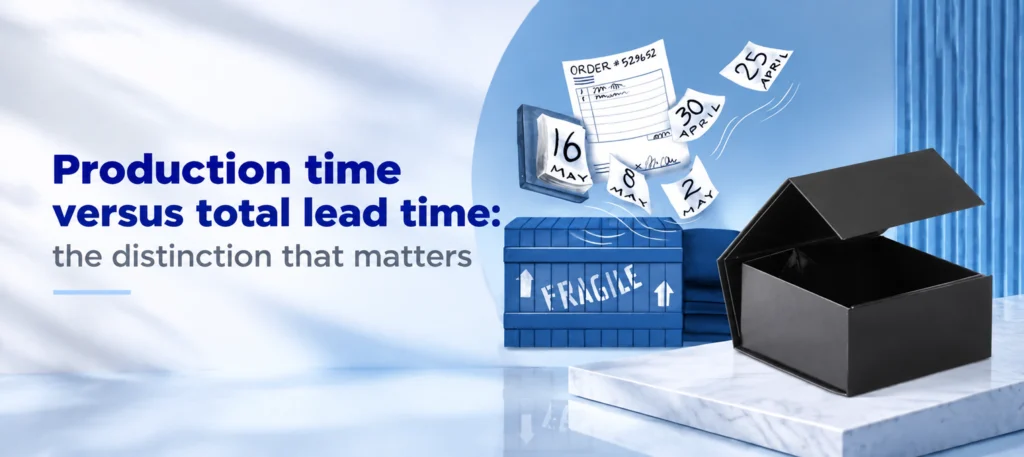
This is where buyer expectations most often go wrong. “Production time” and “total delivery time” are not the same figure, and a manufacturer who quotes only one of them without saying which is worth a direct question. Production covers making the box after your artwork and specification are approved; delivery is additional to that, and depends on courier and address.
At ACP, standard production takes 6 to 8 business days after approval, and delivery is additional and depends on the address and courier, rather than being folded into one blurred total. Ask any manufacturer you are comparing to break their quoted timeline into these two parts rather than accepting a single number.
Sample and approval policy
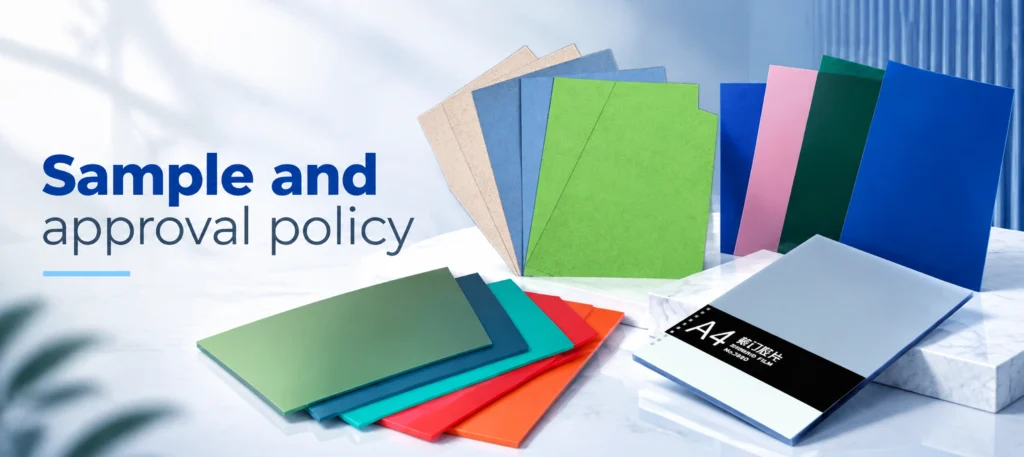
Ask whether you get a chance to approve the box before the full run, and what that approval actually looks like. A digital 3D mock-up is a reasonable free first step, but it cannot prove colour or physical feel on your chosen board and finish; only a physical sample or a video of one can do that. Ask specifically whether a physical pre-production sample is available, and whether it is free or charged, since suppliers vary and a vague answer here is a signal worth noting.
ACP confirms every order before bulk production, based on a free digital 3D mock-up, a video of a physical sample, or a paid physical production sample depending on the order, with cost and timing for a physical sample confirmed at quotation stage.
Reorders: does the specification actually get kept
If this box is going to be a repeat order, ask whether the manufacturer retains your approved specification and dieline, or whether you effectively start from scratch each time. A supplier who keeps your file on record can match a reorder to what was already approved; one who does not may introduce small drift between runs even on the “same” box.
ACP keeps every approved dieline, specification and piece of artwork on file specifically for this reason: when a reorder comes in, it gets checked against what was signed off the first time, rather than reconstructed from memory. That is not a promise of an identical result on every run, since board, ink and finish always carry some normal variation, but it removes one common source of drift.
Finishing capability and honest colour expectations
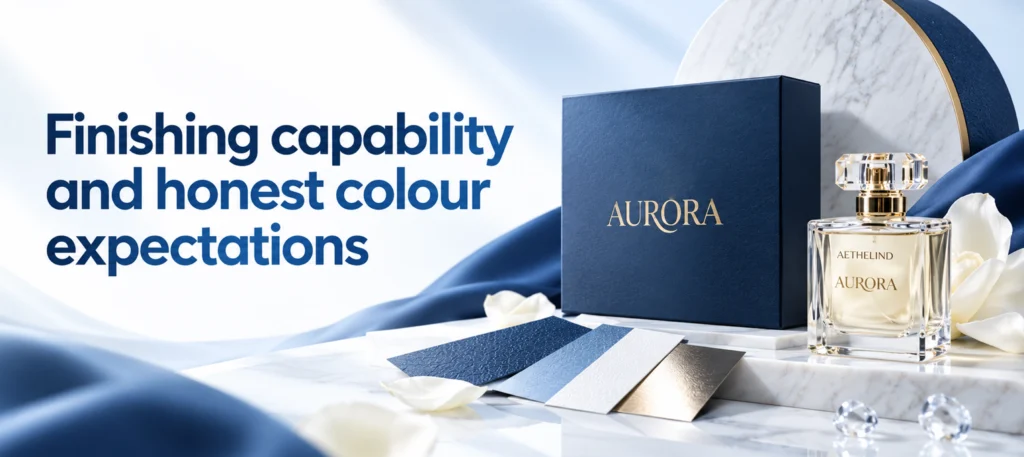
Ask what finishing a manufacturer actually offers rather than reading it off a homepage list. A premium rigid box typically draws on a small cluster of options such as metallic detailing, raised or recessed texture, and selective gloss contrast, and each of those needs enough board weight to register properly rather than showing through on the inside. Then ask the harder question: how do they talk about colour matching? A manufacturer who promises an exact, guaranteed colour match on every material and run is overselling.
ACP’s own honest position on this is stated plainly: Pantone references and CMYK values can be used to manage colour consistency, subject to normal variation caused by the chosen board, ink, coating and production method. No printer can promise more than that, and a supplier who does is worth questioning.
A quick evaluation checklist
| Ask this | Why it matters |
|---|---|
| What is your MOQ for my specific finish, not your cheapest option? | MOQ varies sharply with print and finish complexity |
| Is that a production figure or a total delivery figure? | The two are commonly blurred together to make lead time look shorter |
| Do I get a sample before the full run, and is it free? | A digital mock-up alone cannot prove colour or feel |
| Is my specification and dieline kept for a reorder? | Determines whether a repeat order matches the first |
| How do you describe colour matching, exactly? | “Guaranteed exact match” is a claim no printer can back on every material |
| What certifications, if any, do you hold, and can I see them? | Worth asking any supplier; confirm current certificates directly rather than a logo on a page |
Frequently asked questions

Are rigid boxes made from corrugated board?
No. A rigid box is built around a thick, non-folding greyboard or chipboard core, wrapped in printed paper or fabric. Corrugated board is the fluted material used for shipping and transit boxes, built for impact absorption, and it is a different construction from a rigid box’s solid core.
What is a reasonable MOQ for a UK rigid box manufacturer?
It depends heavily on the finish. A plain, unprinted rigid box often starts lower than a printed or foiled one, which commonly needs a higher minimum to justify the extra setup. Always confirm the MOQ against your own specification rather than a general figure, and ask whether it applies per design if you are considering more than one.
Should production time and delivery time be quoted separately?
Yes, and treat a manufacturer who only gives one combined number with some caution. Production is the time to actually make your boxes after approval; delivery is additional, and depends on courier and address. Quoting them together can make a total lead time look shorter than it really is.
Can a rigid box manufacturer guarantee an exact colour match?
Not honestly, no. Pantone references and CMYK values are used to manage colour consistency, but normal variation from the chosen board, ink, coating and production method means no printer can promise an identical result on every material and run. Treat a flat guarantee of exact colour as a claim worth questioning.
Does it matter if a manufacturer’s production is spread across more than one facility?
Not on its own. Many UK packaging suppliers run a flexible production model, assigning an order to whichever facility suits its structure, material, quantity and finishing rather than owning one fixed factory. What matters is whether they are upfront about how and where your specific order will be produced, not whether they use a single site.
Whichever manufacturer you choose, ask the questions above before you commit. If you would rather just get straight answers to all of them for your own specification, browse our Rigid Boxes selection and send us the details. Design support is free, a digital 3D mock-up comes before anything is produced, and orders start from 100 units.