
Choosing the Right GSM for Tissue Paper and Food Wrappers (UK)
Quick answer: for tissue paper, go lighter for delicate or decorative wrapping and heavier where it needs to hold its shape through folding and handling; a light gift-wrap weight sits well under 20 gsm, a general-purpose weight is closer to 30 gsm, and premium multi-layer tissue runs higher still. For food wrapper paper, GSM matters less than most guides suggest: what actually stops grease and moisture soaking through is the paper’s barrier treatment, not its weight, so a heavier untreated sheet will not necessarily outperform a lighter treated one.
This guide covers tissue paper and food wrapper paper specifically. If you are choosing GSM, flutes or board grade for a cardboard box, that is a separate topic with its own detailed guide, since box strength is governed by very different mechanics than a sheet of tissue or wrapping paper.
Tissue paper: matching weight to the job
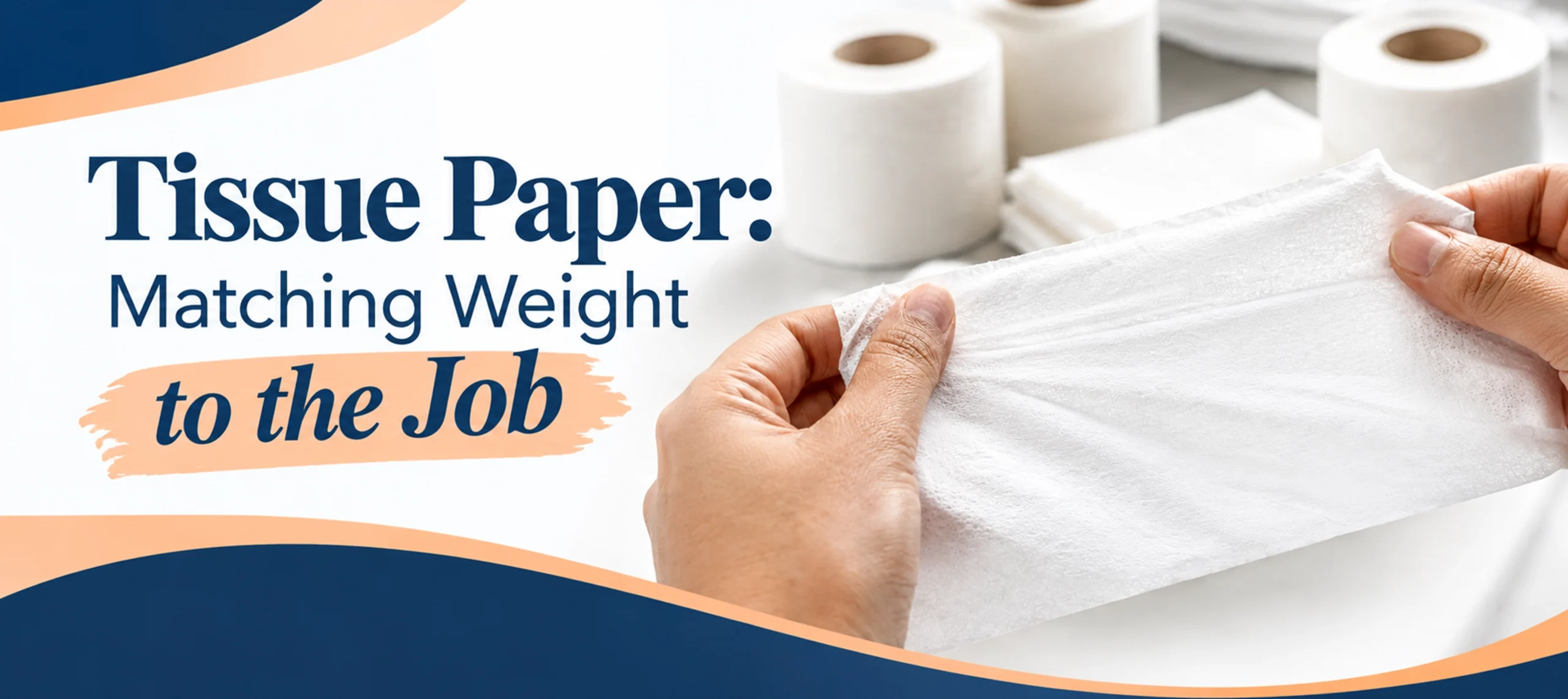
Tissue paper weight is usually described in a small handful of reference points rather than a continuous scale, and the common ones cluster around roughly 17, 22, 30 and 45 gsm.
- Around 17 gsm is the lightest, decorative end: soft, easy to fold, and prone to tearing under real handling. It suits presentation inside a box where the product itself carries the weight, rather than tissue used to physically wrap something delicate.
- Around 22 to 30 gsm is the general-purpose range most retail and gift tissue sits in: enough body to fold cleanly, wrap around a product, and survive normal handling without needing to be treated with extra care.
- Around 45 gsm and up is a heavier, multi-layer weight, used where the tissue needs to hold its shape through repeated folding or where it is doing more than decorative work, such as protecting a surface inside a box.
If your tissue is being folded, packed tightly, or handled more than once before it reaches the customer, lean toward the heavier end of whichever range you are choosing between. If it is purely decorative and undisturbed once placed, the lighter end saves cost without a real downside.
Food wrapper paper: the part most guides get wrong

Here is the correction worth knowing before you specify a weight. A higher GSM figure on its own does not make a food wrapper paper more grease or moisture resistant. What actually does that job is the paper’s barrier treatment: whether it is a naturally dense, calendered sheet, or has been treated with starches, alginates or a food-safe coating to resist fat and moisture. Two papers at the same weight can behave completely differently depending on that treatment, and a heavier untreated sheet is not automatically better than a lighter treated one.
The industry measures this with a Kit rating, a numbered scale for grease resistance rather than weight. As general industry reference, light foods with little oil are commonly matched to a lower Kit rating, hot snacks like burgers or fries to a mid rating, and oily takeaway food such as fried items to a higher rating. This is not a fixed ACP specification; it is how grease resistance is discussed across the trade, and the right rating for your product is confirmed against your actual specification rather than assumed from weight.
Greaseproof, glassine or wax: three different papers, not one
Guides that talk only about GSM often skip this, and it matters more than the number does.
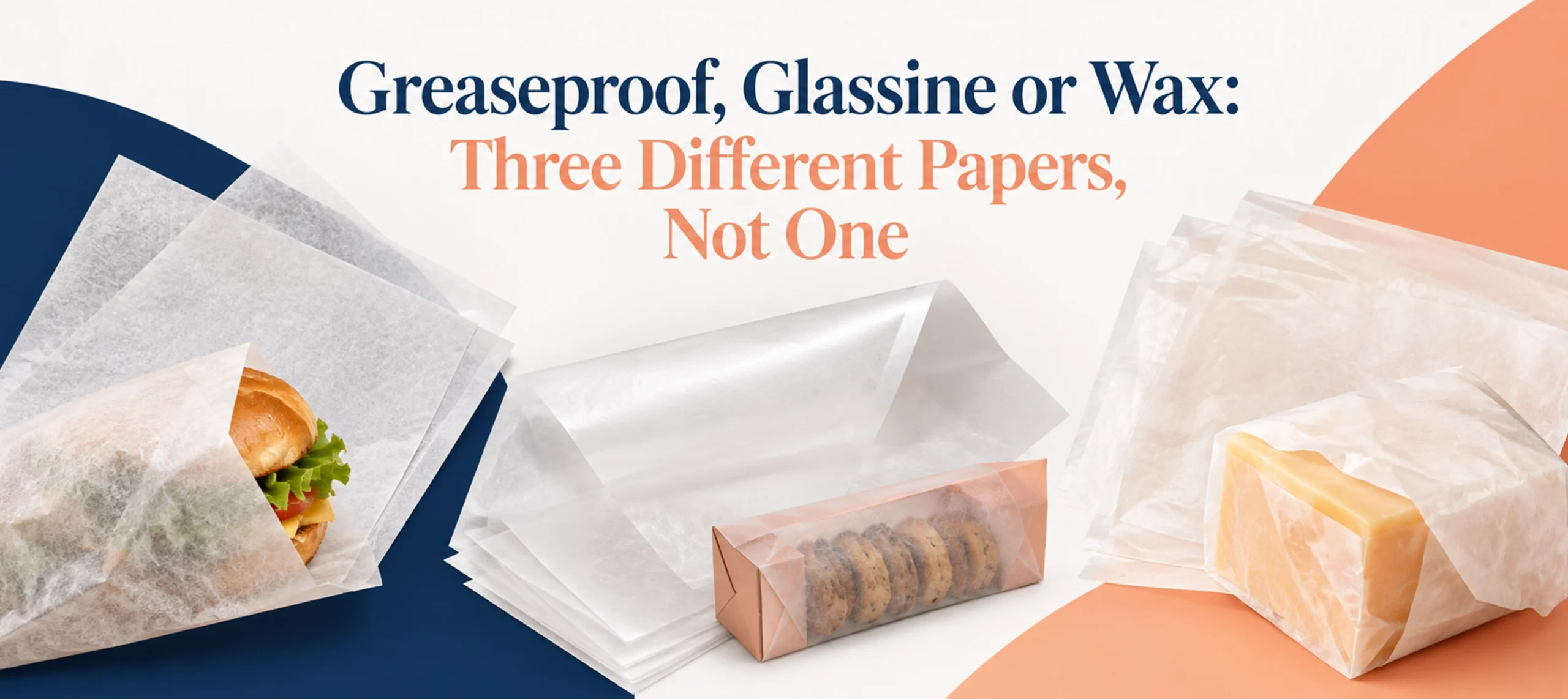
- Greaseproof paper resists grease through its dense fibre structure, achieved mechanically without a coating. It is the more common default in UK foodservice for exactly that reason: no added coating, and reliably grease-resistant on its own.
- Glassine is a smooth, glossy, super-calendered paper that resists grease naturally, without chemical treatment. It is chosen more for its appearance than a functional advantage over greaseproof paper, and it reads as a premium, polished wrap.
- Wax paper, coated in food-grade paraffin or soy wax, resists grease and short-term moisture well, but it is a cold-use material: fine for sandwiches, cheese or chilled food, and never suitable for baking or wrapping anything hot, since the wax coating is not built to take heat.
Picking between them is a material decision first, and a weight decision second.
A quick reference
| Use | Sensible starting point |
|---|---|
| Decorative, undisturbed tissue wrap | Lighter end, around 17 gsm |
| General retail or gift tissue | Mid-range, around 22 to 30 gsm |
| Heavier, multi-layer or repeatedly handled tissue | Around 45 gsm and up |
| Dry or low-fat food wrap | Greaseproof or glassine, lower Kit rating |
| Hot, greasy food wrap | Greaseproof, higher Kit rating |
| Cold or chilled food wrap only | Wax paper acceptable, never for hot or baked food |
Frequently asked questions

What GSM is best for gift wrap tissue paper?
For purely decorative tissue that will not be handled much, a lighter weight around 17 gsm is usually enough. For tissue that has to fold cleanly around a product and survive normal handling, a general-purpose weight around 22 to 30 gsm holds up better, and heavier multi-layer tissue starts around 45 gsm and up.
Does a higher GSM food wrapper resist grease better?
Not on its own. Grease and moisture resistance in food wrapper paper comes from the paper’s treatment, whether that is a naturally dense fibre structure or a barrier coating, measured by a Kit rating rather than weight. A heavier untreated sheet will not necessarily outperform a lighter, properly treated one.
What is the difference between greaseproof paper, glassine and wax paper?
Greaseproof paper resists grease through its dense fibre structure with no added coating, and is the common UK foodservice default. Glassine is a smooth, glossy paper that resists grease naturally and is chosen mostly for its premium appearance. Wax paper is coated in food-grade wax and works well for cold or chilled food, but should never be used for anything hot or baked, since the wax coating is not heat-stable.
Can I use wax paper for hot food?
No. Wax paper’s coating is designed for cold or room-temperature use, such as sandwich or cheese wrapping, and is not heat-stable. For hot or baked food, greaseproof paper or a genuinely oven-safe material is the correct choice instead.
How do I know what Kit rating my food wrapper paper needs?
As general industry reference, lighter, lower-fat foods are typically matched to a lower Kit rating, hot snacks like burgers or fries to a mid rating, and oily or sauce-heavy takeaway food to a higher one. This is a starting point, not a universal figure, and food-contact material suitability is confirmed for the specific material before production.
If you are specifying tissue paper or exploring a food-contact wrapper for your packaging, our Tissue Paper range includes a genuinely light 18 Gsm Tissue Paper option, and greaseproof material with Kit-rated options is available on demand alongside our Custom Food Boxes and Burger Boxes ranges. Design support is free, and orders start from 100 units.