

Black Friday Packaging UK: When to Order for a Date That Keeps Moving
Quick answer: Black Friday packaging needs an earlier, recalculated deadline every single year, because the date itself moves. Black Friday is the day after US Thanksgiving, which falls on the fourth Thursday of November, so the actual date sits somewhere between 23 and 29 November depending on the year, never on a fixed day the way Christmas sits on 25 December. Work backward from that year’s real date, not last year’s, and plan for a shipping-capacity crunch rather than a gift-wrapping one.
Most content about Black Friday either explains a garbled version of where the name came from or repeats generic “order early” advice without saying why the timing is genuinely different from Christmas. Here is the actual mechanism, and what it means for your packaging.
Why the date moves, and why that isn’t trivia
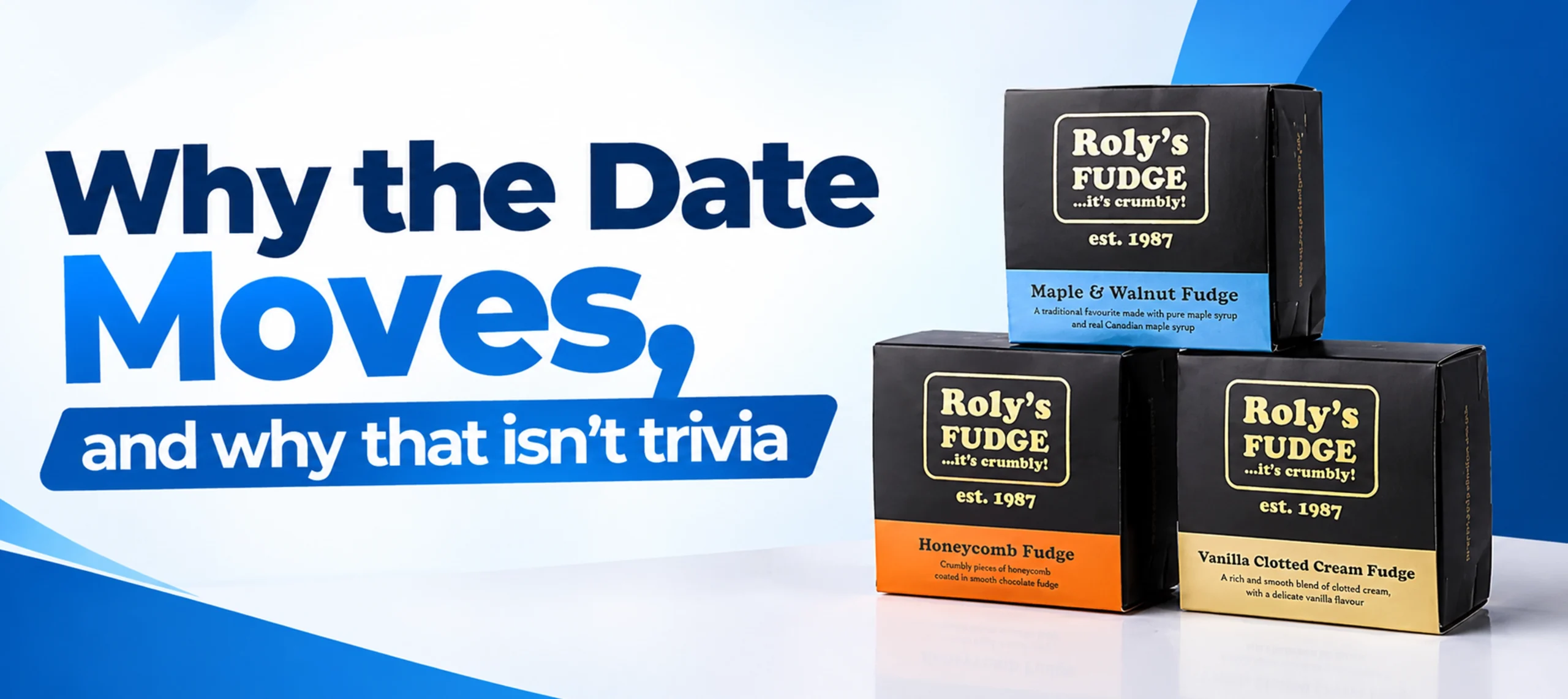
Black Friday’s name has picked up a few competing origin stories over the years, and more than one of them doesn’t quite line up: some trace it to 19th-century financial trouble, others to a mid-20th-century shift in how retailers described their post-holiday profits, and neither one has much to do with the day it actually falls on. What is not in dispute is the mechanism behind the date itself: it is the Friday immediately after US Thanksgiving, which is fixed to the fourth Thursday of November. Because that Thursday lands on a different date each year, Black Friday itself moves within a narrow window, always somewhere between 23 and 29 November.
That is the detail worth acting on. Christmas sits on the same date every year, so a “order by this date” plan can be reused annually with only minor tweaks. Black Friday cannot be planned that way; the safe order deadline has to be recalculated against the real date for that specific year, not copied from a template built around last year’s calendar.
Working the deadline out backward
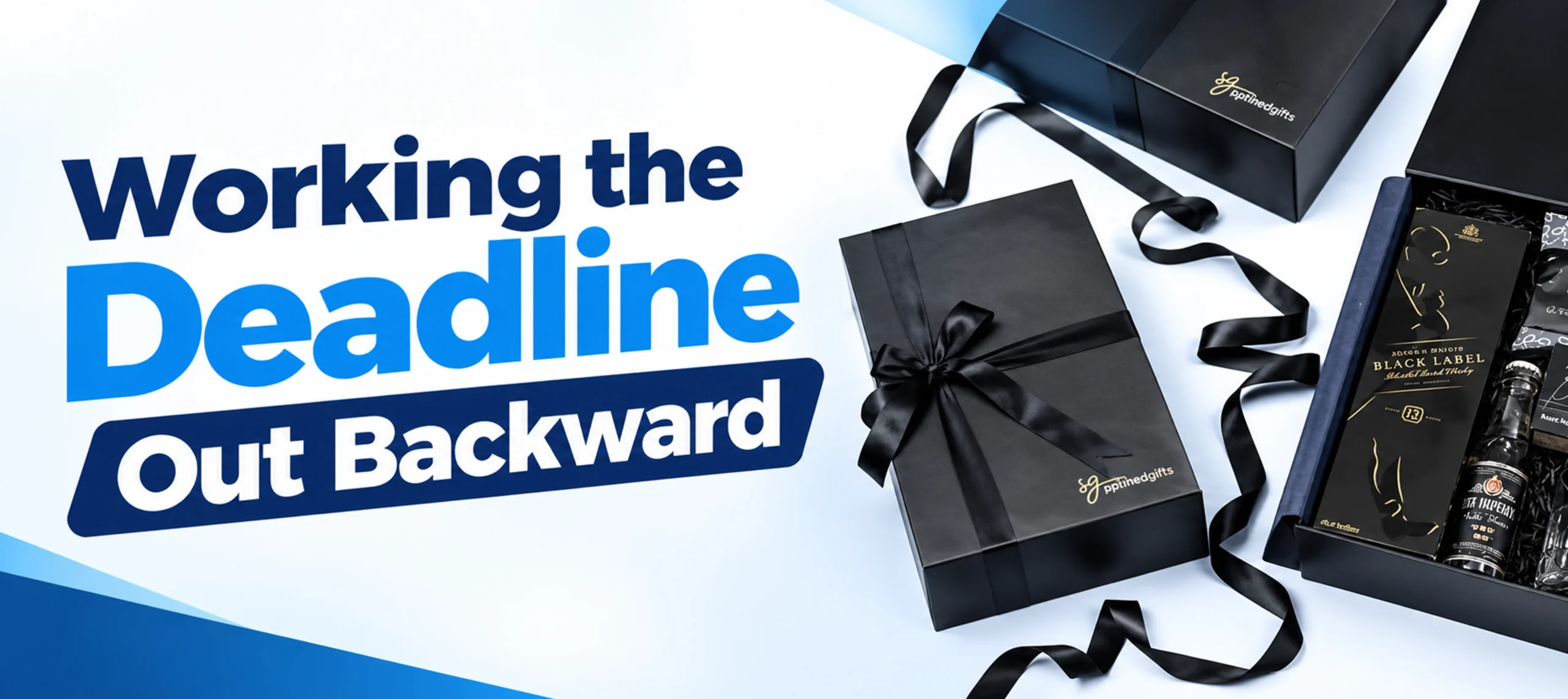
The reliable way to set a deadline is to start from the delivery date you actually need and subtract backward: freight and delivery time, then production time, then a contingency buffer for anything that slips. At ACP, standard production takes 6 to 8 business days after approval, with delivery additional and dependent on address and courier, so a realistic order date has to leave room for both stages plus the approval step itself, not just the production window in isolation. Add a buffer on top for the fact that a specification query, an artwork revision or a courier delay can each eat a few days on their own.
What actually breaks for sellers who leave it too late
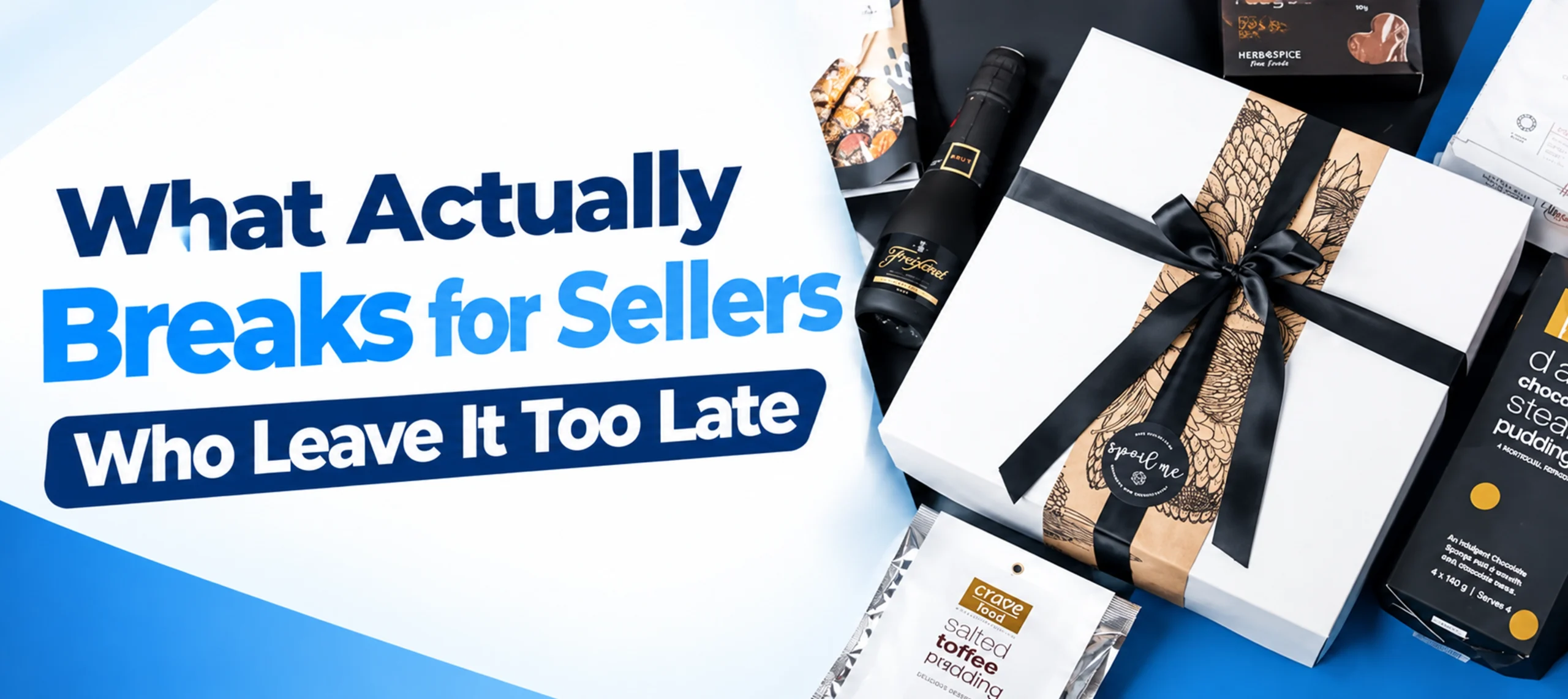
The common assumption is that leaving it late means running out of boxes. In practice, sellers more often run into trouble at the pack-and-despatch stage and with courier capacity during the surge itself, rather than a straightforward shortage of raw packaging stock. A warehouse that can pack fifty orders an hour on a normal week does not automatically handle five times that volume just because the boxes arrived in time; the packing process and the courier collection slots need to scale too, and that is a planning problem separate from ordering the boxes themselves.
Black Friday needs a different brief than Christmas

Christmas packaging leans on gift presentation: a box that looks good under a tree, ribbon-ready, unboxing-focused. Black Friday is a different kind of event entirely: a sudden, compressed spike in online orders that needs to move fast, which puts the emphasis on shipping and mailer capacity rather than gift finish. A brand treating the two the same, using the same box and the same order timeline for both, is usually solving the wrong problem for at least one of them.
If your order date has already slipped close to the event, a plain or lightly branded stock format, dressed up with a sticker or an insert card rather than a full custom print run, closes much of the gap without the lead time a bespoke order needs.
Frequently asked questions

Why does Black Friday fall on a different date every year?
Because it is defined relative to US Thanksgiving, the day immediately after it, and Thanksgiving itself is fixed to the fourth Thursday of November rather than a set calendar date. Since that Thursday moves, so does the Friday after it, landing somewhere between 23 and 29 November depending on the year.
When should I order Black Friday packaging?
Work backward from the actual date for that year, not a fixed month you used last time. Subtract delivery and freight time, then production time, then a contingency buffer for revisions or courier delays, and order by whatever date that calculation lands on for this year specifically.
What usually goes wrong when sellers leave Black Friday packaging too late?
More often than a straightforward shortage of boxes, it is the pack-and-despatch stage and courier capacity that struggle under the surge. Having stock ready does not by itself solve a warehouse or courier pipeline that cannot move at several times its normal rate.
Is Black Friday packaging the same as Christmas packaging?
Not really. Christmas leans on gift presentation and unboxing; Black Friday is primarily a shipping-capacity event driven by a sudden spike in orders that need to move fast. The two deserve separate planning rather than one shared timeline and box choice.
What if I’ve left it too late to order custom Black Friday packaging?
A plain or lightly branded stock format, finished with a sticker or an insert card, is a workable fallback that closes much of the gap a full bespoke print run would otherwise need, without the longer lead time.
Whether you need Custom Mailer Boxes sized for a shipping surge or a simpler Custom Shipping Boxes run, tell us your target date and we will work backward from it with you. Design support is free, and standard production takes 6 to 8 business days after approva