
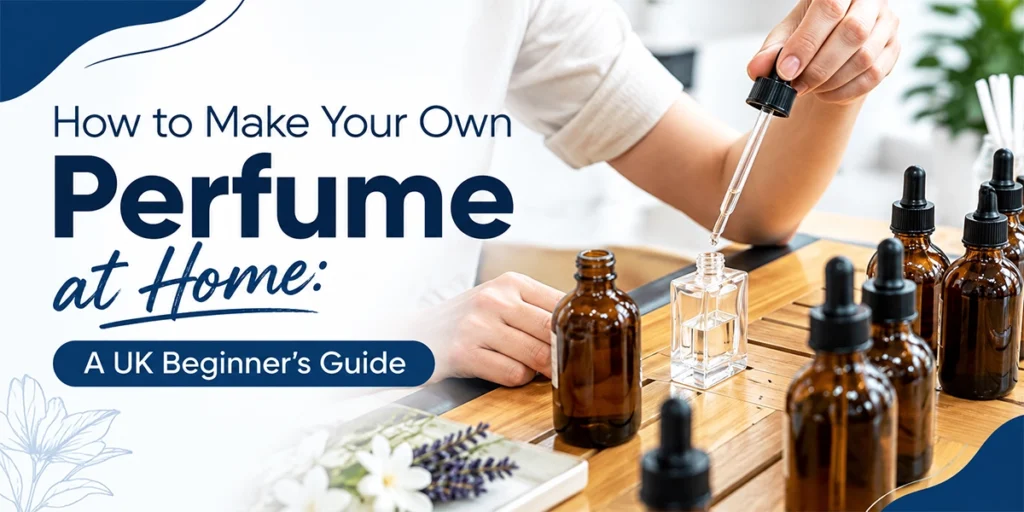
How to Make Your Own Perfume at Home: A UK Beginner’s Guide
Quick answer: here is how to make your own perfume, in short: blend fragrance or essential oils into perfumer’s alcohol (not vodka), let the mixture rest for several weeks so the scent settles, then dilute to the strength you want. The two things most guides skip are which alcohol you are actually allowed to buy in the UK, and what changes if you decide to sell what you have made rather than keep it for yourself. Both are covered below.
Making a wearable perfume at home is genuinely achievable with the right materials and a bit of patience. The part that trips people up is rarely the recipe; it is the alcohol, the resting time, and, if selling ever crosses your mind, the rules that come with it.
What you actually need
- Perfumer’s alcohol. A denatured ethanol made specifically for fragrance use. This is covered in detail below, because it is the step most beginners get wrong.
- Fragrance oil or essential oils. The scent itself: a mix of top, heart and base notes, or a single pre-blended fragrance oil if you are starting simple.
- Distilled or deionised water. Used to soften strong alcohol-heavy blends; tap water can introduce minerals that cloud the mix.
- A dark glass bottle with a tight seal. UV light and heat both degrade a fragrance blend over time.
- Simple lab kit. A small funnel, a few glass droppers or pipettes, and coffee filters or filter paper for straining out any sediment before bottling.
The alcohol most guides get wrong
This is the step that quietly ruins more first attempts than a bad recipe does. Vodka is the common beginner substitute, and it is a poor one: it contains added water and flavouring compounds that dull the scent and can cloud the blend, and it is taxed as a drinking spirit rather than sold for this purpose.
The correct product is perfumer’s alcohol, a denatured ethanol made and sold specifically for fragrance work. In the UK, the relevant excise category commonly described by perfumery suppliers and educators is Trade Specific Denatured Alcohol No 1 (TSDA 1), which HM Revenue and Customs authorises for this use. Most UK hobbyist suppliers sell a version already containing the required denaturants, so you buy it ready to use; anyone sourcing larger quantities directly can apply to HMRC for an Authorisation to Receive TSDA 1, which is free. Buy from a supplier who states their alcohol is sold for perfume or cosmetic use, and it will already be the correct grade.
A simple method
- Choose your concentration. Decide roughly how strong you want the finished perfume, using the bands below as your target.
- Blend your oils first. If you are building your own accord rather than using a single fragrance oil, mix your top, heart and base note oils together before adding any alcohol, so you can smell and adjust the blend on its own.
- Add the alcohol. Combine the oil blend with the perfumer’s alcohol in a clean glass container, then swirl gently rather than shaking hard, which can introduce air and encourage cloudiness.
- Rest the blend. Seal it, label it with the date, and store it somewhere cool, dark and stable, away from a sunny windowsill or a warm bathroom. This resting period, called maceration, is typically several weeks and sometimes longer for heavier, woody or resinous blends; lighter citrus-led blends usually need less time.
- Check it by smell, not the clock. A fresh blend often smells sharp and alcohol-forward; that eases as the ingredients settle. Open and smell it every week or so rather than on a fixed schedule, since maceration time genuinely varies with the blend.
- Add water if needed, filter, then bottle. Once the scent has rounded out, dilute with a little distilled water if the alcohol still reads too sharp, strain through a coffee filter to catch any sediment, and decant into your final bottle.
Getting the strength right
Commercial perfumes are sold in a few standard strength bands, and knowing them helps you judge your own blend against something familiar rather than guessing:
| Type | Approx. oil concentration | Typical wear time |
|---|---|---|
| Eau de Cologne (EDC) | 2 to 4% | 1 to 2 hours |
| Eau de Toilette (EDT) | 5 to 15% | 2 to 4 hours |
| Eau de Parfum (EDP) | 15 to 20% | 6 to 8 hours |
| Parfum / Extrait | 20 to 30% | 8 hours or more |
A first attempt at home usually lands somewhere in the EDT to EDP range: strong enough to actually smell like something, without using so much oil that the blend turns harsh or the cost climbs steeply. Adjust up or down once you know how your own blend wears on your skin.
Safety, before you start
- Patch test first. Dab a small amount on your inner arm and wait 24 hours before wearing a new blend on skin you will keep it on, since fragrance oils and essential oils can irritate some skin types.
- Perfumer’s alcohol is flammable. Keep it away from open flame and any heat source, and store it upright out of reach of children.
- Keep records. Note down every oil, its supplier and the proportion used. If a blend ever irritates you, or if you later want to move toward selling, you will need exactly this information.
If you want to sell what you make
Making a perfume for yourself and selling it are two different things under UK law, and this is the gap most hobbyist tutorials leave out entirely. The moment you place a homemade perfume on the market, it becomes a cosmetic product, and UK regulation requires a UK-based Responsible Person, a Cosmetic Product Safety Report from a qualified safety assessor, a Product Information File, compliant labelling, and notification through the government’s Submit Cosmetic Product Notifications (SCPN) service before it goes on sale. Skipping notification carries real penalties.
None of that is something a packaging supplier can complete for you. The artwork layout can reserve clear panels for the information the product is required to display, but All Custom Packaging can help organise the available print space; the brand or its regulatory adviser remains responsible for confirming the accuracy and completeness of the required product information. Treat this section as a starting point, not a full compliance guide, and check the current requirements on GOV.UK before you sell anything.
Frequently asked questions
Can I use vodka to make perfume?
You can, but it rarely works well. Vodka contains added water and flavouring compounds that dull the scent and can cloud the blend, and it is priced and taxed as a drinking spirit rather than sold for this use. A dedicated perfumer’s alcohol, a denatured ethanol made for fragrance work, gives a cleaner result and is what UK suppliers sell specifically for this purpose.
How long does homemade perfume need to rest before it’s ready?
Typically several weeks, sometimes longer for heavier, woody or resinous blends, and less for light citrus-led ones. This resting period is called maceration: fresh mixtures often smell sharp and alcohol-forward, and that eases as the ingredients settle. Check by smell every week or so rather than on a fixed schedule.
What percentage of oil should I use for my own perfume?
Commercial perfumes range from around 2 to 4 percent oil for an Eau de Cologne up to 20 to 30 percent for a Parfum or Extrait, with Eau de Toilette and Eau de Parfum sitting in between. A first home blend in the Eau de Toilette to Eau de Parfum range, roughly 10 to 20 percent, is a sensible starting point.
Do I need a licence to make perfume at home for personal use?
For personal use, no. The point where UK rules apply is selling: once a homemade perfume is placed on the market, it counts as a cosmetic product and UK regulation requires a Responsible Person, a Cosmetic Product Safety Report, compliant labelling and SCPN notification before sale. Making and wearing it yourself does not trigger those requirements.
Is homemade perfume safe to wear?
It can be, with sensible precautions: patch test a new blend on your inner arm and wait 24 hours before wearing it more widely, since fragrance and essential oils can irritate some skin types, and keep the finished perfume out of reach of children given the alcohol content. If you have sensitive skin or known allergies, introduce new ingredients one at a time.
Once you have a perfume you are proud of, whether it stays a personal project or becomes something you sell, it deserves packaging that matches the effort. Our Cosmetic Packaging range includes dedicated Perfume Boxes, a compact Small Perfume Boxes option, and genuinely blank, ready-to-go Empty Perfume Boxes stock if you want to test the market before committing to a full custom print run. Design support is free, and orders start from 100 units.