
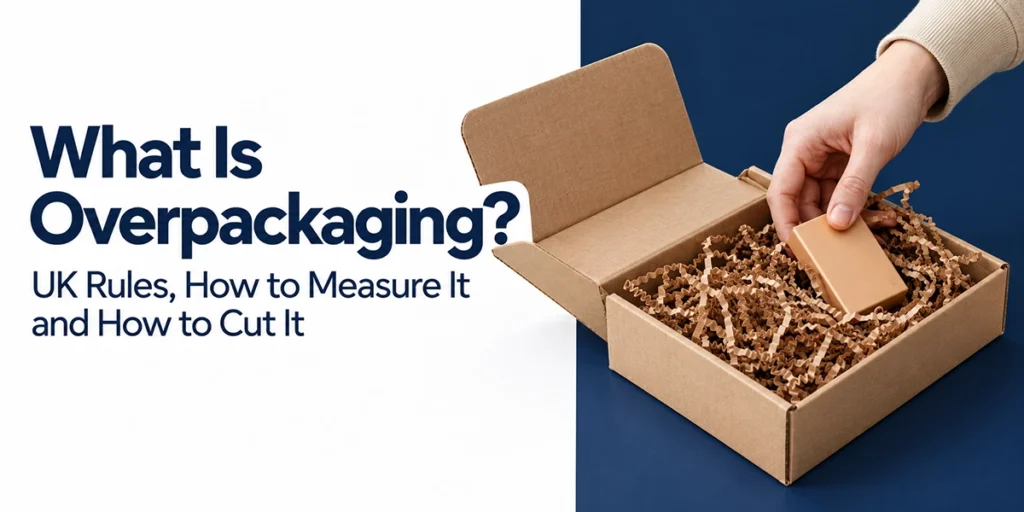
What Is Overpackaging? UK Rules, How to Measure It and How to Cut It
Quick answer: Overpackaging is using more packaging than a product needs: a box far bigger than the item, extra layers, loose filler that only fills space, or parts that protect nothing. In Great Britain it is not only a waste question. The law already requires packaging volume and weight to be kept to the minimum adequate amount for safety, hygiene and acceptance. The fix is not to strip packaging back blindly, but to right-size the box, hold the product with fitted inserts instead of loose fill, and remove any component you cannot justify.
What counts as overpackaging
The Institute of Packaging Professionals defines overpackaging as methods and materials that exceed what is needed for adequate containment, protection, transport and sale. In practice it takes a few common forms:
| Form | What it looks like |
|---|---|
| Oversized box | A small product in a big box, with the gap filled by paper, air pillows or bubble wrap |
| Too many layers | A product box inside a mailer inside a shipping box, when two layers would do |
| Unneeded components | Trays, windows, wraps or cards that protect nothing and are not required |
| Over-specified board | Heavy double wall board for a light product that would travel safely in single wall |
| Slack fill | A pack that looks fuller than it is, with a false bottom or deep empty space |
What UK law says
In Great Britain, the Packaging (Essential Requirements) Regulations 2015 say packaging must be made so that its volume and weight are limited to the minimum adequate amount to maintain the necessary level of safety, hygiene and acceptance for the product and the consumer.
“Acceptance” is not a free pass for decorative excess. Trading standards guidance on the composition and use of packaging warns that particular care is needed here: if it could be argued that consumers buy the goods despite the excessive packaging, you may not be complying.
Three practical points follow from the same guidance:
- Who is responsible. It is not only the packaging maker. It includes anyone placing packaging on the market for the first time, anyone who puts their name or mark on the pack, and importers.
- Documentation. Technical documentation showing compliance should be kept for four years and produced within 28 days if Trading Standards asks for it.
- Enforcement. Trading Standards enforce the regulations.
Packaging design support can help you meet these requirements, but the brand or its regulatory adviser remains responsible for confirming compliance.
Selling into the EU or Northern Ireland
The EU has gone further. Under the EU Packaging and Packaging Waste Regulation, the Food and Drink Federation’s guidance explains that by 1 January 2030, grouped, transport and ecommerce packaging must contain no more than 50% empty space, and void fill such as paper, air cushions, bubble wrap and foam counts as empty space. It applies to UK businesses placing packaging on the EU market or supplying Northern Ireland.
There is no equivalent fixed percentage in Great Britain today, but the 50% figure is a useful yardstick for any ecommerce box.
How to measure empty space in your box
You can check a box in two minutes:
- Measure the inside of the box: length x width x height.
- Measure the product (or the product in its own retail box) the same way.
- Empty space % = (box volume minus product volume) divided by box volume, x 100.
A worked example, for a product 200 x 150 x 60 mm:
| Box inside size | Box volume | Product volume | Empty space | |
|---|---|---|---|---|
| Stock box | 300 x 250 x 150 mm | 11.25 litres | 1.8 litres | 84% |
| Right-sized box | 220 x 170 x 80 mm | 2.99 litres | 1.8 litres | 40% |
The stock box is mostly air and filler. The right-sized box still leaves room for protection but is under half empty. For how to measure a box correctly and how box size affects courier charges, see our guide to standard box dimensions.
How to cut overpackaging without causing damage
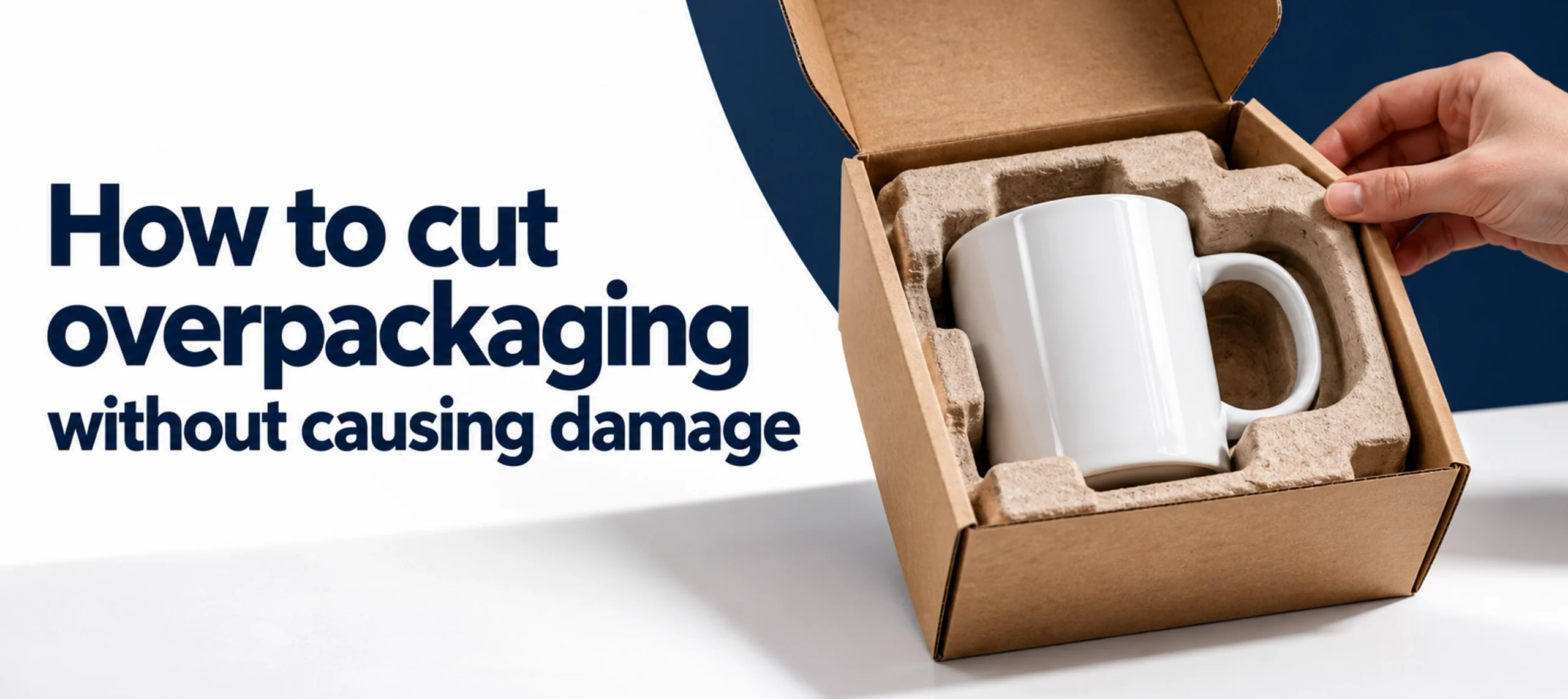
- Right-size the box. Start from the product plus the protection it genuinely needs, not from a stock size you already hold.
- Replace loose fill with a fitted insert. An insert cut to the product holds it still with far less material than a box of filler.
- Remove a layer. If a retail box travels inside a mailer inside a shipping box, ask whether one layer can go. A printed mailer can often do the job of both mailer and outer.
- Match the board to the load. Heavier board is only justified by weight, fragility or stacking.
- Question every component. For each tray, card, wrap or window, write down what it does. If the answer is “it looks nice” and nothing else, it is a candidate to remove.
Do not overcorrect. A box that is too tight or too weak causes damage, and a broken product and its replacement use far more material than the packaging you saved. Our guide to stopping parcels arriving damaged covers the other side of the balance. Test a packed sample by shaking and dropping it before you change a whole run.
Is premium packaging overpackaging?
Not automatically. A rigid gift box can be justified by the protection it gives and by what customers expect for that product. The risk is in layers and components that do neither. Keep the premium element, and remove what sits around it without a purpose, such as a presentation box shipped loose in a large outer with filler.
When to re-check
Re-check your packaging when:
- you launch a new product size or change the product
- you add bundles or gift sets that use the same box
- you change the number of layers or the carrier
- customers mention big boxes or too much filler in reviews
Keep a short note of the reason for each component and the empty-space figure for each pack. It takes minutes and is the kind of record that supports the documentation duty above.
Cutting packaging with us
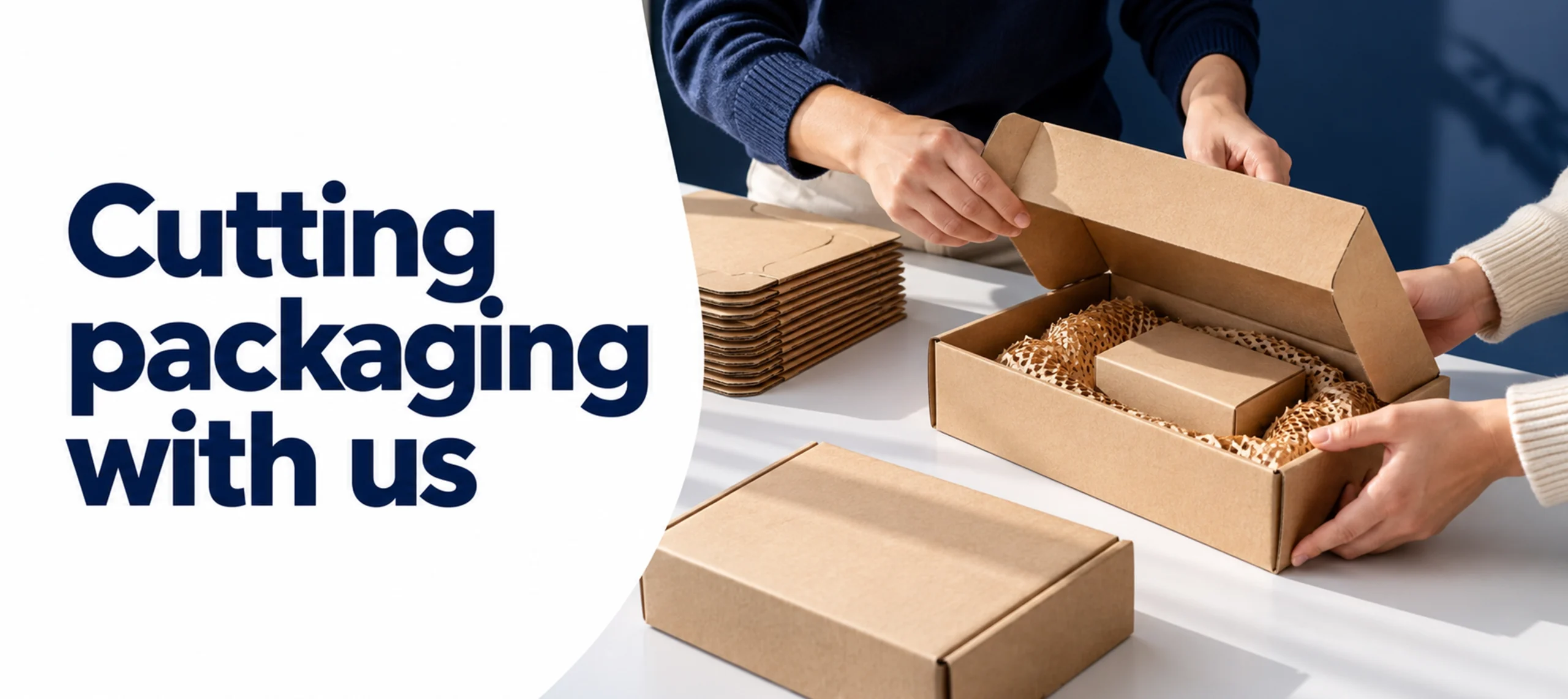
We make boxes to your product’s dimensions, so the box fits the product rather than the other way round. Inserts cut to your product replace loose fill, and board is chosen to suit the load, from single wall to double wall. See our custom mailer boxes.
We can also make mailer inserts to hold the product in place.
- Orders start from 100 units.
- Design support is free.
- A digital 3D mock-up is free.
Overpackaging questions
What is overpackaging?
Using more packaging than the product needs for containment, protection, transport and sale: oversized boxes, extra layers, loose filler that only fills space, or components that protect nothing.
Is overpackaging illegal in the UK?
Packaging must be kept to the minimum adequate amount for safety, hygiene and acceptance under the Packaging (Essential Requirements) Regulations 2015, enforced by Trading Standards. Packaging that goes beyond that can breach the regulations.
Is there a maximum amount of empty space in a box?
Not as a fixed figure in Great Britain. In the EU, from 1 January 2030, grouped, transport and ecommerce packaging must contain no more than 50% empty space, which also applies to goods supplied to Northern Ireland.
How do I work out empty space?
Take the inside volume of the box, subtract the product’s volume, divide by the box volume and multiply by 100.
Can reducing packaging cause more damage?
Yes, if it goes too far. Right-size and fit the product rather than simply removing protection, and test a packed sample before changing a whole run.
Who is responsible for overpackaging, the brand or the box maker?
Responsibility includes anyone placing the packaging on the market first, anyone whose name or mark is on it, and importers. For most branded products, that includes the brand.
Think your packaging is bigger than it needs to be? Send us the product size and your current box, and we will suggest a right-sized option.