
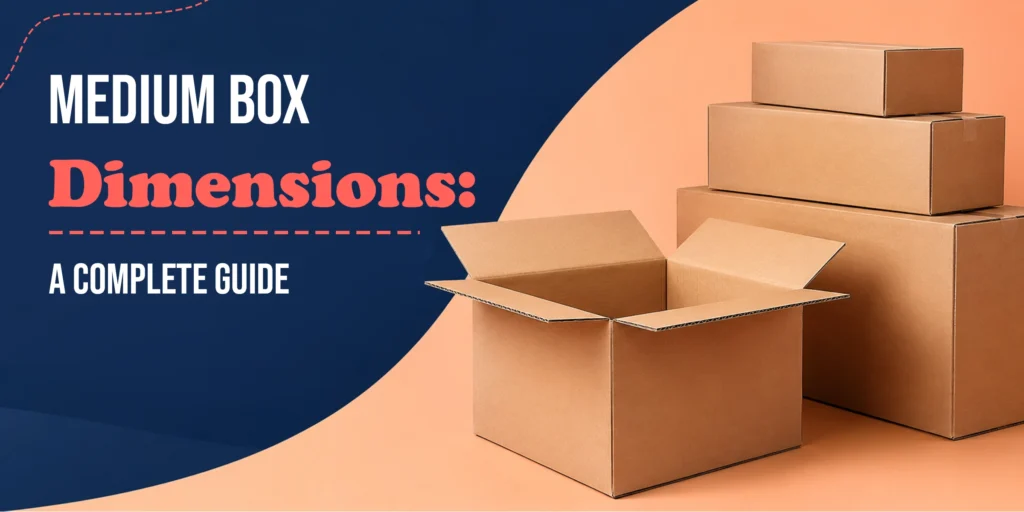
Medium Box Dimensions: A Complete Guide
Choosing the correct packaging size is essential when packing, storing, or shipping medium-sized products. A properly sized box protects the contents, reduces material waste, improves storage efficiency, and helps control shipping costs.
However, there is no single box size that works for every medium-sized product. The ideal dimensions depend on the product’s size, shape, weight, fragility, and shipping requirements.
Whether you need packaging for clothing, books, footwear, cosmetics, electronics, or home accessories, this guide will help you understand medium box dimensions, common sizes, measurement methods, and mistakes to avoid.
What Are Medium Box Dimensions?
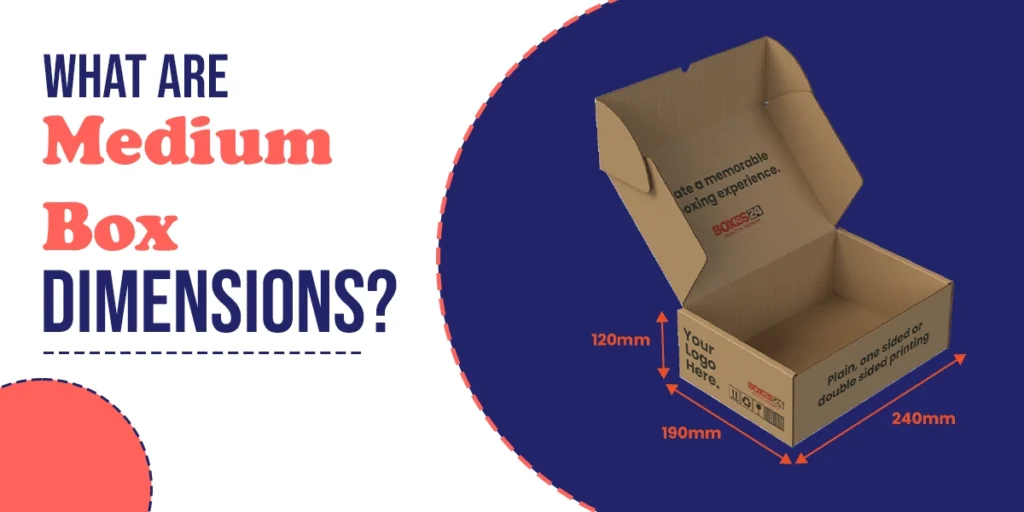
Medium boxes are commonly used for products that are too large for small cartons but do not require oversized or heavy-duty packaging. They are suitable for household items, books, clothing, kitchen accessories, footwear, electronics, gift sets, and many other retail products.
Box dimensions are normally written in the following order:
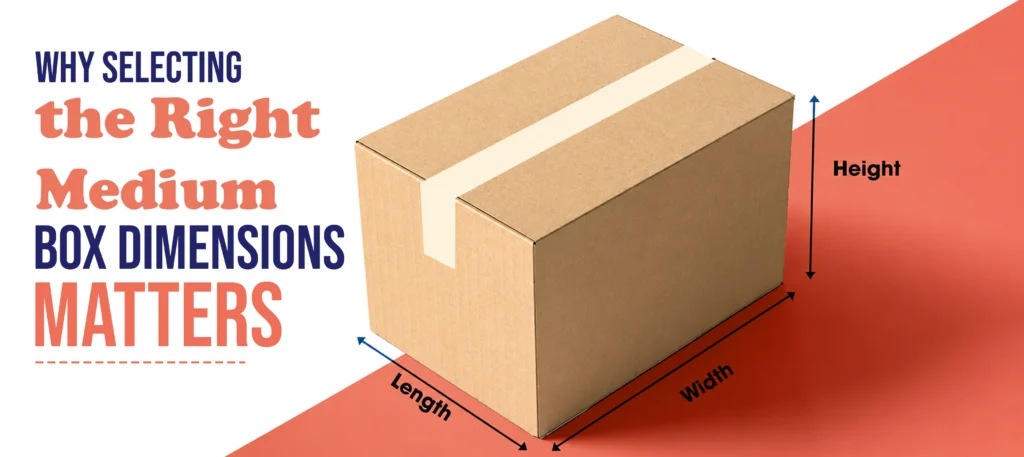
Length × Width × Height
Some commonly used medium box dimensions include:
- 11.25″ × 8.75″ × 6″
- 14″ × 12″ × 3.5″
- 16″ × 12″ × 8″
- 18″ × 16″ × 12″
- 20″ × 16″ × 15″
These measurements are only general examples. The correct size should always be selected according to the product and the amount of protective packaging required.
Businesses with uniquely shaped products may benefit from custom mailer boxes sized to fit their items more accurately. A closer fit can improve presentation, minimise movement inside the box, and reduce the need for excessive void fill.
Why Selecting the Right Medium Box Dimensions Matters
Choosing accurate box dimensions can affect almost every part of the packaging and fulfilment process. The right box size improves product protection while also supporting better storage, shipping, and customer experiences.
Prevent Product Damage
Products can move, collide, bend, or break when packed inside an oversized box without adequate support. On the other hand, packaging that is too tight may place unnecessary pressure on the product.
A correctly sized box leaves enough room for protective materials while keeping the product securely in place.
Improve the Customer Experience
Packaging is often the first physical interaction a customer has with an online brand. A box that is appropriately sized, neatly presented, and easy to open can create a more professional unboxing experience.
Customers are also more likely to appreciate packaging that does not appear unnecessarily bulky or wasteful.
Streamline the Shipping Process
Accurate dimensions make it easier for packing teams to select the correct packaging, arrange products efficiently, and prepare orders without unnecessary delays.
Standardising a suitable range of medium box sizes can also improve warehouse organisation and order fulfilment.
Reduce Production and Shipping Costs
Oversized packaging uses more material and may increase shipping charges because many couriers calculate prices using dimensional weight.
Using the correct box dimensions can help businesses:
- Reduce cardboard consumption
- Minimise void-fill materials
- Improve pallet and vehicle space
- Lower storage requirements
- Avoid unnecessary dimensional-weight charges
Support Different Product Categories
Medium-sized boxes are highly versatile. They can be customised for clothing, cosmetics, food products, electronics, décor items, subscription products, footwear, and e-commerce orders.
The dimensions, materials, printing, and internal structure can be adapted according to the needs of each product.
What Are the Standard Dimensions of Medium Packaging?
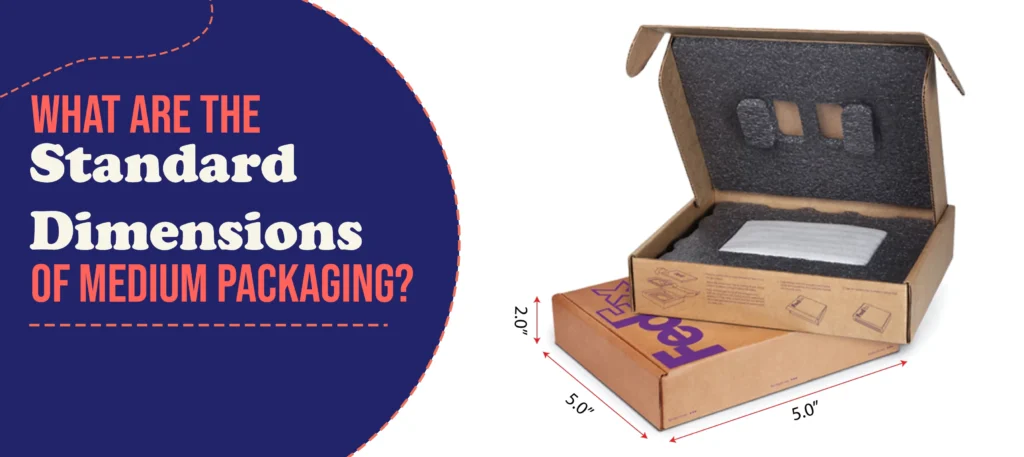
There is no universal standard for medium packaging. Different manufacturers, couriers, and industries may classify box sizes differently.
However, medium shipping boxes commonly fall within a general range of approximately:
12″ × 10″ × 4″ to 18″ × 18″ × 12″
Some deeper cartons may also be considered medium-sized depending on their overall volume, material, and intended application.
The following sections provide examples for different product categories.
Medium Book Box Dimensions
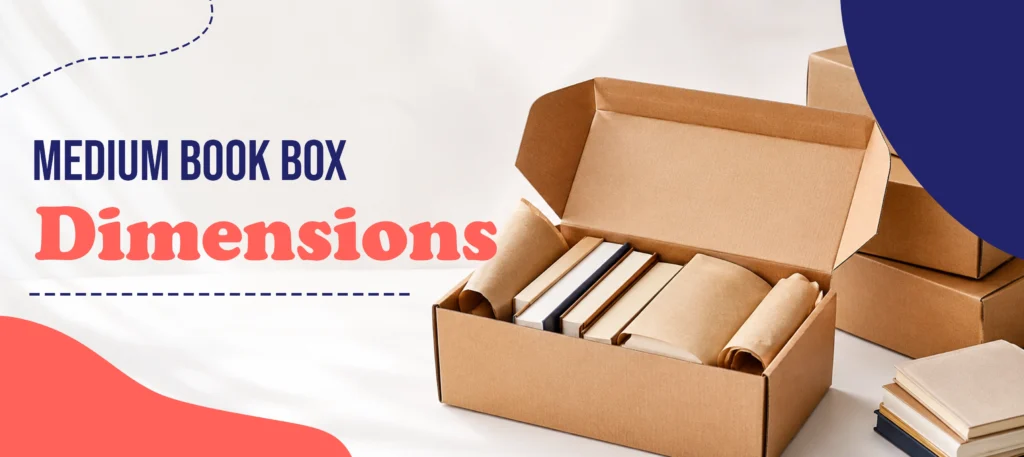
Books require packaging that prevents bending, corner damage, moisture exposure, and excessive movement during shipping.
Common medium book box dimensions include:
- 12″ × 12″ × 12″
- 16″ × 12″ × 12″
- 18″ × 12″ × 12″
The ideal size depends on the number of books, their thickness, and whether additional padding is required.
Books can become very heavy when packed together, so the strength of the cardboard should be considered alongside the box dimensions.
Medium Clothing Box Dimensions
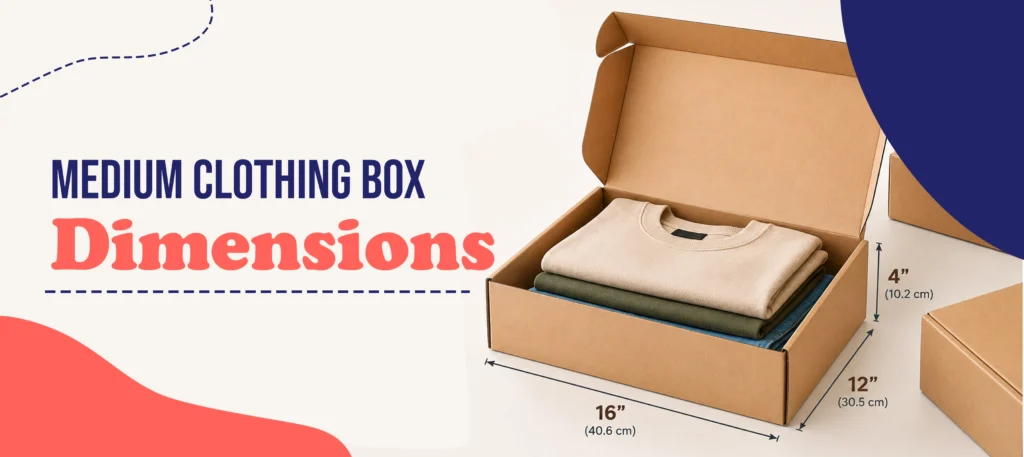
Clothing boxes are commonly used for T-shirts, trousers, knitwear, shirts, lightweight jackets, scarves, and coordinated clothing sets.
Popular clothing box dimensions include:
- 10″ × 7″ × 1.25″
- 12″ × 9″ × 2″
- 12″ × 10″ × 2″
- 14″ × 10″ × 4″
- 16″ × 12″ × 5″
Shallow boxes are often suitable for neatly folded garments, while deeper packaging may be required for hoodies, jackets, or multiple items.
Medium Footwear Box Dimensions
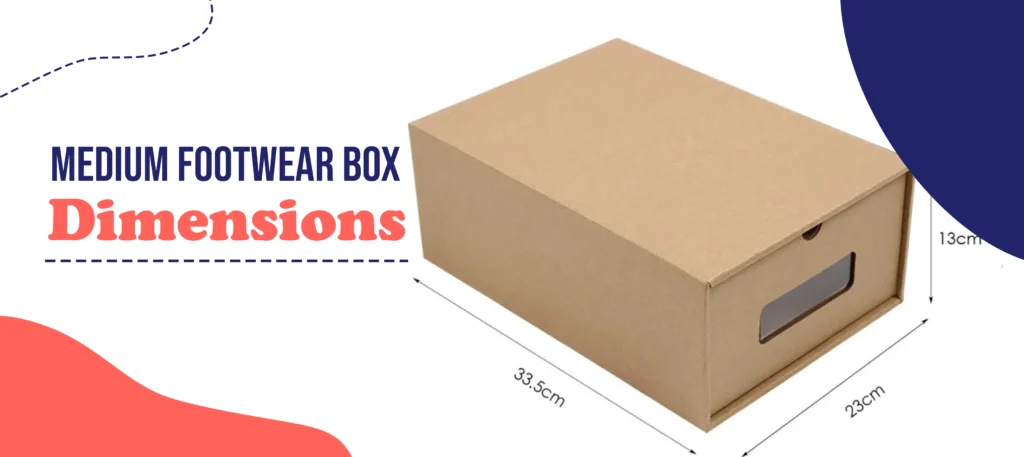
Footwear packaging must provide sufficient space without allowing shoes to move excessively. Tissue paper, cardboard dividers, foam inserts, or moulded supports may be used to improve presentation and protection.
Common footwear box sizes include:
- 8″ × 5″ × 3″
- 13.8″ × 7.9″ × 4.7″
- 14″ × 10″ × 5″
- 15″ × 11″ × 5″
The correct dimensions depend on the shoe style and size. Trainers, boots, formal shoes, children’s footwear, and high heels may all require different packaging structures.
Medium Electronics Box Dimensions
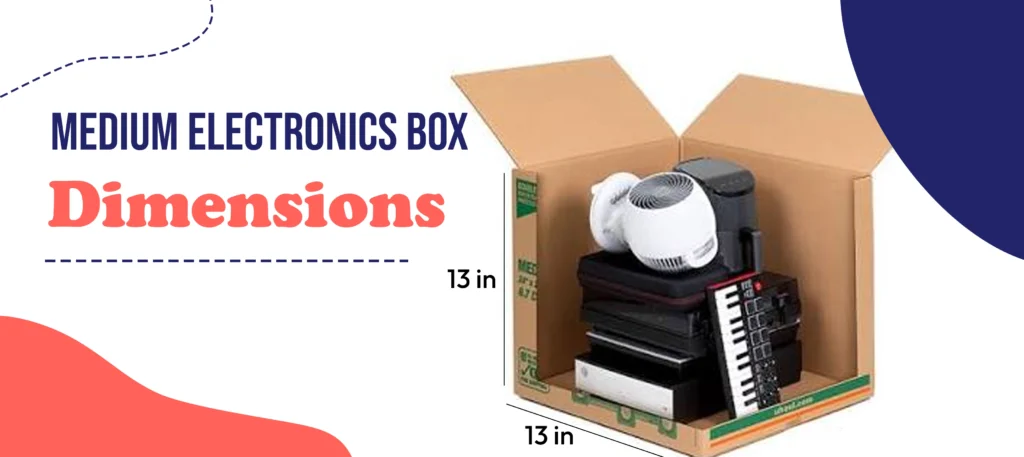
Electronics packaging should protect products from impact, vibration, dust, and movement. The box must also provide enough room for cables, chargers, manuals, and protective inserts.
Typical dimensions include:
- 8″ × 6″ × 4″
- 12″ × 9″ × 6″
- 14″ × 12″ × 6″
- 16″ × 14″ × 8″
Small electronic accessories may require compact cartons, whereas devices such as tablets, gaming accessories, routers, or bundled kits may need larger boxes.
Delicate or high-value products may require reinforced corrugated packaging or rigid boxes for extra protection, particularly when presentation and structural strength are equally important.
Medium Home Decor Box Dimensions
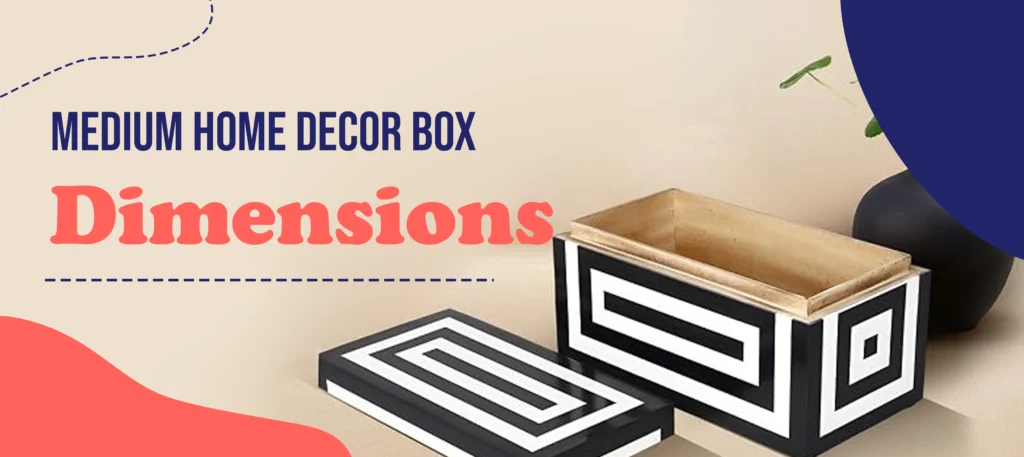
Home décor packaging is commonly used for candles, picture frames, vases, ornaments, small kitchen accessories, and decorative products.
Suitable dimensions may include:
- 9″ × 6″ × 2″
- 10″ × 8″ × 4″
- 12″ × 10″ × 5″
- 14″ × 12″ × 8″
- 16″ × 14″ × 10″
Fragile decorative items should be measured carefully, including the space needed for cushioning, dividers, or fitted inserts.
Medium Cosmetic Box Dimensions
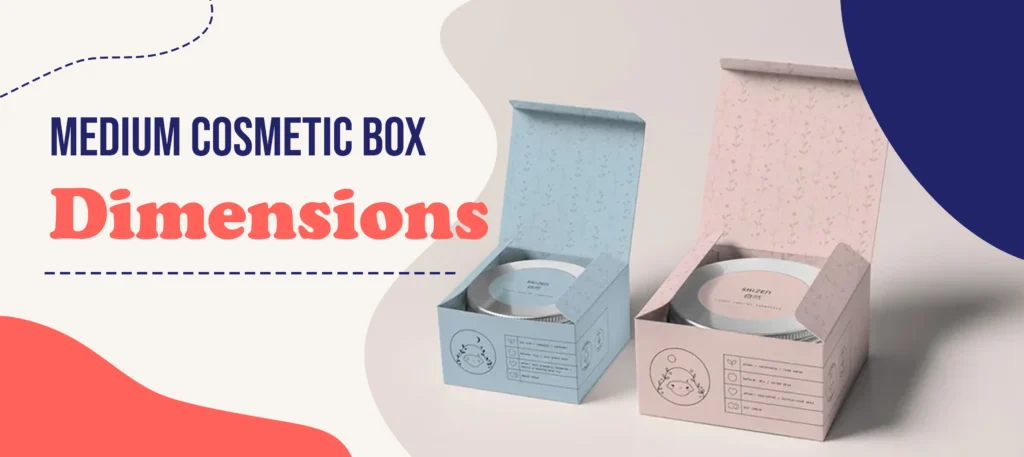
Cosmetic products are available in many shapes and sizes, from individual skincare bottles to complete gift sets and promotional kits.
Common cosmetic packaging dimensions include:
- 3″ × 2″ × 5″
- 4″ × 4″ × 8″
- 6″ × 2″ × 9″
- 12″ × 10″ × 4″
- 16″ × 14″ × 6″
While some of these sizes may be considered small individually, they can be used as internal product boxes inside a medium shipping carton.
Cosmetic gift sets and PR packages may also require custom inserts to keep each product organised and securely positioned.
Medium Box Dimensions for Different Products
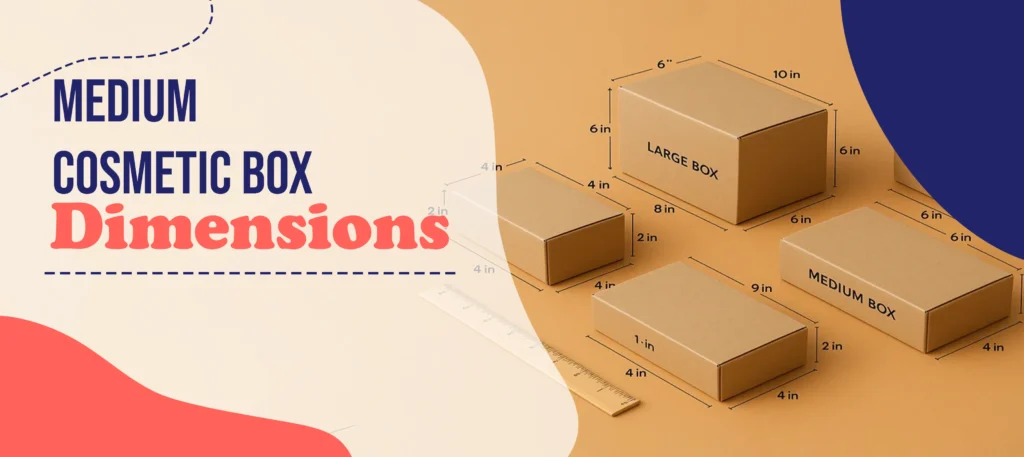
The following table provides approximate medium box sizes in inches, centimetres, and millimetres.
| Product Type | Dimensions in Inches | Dimensions in Centimetres | Dimensions in Millimetres |
| T-Shirts | 14″ × 10″ × 4″ | 35.6 × 25.4 × 10.2 cm | 356 × 254 × 102 mm |
| Hoodies | 16″ × 12″ × 5″ | 40.6 × 30.5 × 12.7 cm | 406 × 305 × 127 mm |
| Jackets | 18″ × 14″ × 6″ | 45.7 × 35.6 × 15.2 cm | 457 × 356 × 152 mm |
| Shoe Boxes | 14″ × 10″ × 5″ | 35.6 × 25.4 × 12.7 cm | 356 × 254 × 127 mm |
| Cosmetic Gift Sets | 12″ × 10″ × 4″ | 30.5 × 25.4 × 10.2 cm | 305 × 254 × 102 mm |
| Makeup PR Kits | 16″ × 14″ × 6″ | 40.6 × 35.6 × 15.2 cm | 406 × 356 × 152 mm |
| Candles | 12″ × 12″ × 6″ | 30.5 × 30.5 × 15.2 cm | 305 × 305 × 152 mm |
| Subscription Boxes | 16″ × 12″ × 6″ | 40.6 × 30.5 × 15.2 cm | 406 × 305 × 152 mm |
| Electronics | 16″ × 14″ × 8″ | 40.6 × 35.6 × 20.3 cm | 406 × 356 × 203 mm |
| Tablets | 12″ × 10″ × 4″ | 30.5 × 25.4 × 10.2 cm | 305 × 254 × 102 mm |
| Gaming Accessories | 14″ × 12″ × 6″ | 35.6 × 30.5 × 15.2 cm | 356 × 305 × 152 mm |
These measurements should be treated as general recommendations rather than fixed standards. Always test the dimensions using your actual product before placing a bulk order.
How to Measure a Medium Box
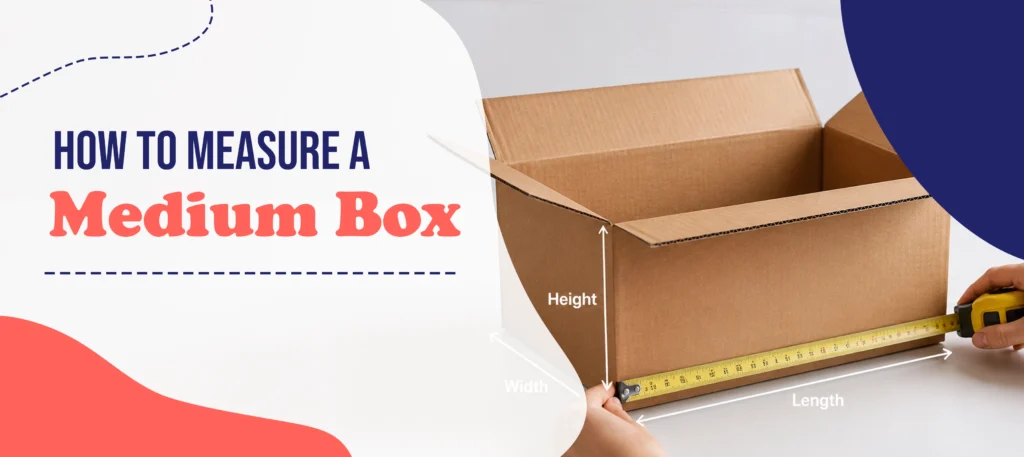
Box dimensions are usually measured internally because the internal space determines whether the product will fit correctly.
Follow these steps:
1. Measure the Length
Measure the longest side of the box opening from one internal edge to the other.
2. Measure the Width
Measure the shorter side of the opening.
3. Measure the Height
Measure from the bottom of the box to the top edge.
The final measurement should be written as:
Length × Width × Height
For example:
16″ × 12″ × 6″
When measuring your product, remember to include any additional space required for tissue paper, bubble wrap, foam, dividers, moulded inserts, or other protective materials.
Step-by-Step Guide to Choosing the Right Dimensions
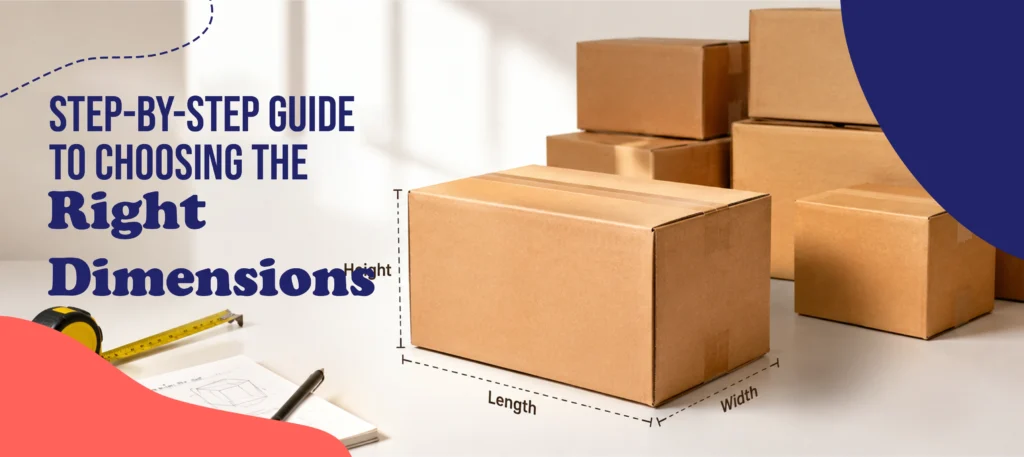
Selecting the correct medium box requires more than measuring the product alone. The following process can help you make a more informed choice.
Identify the Product Type
Start by considering the characteristics of the product.
Ask the following questions:
- Is it fragile?
- Is it heavy or lightweight?
- Does it contain multiple components?
- Can it bend, leak, scratch, or break?
- Does it require a premium presentation?
These details will influence the amount of space and protection needed.
Measure the Product Accurately
Measure the product’s length, width, and height at its widest points.
For irregularly shaped products, measure the maximum dimensions rather than only measuring the narrowest sections.
Include Space for Protective Materials
Add enough room for inserts, cushioning, wrapping, or dividers. Avoid adding excessive space, as this may allow the product to move during transportation.
Review the Internal and External Dimensions
Internal dimensions show the available product space. External dimensions include the thickness of the packaging material and are often used by couriers to calculate shipping charges.
Both measurements are important.
Consider the Shipping Method
The correct dimensions may depend on whether the order is being sent through a postal service, courier network, palletised shipment, or local delivery service.
Check the carrier’s size and weight limits before confirming the packaging design.
Create and Test a Prototype
Before placing a large order, request a prototype or sample. Pack the actual product and test the box for fit, strength, appearance, and ease of use.
Transport testing can also help identify weaknesses before the final production run.
Packaging Design Tips for Better Box Sizing
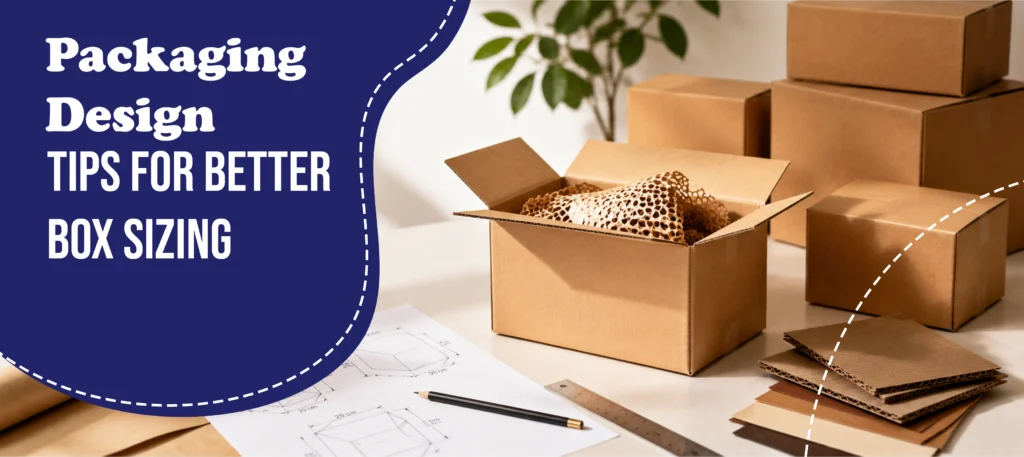
Well-designed packaging balances protection, cost, appearance, and convenience.
Use Product Inserts
Custom inserts can hold products in a fixed position and reduce movement inside the packaging.
Depending on the product, inserts may be made from cardboard, corrugated board, moulded pulp, foam, or other materials.
Consider the Unboxing Experience
The box should be easy to open while still protecting the product. Consider how the product will be arranged and what the customer will see first.
Branded tissue paper, printed messages, inserts, and organised product placement can improve the presentation without requiring an unnecessarily large box.
Test Packaging Before Bulk Production
A digital design may look correct but still perform differently once manufactured.
Testing a physical sample allows you to evaluate:
- Product fit
- Box strength
- Opening and closing
- Insert placement
- Print positioning
- Shipping performance
- Overall presentation
Balance Protection and Cost
More packaging does not always mean better protection. Excess material can increase production costs, shipping charges, and waste.
The objective should be to use the smallest practical box that protects the product properly.
Consider Sustainable Materials
Sustainability is becoming increasingly important to both businesses and customers. When choosing recyclable box materials, consider the complete packaging system, including the outer box, inserts, coatings, tapes, and labels.
Using appropriately sized packaging can also reduce material consumption and improve transport efficiency.
Common Mistakes When Choosing Medium Box Dimensions
Incorrect packaging decisions can increase costs, damage products, and create a poor customer experience.
Using Oversized Packaging
An oversized box requires more cardboard and void-fill material. It can also increase dimensional-weight charges and make the product appear smaller or less valuable.
Ignoring Product Fragility
A box may appear to fit the product while still failing to provide adequate protection.
Fragile items require enough space for cushioning, corner protection, inserts, or dividers.
Choosing Weak Packaging Materials
Correct dimensions alone will not protect a heavy or delicate product. The board grade, flute type, paper thickness, and box construction must be suitable for the contents.
Forgetting About Protective Inserts
When calculating the dimensions, remember to account for any internal packaging components.
Ignoring the thickness of inserts or padding may result in a box that is too small.
Confusing Internal and External Dimensions
Ordering a box based on external dimensions can create fitting problems because the internal space will be slightly smaller.
Always confirm whether the measurements provided by the supplier are internal or external.
Failing to Test the Packaging
Ordering large quantities without testing a sample may lead to costly errors.
A prototype can reveal problems with dimensions, structure, print placement, closure, and product protection.
Standard Medium Boxes vs Custom Medium Boxes
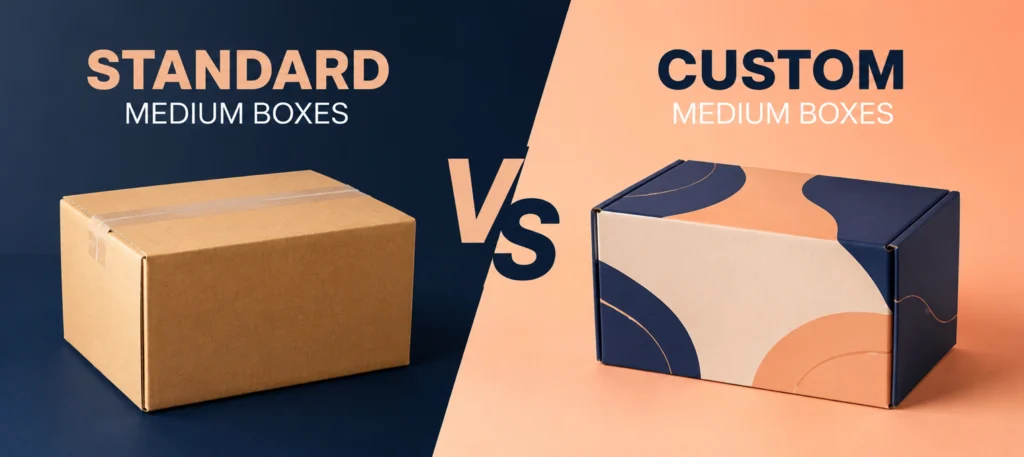
Standard-sized boxes are readily available and may be suitable for businesses that ship a wide variety of products. They can be economical for smaller order quantities and general-purpose packaging.
Custom medium boxes are manufactured according to the precise requirements of a product or brand. They can provide several advantages, including:
- A more accurate product fit
- Reduced material waste
- Improved product protection
- Better control over presentation
- Custom printing and branding
- Purpose-built inserts
- A more memorable unboxing experience
The best option depends on the product, budget, order volume, and branding requirements.
Looking for a Custom Packaging Supplier?
All Custom Packaging UK provides custom packaging solutions designed around your product dimensions, branding requirements, and intended application.
Our packaging can be customised in different sizes, structures, materials, colours, and finishes. Whether you require packaging for clothing, cosmetics, electronics, footwear, gifts, subscription products, or retail items, we can help you create boxes that combine protection with professional presentation.
Available customisation options may include:
- Custom box dimensions
- Corrugated and cardboard materials
- Bespoke structural layouts
- CMYK and Pantone printing
- Logo and artwork printing
- Matte or gloss lamination
- Foil stamping
- Embossing and debossing
- Spot UV
- Die-cut windows
- Custom inserts
- Premium finishing options
Every product has different packaging requirements. Our team can help you select a suitable box style, material, and size based on your product and shipping needs.
You can get a free quote for custom box sizes by sharing your required dimensions, preferred material, artwork, quantity, and finishing specifications with All Custom Packaging UK.
Final Thoughts
Understanding medium box dimensions is an important part of efficient packaging and shipping. The correct box size can protect products, reduce unnecessary material usage, improve warehouse efficiency, and help manage delivery costs.
However, a box should not be selected on dimensions alone. Product weight, fragility, material strength, inserts, courier requirements, and customer presentation should also be considered.
Whether you run a small online shop or manage large-scale e-commerce fulfilment, measuring carefully and testing the packaging before production can help you avoid unnecessary costs and product damage.
For packaging designed specifically around your products, All Custom Packaging UK can provide custom dimensions, materials, printing, and finishes to support your business requirements.
Frequently Asked Questions
What are standard medium box dimensions?
Common medium box dimensions include 12″ × 12″ × 12″, 14″ × 12″ × 10″, 16″ × 14″ × 12″, and 18″ × 16″ × 12″. However, the ideal dimensions depend on the product, protective materials, and shipping requirements.
What is the best medium box size for shipping?
A commonly used medium shipping box measures approximately 16″ × 14″ × 12″. It offers a practical balance between capacity and shipping efficiency, but it may not be suitable for every product.
How much weight can a medium corrugated box hold?
The weight capacity depends on the corrugated board grade, flute type, box construction, product distribution, and handling conditions. Many medium corrugated boxes may carry approximately 30 to 70 lbs, but the packaging specification should always be confirmed with the manufacturer.
Are custom medium box dimensions better than standard sizes?
Custom dimensions can be a better option when a product does not fit standard packaging efficiently. They can reduce empty space, improve protection, minimise material waste, and create more opportunities for branded presentation.
Which material is best for medium packaging boxes?
Corrugated cardboard is one of the most widely used materials for medium shipping boxes because it is lightweight, durable, cost-effective, and widely recyclable. Solid cardboard and rigid board may be more suitable for retail or luxury presentation boxes.
How do I calculate the correct box size?
Measure the product’s length, width, and height at the widest points. Then add the space required for wrapping, inserts, dividers, or cushioning. A physical sample should be tested before confirming the final dimensions.
Are box dimensions measured internally or externally?
Packaging manufacturers often provide internal dimensions because they represent the usable space inside the box. Couriers may use external dimensions when calculating shipping costs, so it is important to confirm which measurement system is being used.
Can medium boxes be printed with custom branding?
Yes. Medium boxes can be customised with logos, brand colours, product information, patterns, instructions, promotional messages, and finishing effects. The printing options available depend on the box material, design, quantity, and budget.