
How to Choose the Right Packaging for Your Product
Your product may be excellent, but it still needs the right packaging to communicate its quality. Well-designed packaging protects your product, attracts customers and gives your brand a professional identity.
Choosing suitable packaging can feel complicated because you need to consider materials, dimensions, protection, printing, cost and customer expectations. This guide explains how to choose the right packaging for your product without compromising functionality, presentation or budget.
What Is Product Packaging?
Product packaging is the material and structure used to contain, protect, store, present and transport a product. It can include boxes, containers, inserts, labels, wraps and other protective elements.
However, packaging does much more than simply hold an item. It can communicate product information, display your logo and help customers recognize your brand. From protective shipping cartons to premium Gift boxes, every packaging style serves a particular purpose.
The right packaging should balance three important elements:
- Product protection
- Customer convenience
- Brand presentation
When these elements work together, packaging becomes a valuable marketing tool rather than just another business expense.
Why Does Choosing the Right Packaging Matter?
Customers do not only purchase products they also respond to the experience surrounding those products. Packaging is often the first physical interaction a customer has with your brand, so it can strongly influence their first impression.
Choosing appropriate packaging can help you:
- Protect products from moisture, dust, pressure and impact
- Improve product presentation and perceived value
- Create a memorable unboxing experience
- Maintain a consistent brand identity
- Make products easier to store, carry and display
- Reduce unnecessary material and shipping costs
- Minimize damage, returns and customer complaints
- Build customer confidence in your business
Poorly selected packaging can increase costs and damage your reputation. The right packaging, on the other hand, supports the product throughout its journey from production to the customer.
Factors to Consider When Choosing Product Packaging
There is no single packaging solution that works for every product. Your selection should be based on the product, business, sales channel and customer expectations.
1. Understand the Nature of Your Product
Start by examining the physical characteristics of the product you need to package.
Product Size
Measure the product accurately, including its length, width and height. Packaging that is too large can require extra void fill and increase shipping costs. Packaging that is too tight may place pressure on the product or make it difficult to remove.
Product Shape
Products with unusual shapes may require custom-sized boxes, die-cut inserts or internal supports. A properly fitted structure keeps the item secure and prevents movement during handling.
Fragility
Fragile products such as glassware, electronics, cosmetics and ceramics need additional protection. Depending on the item, you may require foam, corrugated inserts, molded pulp, dividers or cushioning materials.
Weight
Heavy products need packaging made from strong materials with sufficient thickness. Lightweight paperboard may suit small retail products, while heavy items usually require durable corrugated cardboard.
Product Sensitivity
Consider whether the product can be affected by heat, moisture, light, air or contamination. Food, cosmetics and certain healthcare products may need barriers, secure closures or specially selected packaging materials.
2. Understand Your Brand and Customers
Packaging should represent your business as accurately as it protects your product. Before choosing a design, ask:
- What does the product look like and what does it do?
- Who is most likely to purchase it?
- Is the product positioned as affordable, premium or luxury?
- What values does the brand represent?
- Where will customers see or receive the packaging?
A premium product may benefit from Rigid boxes with magnetic closures, custom inserts and refined finishes. A natural or environmentally responsible brand may prefer kraft packaging with minimal printing and recyclable materials.
Your packaging should feel appropriate for both the product and the people buying it.
3. Determine the Required Protection Level
Protection should always be one of your main priorities. A beautiful box has little value if the product arrives damaged.
Consider the risks your product may face during:
- Storage
- Packing
- Stacking
- Transportation
- Retail display
- Customer handling
- Courier delivery
Protective packaging options include corrugated layers, foam inserts, cardboard dividers, molded pulp, tissue paper and other cushioning materials. The best solution depends on the product’s weight, fragility and shipping conditions.
For example, professional Cosmetic packaging may require fitted inserts to hold bottles, jars or tubes securely while maintaining an attractive presentation.
4. Think About Transportation and Shipping
Packaging that looks impressive on a retail shelf may not be suitable for courier delivery. Consider how the product will travel before it reaches the customer.
For eCommerce orders, Custom mailer boxes can provide a practical combination of protection, branding and convenience. Their self-locking structure makes them suitable for shipping clothing, accessories, subscription products and many other lightweight items.
When selecting shipping packaging, consider:
- Distance and delivery method
- Product movement inside the box
- Exposure to pressure or impact
- Box stacking strength
- Package dimensions and weight
- Courier size restrictions
- Sealing and tamper resistance
Custom sizing can reduce empty space, lower material usage and help control dimensional shipping charges.
5. Establish a Realistic Packaging Budget
Your budget determines which materials, structures, printing methods and finishes are practical. Packaging costs may include:
- Structural design
- Materials and thickness
- Printing plates or setup
- Artwork preparation
- Inserts and dividers
- Coatings and finishes
- Sampling
- Assembly
- Storage and delivery
Do not focus only on the lowest price per box. A cheaper option may result in product damage, poor presentation or higher shipping costs.
Consider the overall cost of packaging throughout its lifecycle. Ordering in larger quantities can lower the unit price, but only if you have enough storage space and can use the packaging before your product or branding changes.
6. Select the Right Packaging Material
The material affects the packaging’s strength, appearance, cost and environmental impact.
Paperboard
Paperboard is lightweight, printable and suitable for many retail products. It is commonly used for cosmetics, food items, pharmaceuticals and small consumer goods.
Corrugated Cardboard
Corrugated cardboard contains fluted layers that provide cushioning and strength. It is widely used for shipping, eCommerce and heavy or fragile products.
Kraft Paper
Kraft material has a natural appearance and is popular with brands seeking simple, understated packaging. It can be used for retail boxes, mailers and food packaging where appropriate.
Rigid Board
Rigid board is thick and highly durable. It is commonly selected for luxury products, high-end gifts, electronics and premium retail packaging.
Food-Appropriate Materials
Food packaging must be designed around hygiene, freshness, grease resistance and product safety. Professionally manufactured Custom food boxes can be tailored for bakery products, takeout meals, confectionery and other food items.
Always confirm that your selected materials meet any applicable product and industry requirements.
7. Choose a Functional Packaging Style
The structure should make the product easy to pack, store, display, transport and open. Popular packaging styles include:
- Tuck-end boxes
- Auto-lock bottom boxes
- Sleeve packaging
- Two-piece boxes
- Magnetic closure boxes
- Window boxes
- Display boxes
- Mailer boxes
- Drawer boxes
- Folding cartons
The right style depends on how the packaging will be used. For example, Apparel boxes may feature a two-piece, mailer or folding structure depending on whether the products are displayed in stores, presented as gifts or shipped directly to customers.
A custom layout can also help your product stand out while improving packing efficiency.
8. Use Professional Printing to Strengthen Your Branding
Printing allows packaging to communicate your brand identity and product information. You can include:
- Brand logo
- Colors and artwork
- Product name
- Ingredients or instructions
- Contact information
- Social media details
- Barcodes and QR codes
- Recycling guidance
- Required warnings or labels
Common printing methods include:
Offset Printing
Offset printing provides detailed results and consistent colors, making it suitable for larger production quantities and premium retail packaging.
Digital Printing
Digital printing is practical for shorter runs, prototypes and designs that need a faster setup without traditional printing plates.
Flexographic Printing
Flexography is often used for corrugated packaging, labels and high-volume production.
Screen Printing
Screen printing can apply bold colors and simple designs to various packaging surfaces.
Your packaging manufacturer can recommend a printing method based on the material, artwork, quantity, budget and required finish.
9. Add Finishes for a Premium Appearance
Finishing options can improve the look and feel of packaging while highlighting important design elements.
Popular choices include:
- Matte lamination
- Gloss lamination
- Soft-touch coating
- Spot UV
- Foil stamping
- Embossing
- Debossing
- Aqueous coating
- Window patching
Finishes should support the brand rather than overwhelm the design. For example, a matte surface with a small foil-stamped logo can create a more refined appearance than using several competing effects.
10. Consider Sustainability
Many customers pay attention to how products are packaged and what happens to the packaging after use.
To reduce environmental impact, consider:
- Recyclable paper-based materials
- Packaging made with recycled content
- Right-sized boxes
- Minimal plastic components
- Reusable packaging structures
- Water-based or low-impact inks
- Easily separated packaging components
- Clear recycling information
Sustainable packaging should still provide adequate product protection. Damaged products create waste too, so material reduction must be balanced with performance.
How to Choose Packaging at a Glance
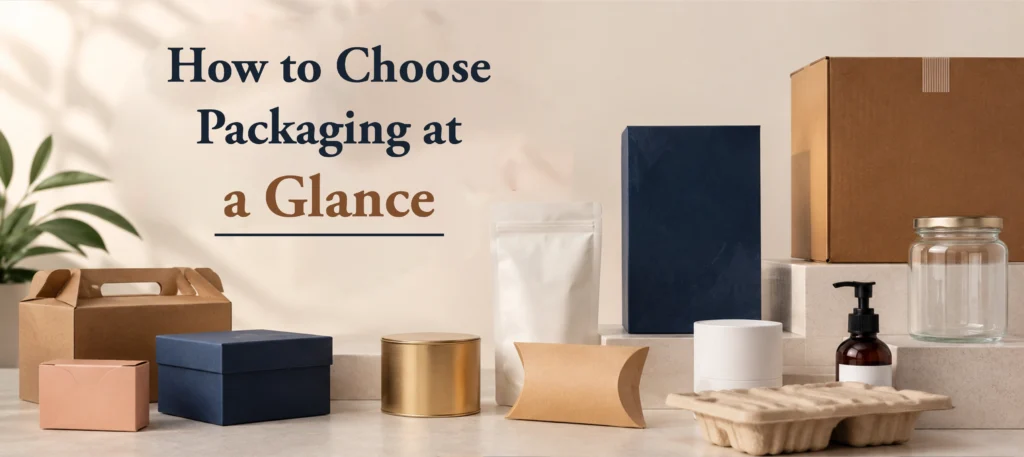
| Decision Factor | What to Consider | Suitable Packaging Options | Why It Matters |
| Product type | Fragile, liquid, solid or perishable | Corrugated boxes, rigid boxes or sealed containers | Maintains product safety and integrity |
| Size and weight | Dimensions, bulkiness and shipping weight | Custom-sized boxes, mailers and inserts | Reduces movement, waste and shipping costs |
| Target audience | Budget, premium or luxury customers | Kraft boxes, printed cartons or rigid packaging | Supports the intended brand perception |
| Branding needs | Logo visibility and artwork complexity | Custom-printed boxes and branded labels | Builds recognition and customer trust |
| Budget | Unit cost and order quantity | Kraft packaging, minimal printing or bulk orders | Helps control overall expenses |
| Sustainability | Recyclability and material usage | Kraft, recyclable or reduced-material packaging | Supports environmental goals |
| Sales channel | Retail, wholesale or eCommerce | Display boxes, cartons or mailers | Meets channel-specific requirements |
| Protection | Fragility and environmental exposure | Inserts, padding and corrugated layers | Reduces damage and returns |
| Unboxing experience | Presentation and customer interaction | Rigid boxes, inserts and tissue wraps | Improves satisfaction and perceived value |
| Compliance | Labeling, safety and industry rules | Printed labels and suitable materials | Helps meet applicable requirements |
| Scalability | Storage and future order volumes | Custom packaging in wholesale quantities | Supports business growth |
| Turnaround time | Launch date and production schedule | Digital printing or stock packaging | Helps prevent avoidable delays |
Packaging Design Tips for Beginners
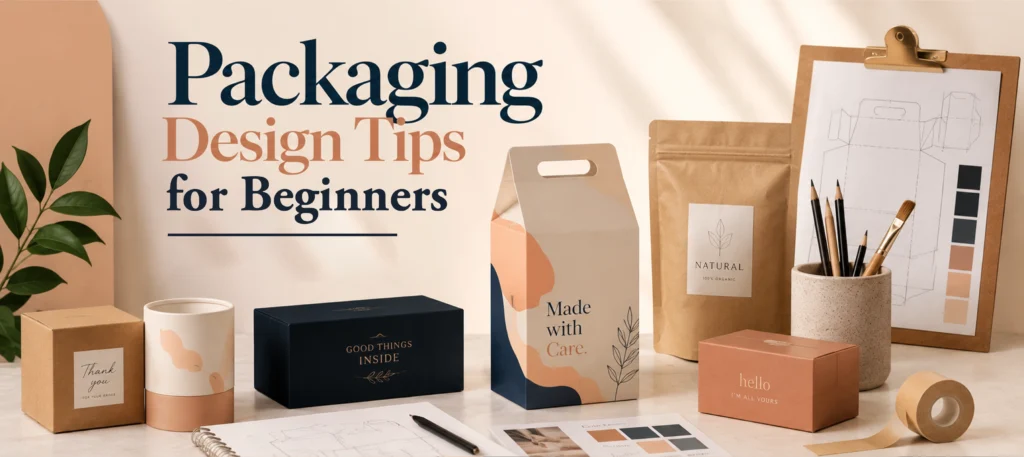
If you are developing custom packaging for the first time, follow these steps:
Provide Accurate Product Information
Send your packaging supplier a physical sample when possible. Alternatively, provide clear photographs, exact dimensions, weight and details about the product’s fragility.
Request a Detailed Quotation
Ask for a quotation based on the required quantity, materials, printing and finishing options. Review what is included before approving the project.
Prepare the Artwork
You can provide your own print-ready design or work with the packaging company’s design team. Make sure the artwork reflects your brand and includes all required product information.
Order a Prototype
A plain or printed sample allows you to test the dimensions, structure, product fit and opening experience before full production.
Test the Packaging
Place the actual product inside the sample and test it under realistic conditions. For shipping boxes, conduct handling, stacking and delivery tests where possible.
Approve Final Production
Once the structure, materials and artwork have been checked, approve the packaging for manufacturing. Keep a final approved sample for comparison when the production order arrives.
Common Packaging Mistakes to Avoid
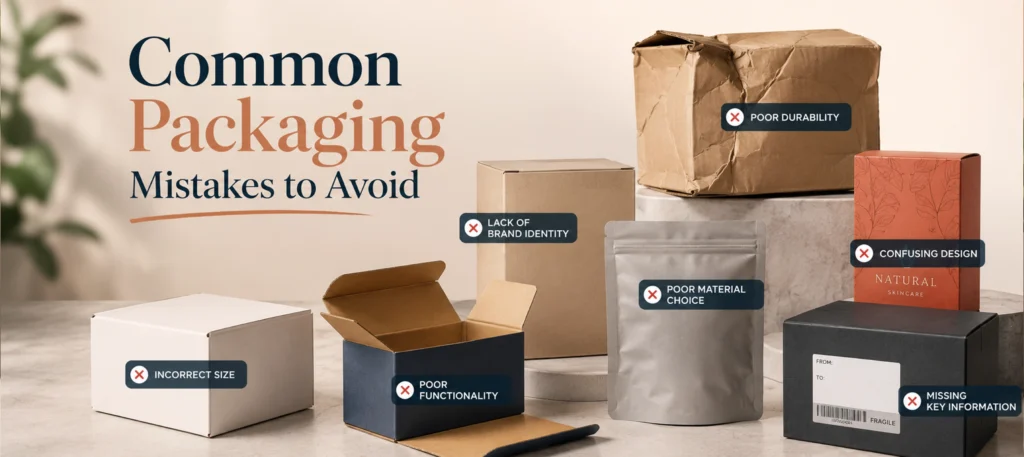
Choosing Appearance Over Protection
Attractive packaging must still protect the product. Always test its strength and product fit before placing a full order.
Ignoring Shipping Costs
Large boxes can increase dimensional shipping charges even when the product is lightweight. Use appropriate dimensions and minimize unnecessary empty space.
Overpackaging the Product
Too much packaging increases costs, creates waste and may frustrate customers. Use only the material needed for effective protection and presentation.
Using Inconsistent Branding
Colors, typography, logo placement and messaging should remain consistent with your wider brand identity.
Forgetting the Customer Experience
Packaging should be easy to open, handle and dispose of. Complicated closures and excessive wrapping can negatively affect the experience.
Skipping Samples and Testing
Never assume that a packaging design will perform correctly based only on a digital mockup. A physical sample helps identify fitting, printing and structural problems before production.
Ignoring Labeling Requirements
Some products require specific ingredients, warnings, instructions, dates or safety information. Confirm all applicable requirements before printing.
Where to Buy Custom Product Packaging
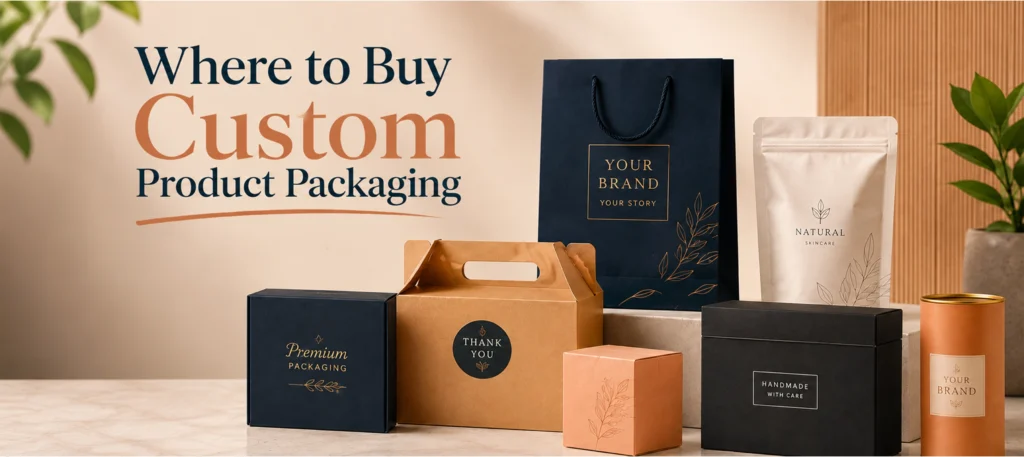
All Custom Packaging UK creates custom product packaging tailored to different products, industries and brand requirements. Businesses can choose from durable materials, custom sizes, functional box structures, branded printing and premium finishing options.
Whether you need packaging for retail, gifting, eCommerce, food, cosmetics or product delivery, the boxes can be designed around the dimensions and protection needs of your products.
Custom wholesale options are also available for startups, growing companies and established businesses. By selecting a suitable quantity, material and printing method, you can develop professional packaging while keeping your budget under control.
Contact All Custom Packaging UK to discuss your product, request a quotation and explore packaging options designed for your business.
Conclusion
Choosing the right packaging for your product requires careful planning. You need to consider the product’s size, weight, fragility, sales channel, customer expectations and transportation requirements.
Effective packaging is more than a container. It acts as a product protection system, customer experience and brand communication tool. When the materials, structure and design work together, your packaging can reduce damage, control costs and improve the way customers perceive your products.
The best results come from using packaging that is properly sized, professionally designed, tested and scalable as your business grows.
Frequently Asked Questions
How do I choose the right packaging for my product?
Start by evaluating the product’s dimensions, weight, fragility, storage conditions and delivery method. Then choose materials, box dimensions and protective features that support both product safety and branding.
Is custom packaging better than stock packaging?
Custom packaging generally provides a closer product fit, more branding opportunities and a better customer experience. It may also reduce empty space and shipping costs. Stock packaging can still be suitable for small quantities, limited budgets or urgent orders.
What is the most cost-effective packaging material?
Paperboard and corrugated cardboard are among the most affordable and versatile materials for many products. The most cost-effective choice will depend on the required strength, order quantity, printing and product dimensions.
How does packaging affect buying decisions?
Packaging can influence perceived quality, trust and product value. Clear information, attractive branding and a functional design can help customers feel more confident about making a purchase.
Why should businesses consider environmentally responsible packaging?
Using recyclable, right-sized or reduced-material packaging can support sustainability goals, appeal to environmentally aware customers and reduce unnecessary packaging waste.
Should I test my packaging before placing a bulk order?
Yes. Testing a sample helps confirm the product fit, material strength, print quality and customer experience. Shipping packaging should also be tested under realistic handling and delivery conditions.