
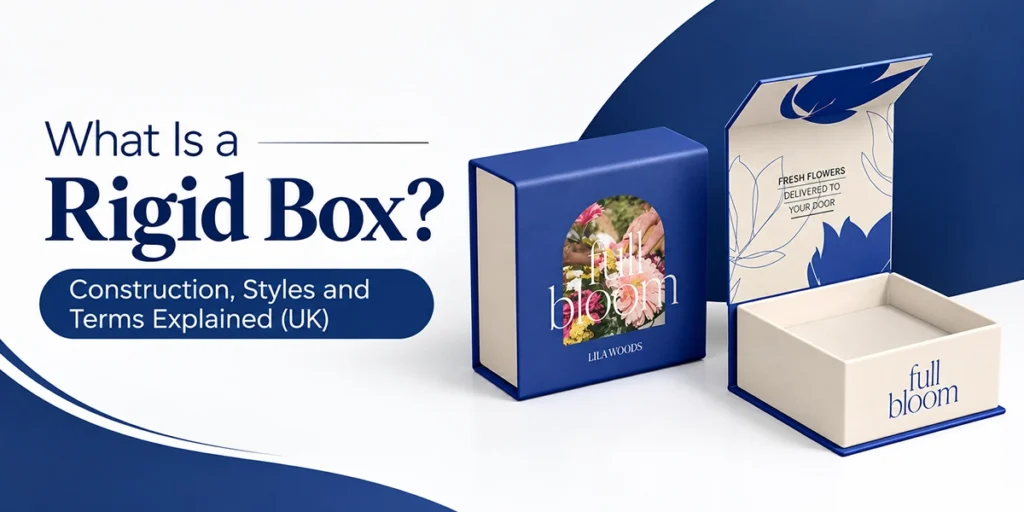
What is a Rigid Box? Construction, Styles and Terms Explained (UK)
Quick answer: a rigid box, also called a setup box, is built from a thick, non-folding board core, usually wrapped in printed paper or fabric, and supplied to you fully assembled rather than flat-packed. It holds its shape under its own weight, which is what gives it the solid, premium feel that a thinner folding carton cannot match. The terms worth knowing before you order are two-piece, shoulder-neck and full telescope, covered below.
Most rigid box guides list a few named styles and move straight to price. This one starts where a UK supplier conversation actually starts: what the box is made of, how the pieces fit together, and what the trade terms on your quote mean.
What makes a box “rigid”
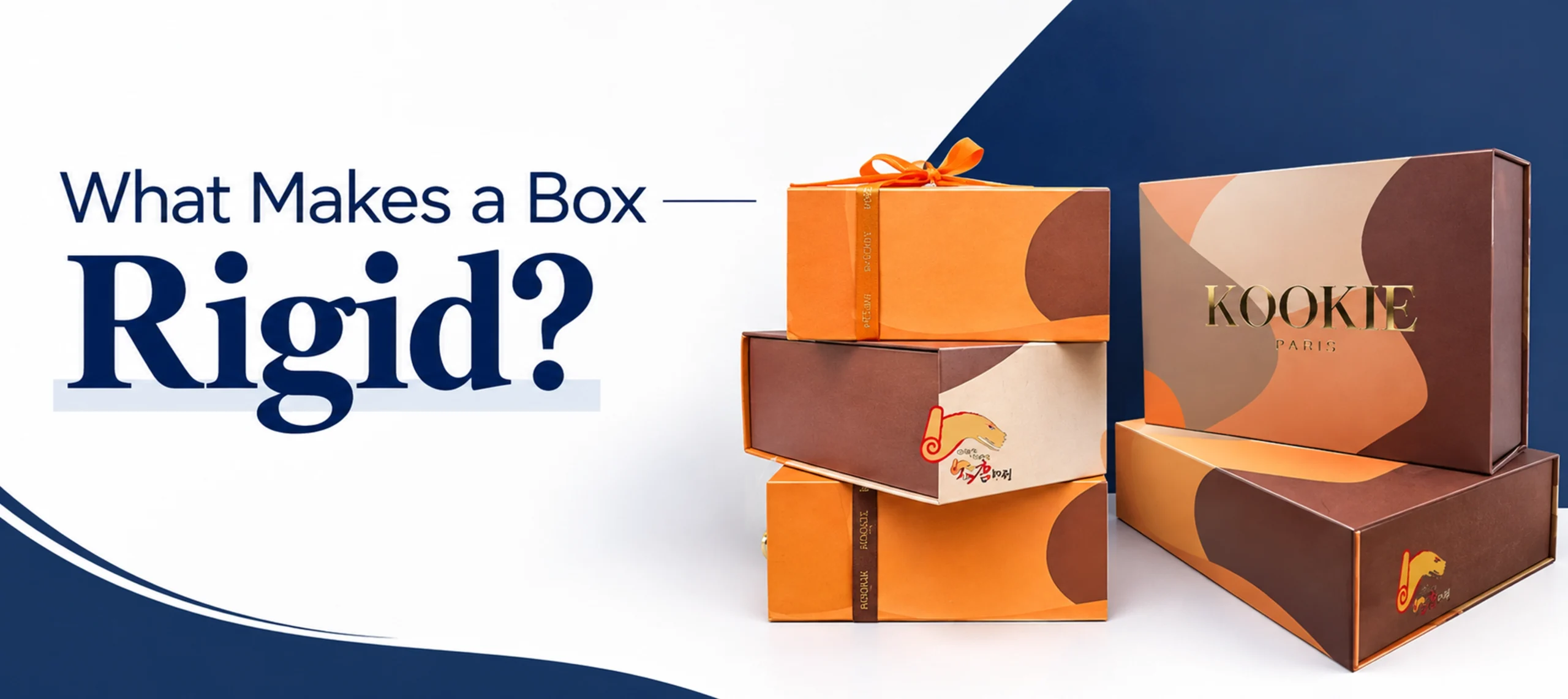
A rigid box is built around a solid board core, commonly called greyboard, a dense, smooth board made from compressed paper fibres. That core is what does the structural work: it holds its shape without folding, unlike the thinner folding carton board used for standard printed boxes. The core is then wrapped in printed paper, textured paper or fabric, which carries the branding and the finish.
Because the structure is set before the wrap goes on, a rigid box cannot be shipped flat and assembled by the brand the way a folding carton can. It arrives to you already built, which is one of the clearest practical differences between the two formats.
The construction terms on your quote
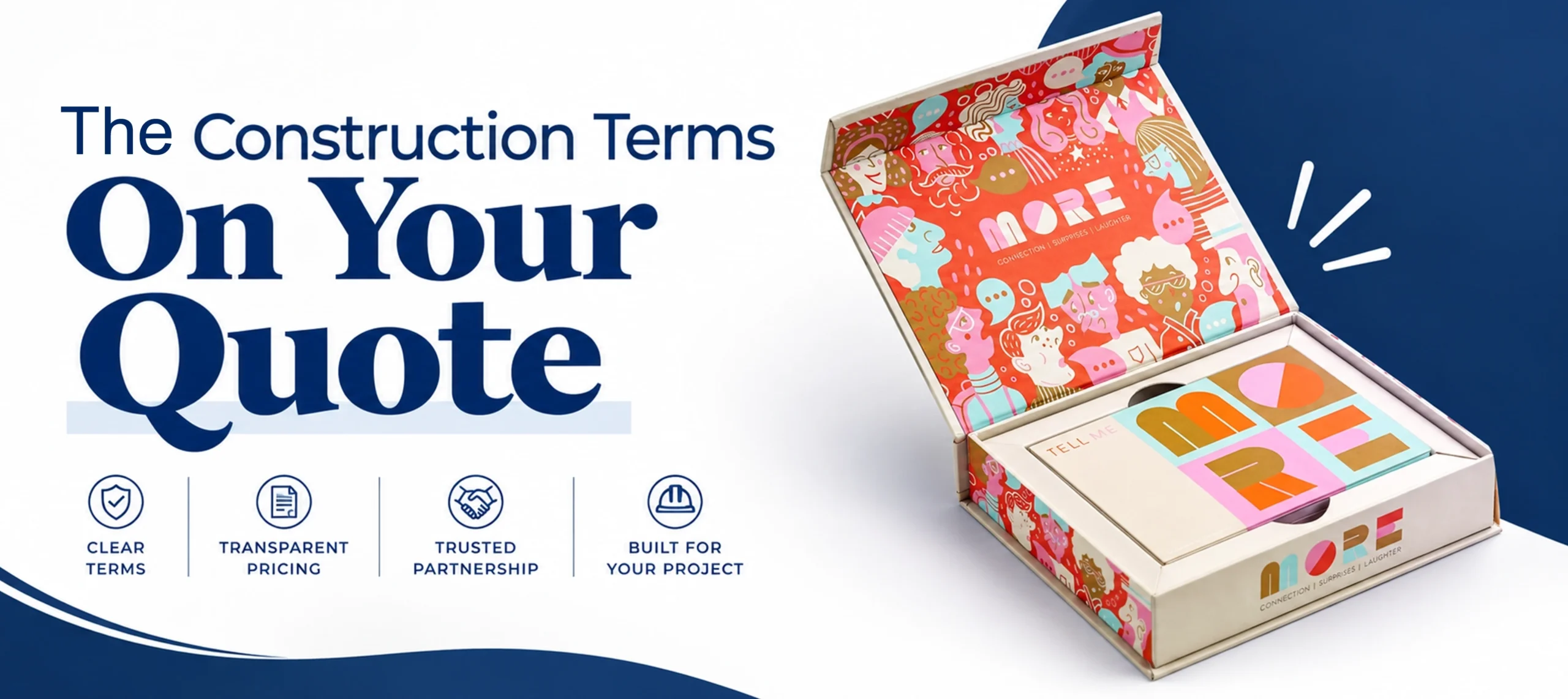
A UK rigid box supplier will use a small set of terms consistently, and knowing them saves a lot of back-and-forth on a spec call.
- Setup box. Another name for a rigid box, used interchangeably in the UK trade. If a supplier says “setup box”, they mean the same pre-assembled, board-core construction described above.
- Two-piece. Describes the structure, not the material or the finish: a separate lid and base that fit together. Most rigid boxes, whatever their style, are built on this lid-and-base principle.
- Shoulder-neck, or collar. An inner collar fitted between the base and the lid so the lid closes onto a controlled, snug edge rather than the raw top of the base. It is what gives premium spirits and fragrance boxes that deliberate, weighted close, and it is a genuine construction feature, not a cosmetic one.
- Full telescope vs partial lid. A full telescope box has a lid that covers the base completely, so the outside looks like one continuous surface when closed. A partial lid covers only part of the base height, leaving a visible band of the base showing. Both are two-piece constructions; the difference is how far the lid travels down the base.
Rigid box styles ACP can build
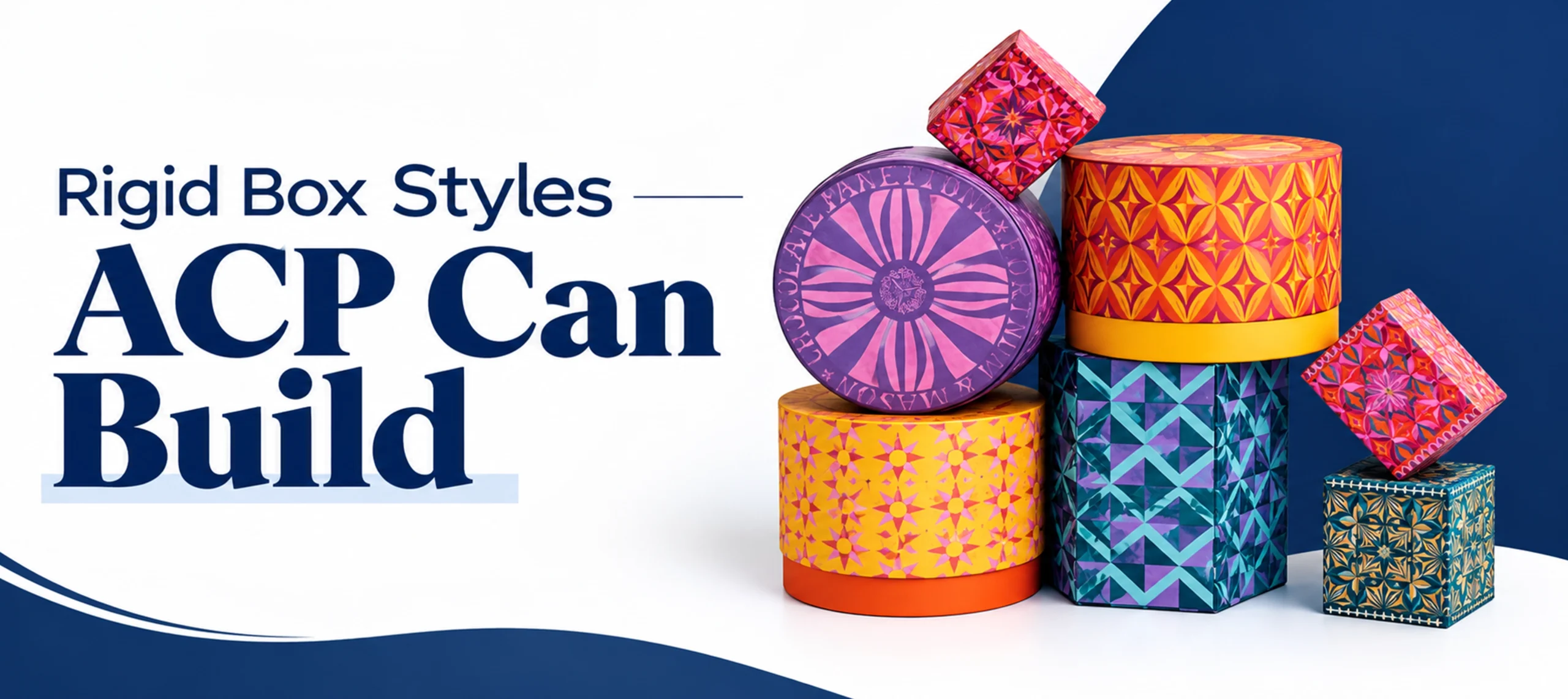
Once the construction vocabulary makes sense, the style choice is straightforward. These are genuine, confirmed structural options, not a generic list:
| Style | What it is | Typically used for |
|---|---|---|
| Two-piece, with lid | The standard setup box, separate lid and base | Gift sets, cosmetics, general premium retail |
| Magnetic closure | A two-piece box with a concealed magnet holding the lid shut | Electronics, premium retail, corporate gifting |
| Collapsible rigid | Folds flat for storage and shipping, then locks rigid when built | Brands needing rigid presentation without rigid-box shipping costs |
| Round and telescoping round | A round base and a separate round outer that slides down over it | Candles, confectionery, round-format gifting |
Foil stamping, embossing, debossing, spot UV and soft-touch coating are all available finishes on a rigid box, and each reads differently depending on how much board weight and contrast it has to work with: foil and emboss need enough board to hold detail without showing through on the inside, and spot UV needs a matt surround to actually register as a contrast.
Materials: what “rigid” is made from
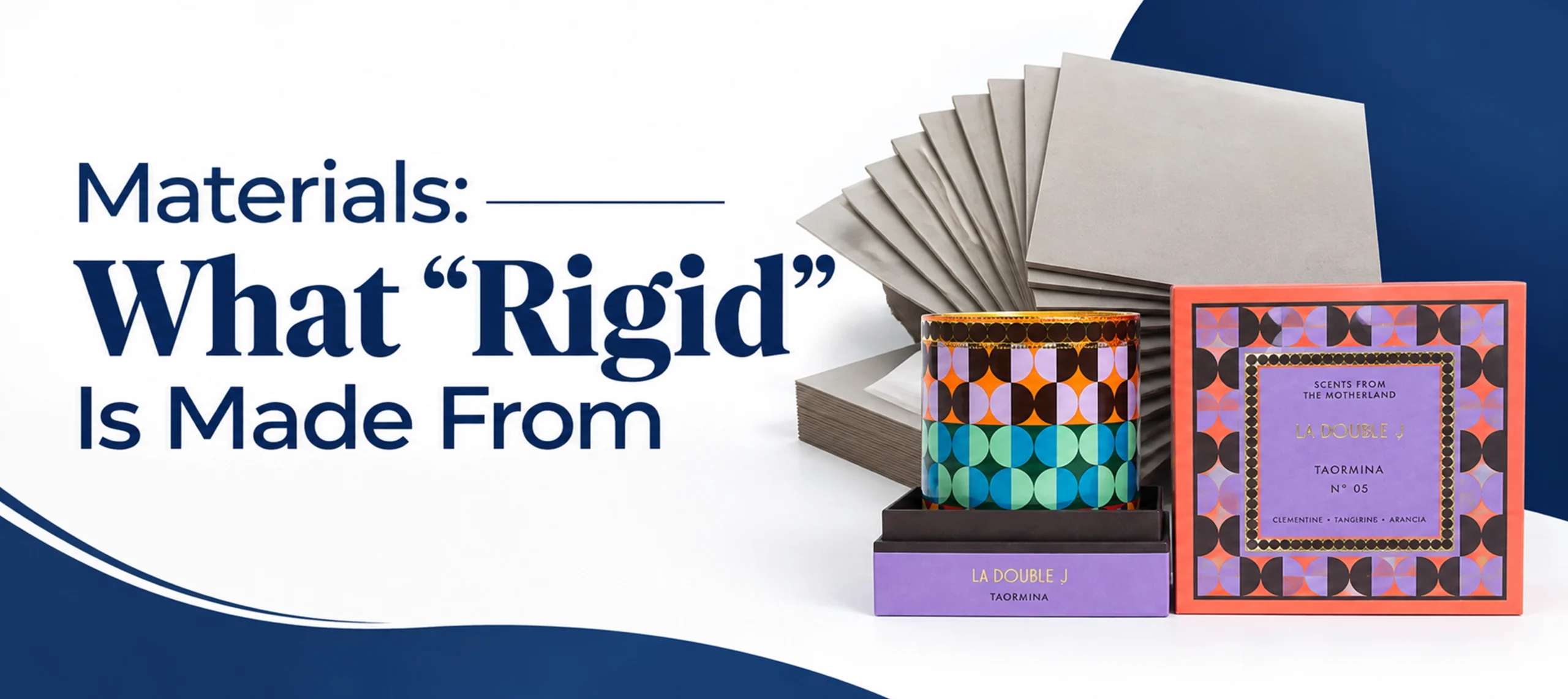
The core is almost always greyboard, sometimes called chipboard in general industry use, a dense board built specifically for structural rigidity rather than for folding. As a general industry orientation, published sources put typical rigid box board thickness somewhere in the 1 to 4 mm range, with lighter cosmetic and gift boxes nearer 1.2 to 2.5 mm and heavier spirits or gift sets moving up toward 3 to 3.5 mm. Treat that as background, not a spec: the right thickness for your box depends on its size, weight and how it will be handled, and is confirmed for your specification rather than assumed from a general range.
When a rigid box is worth it, and when it is not
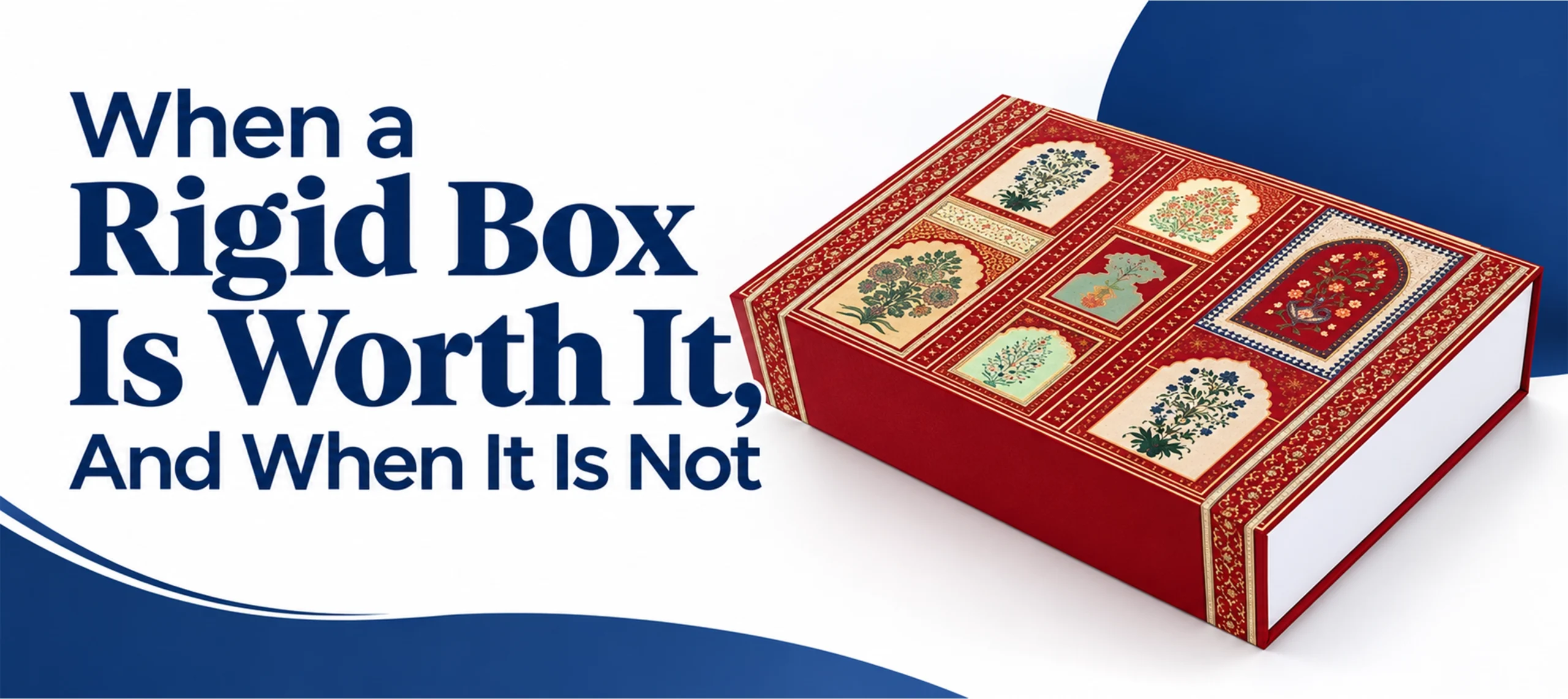
A rigid box earns its cost when the unboxing moment matters as much as the product inside: jewellery, fragrance, premium spirits, electronics, and cosmetics sold on a premium shelf all lean on the weight and solidity a rigid box gives. It is a poor fit for anything shipped in volume at a low unit price, where a folding carton or a mailer box does the job for a fraction of the cost and space.
If you already know you need one format but are weighing rigid against a folding carton on cost and volume, that is a separate decision with its own trade-offs around price per unit and storage space.
Recyclability: the honest answer

Rigid box board is paper-based and can be recycled, but do not treat “sustainable” as a blanket label the way some guides do. An unlaminated greyboard construction may be easier to process through suitable paper-recycling streams than a heavily laminated or foil-wrapped alternative, and final recyclability depends on the full material and finishing specification and the facilities available locally. A foil-stamped, soft-touch-laminated rigid box is a different recycling case to a plain wrapped one, and it is worth knowing that before you specify the finish.
Frequently asked questions

What is the difference between a rigid box and a folding carton?
A rigid box is built from a thick, non-folding board core and arrives pre-assembled. A folding carton uses thinner board that is scored and glued flat, then folded up by the brand or filler at the point of use. The rigid box gives more structural weight and a premium unboxing feel; the folding carton ships flat, taking up less space and usually costing less per unit.
What does “two-piece” mean on a rigid box quote?
It describes the construction, a separate lid and base that fit together, not the material or the finish. Most rigid box styles, including magnetic closure and telescoping round boxes, are built on this same lid-and-base principle.
What is a shoulder-neck or collar on a rigid box?
It is an inner collar fitted between the base and the lid so the lid closes onto a controlled edge rather than the raw top of the base. It is what gives premium spirits and fragrance packaging its deliberate, weighted close, and it is a genuine construction feature you can ask a supplier for by name.
Are rigid boxes recyclable?
Rigid box board is paper-based, and an unlaminated construction may be easier to process through suitable paper-recycling streams than a heavily laminated or foil-wrapped one. Final recyclability depends on the full material and finishing specification and the facilities available locally, so a foil-stamped or laminated box is not automatically as straightforward to recycle as a plain one.
How thick is the board in a rigid box?
There is no single fixed figure. As general orientation, published rigid box board thickness commonly runs from around 1 to 4 mm, with lighter cosmetic boxes nearer the low end and heavier spirits or gift-set boxes nearer the top. The right thickness for your box is confirmed against your specification rather than assumed from a general range.
If you are ready to move from understanding the format to specifying one, our Rigid Boxes range covers the full set of styles, from a straightforward 2 Piece Rigid Gift Boxes setup to Magnetic Closure Rigid Boxes, Custom Collapsible Rigid Boxes and Round Rigid Boxes. Design support is free, a digital 3D mock-up is free, and standard production takes 6 to 8 business days after approval. Orders start from 100 units.