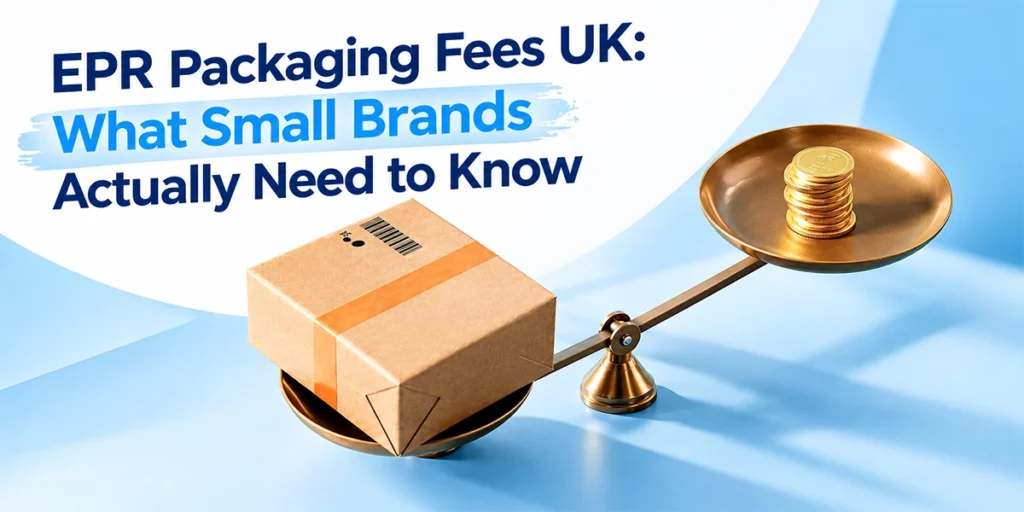
EPR Packaging Fees UK: What Small Brands Actually Need to Know
Quick answer: EPR packaging fees UK cover two separate schemes that can both apply to the same business: Extended Producer Responsibility (EPR), a compliance fee that funds the recycling and disposal of packaging, and the Plastic Packaging Tax (PPT), a genuine tax on plastic packaging with under 30 percent recycled content. For most small brands ordering custom packaging in modest quantities, neither applies directly yet, because both schemes carry a size threshold, but the obligation sits with you as the brand, not with your packaging supplier, so it is worth knowing where those thresholds actually sit.
Most guides to this cover one scheme and skip the other, or quote a fee range with nowhere to check it. This one covers both, sourced directly from GOV.UK, and answers the question a small custom-packaging buyer actually has: does this apply to me, and if it eventually does, who pays.
EPR and PPT are not the same thing
Extended Producer Responsibility (EPR) is not a tax. It is a compliance fee scheme that makes the business responsible for a product’s packaging pay toward the real cost of collecting, sorting and recycling it, rather than leaving that cost with local councils. Fees vary by material and, from the second year of the scheme, by how recyclable that material actually is.
The Plastic Packaging Tax (PPT) is a genuine tax, collected by HMRC, aimed specifically at plastic packaging that contains less than 30 percent recycled plastic. It exists to make recycled plastic more attractive to use than virgin plastic.
The two can apply to the same packaging at the same time. A business bringing in enough plastic packaging with low recycled content could owe both an EPR fee and PPT on the same material, which is exactly the kind of combined cost a guide covering only one scheme leaves you unable to calculate.
Who actually has to pay: you, not your packaging supplier
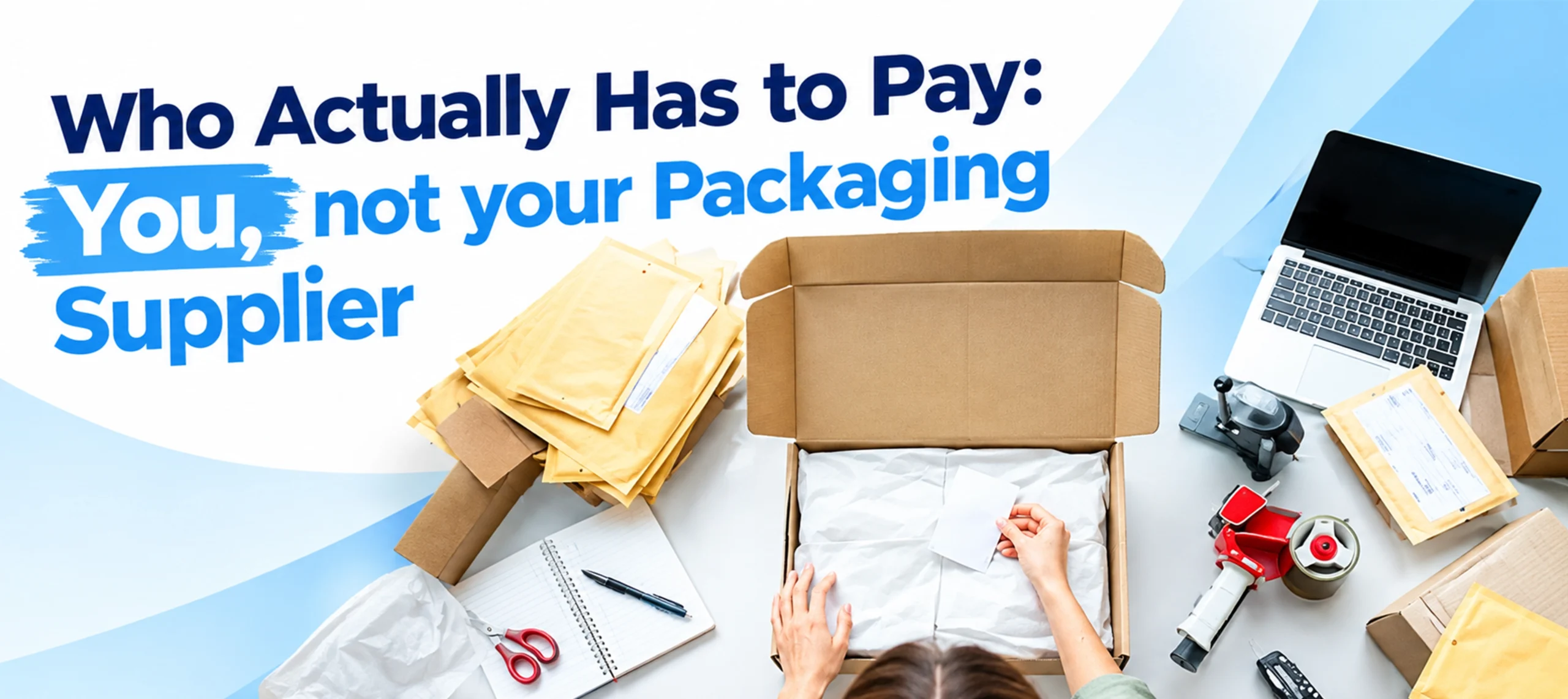
This is the part most small brands get wrong, and it matters if you order custom boxes from a supplier like ACP rather than manufacturing packaging yourself. Under UK EPR rules, the obligation generally sits with the brand owner, the business whose brand the finished, packaged product is sold under, even when someone else manufactures, prints or fills that packaging on their behalf. A packaging manufacturer supplying unbranded stock, or printing a small logo without becoming the actual seller of the finished product, is not usually the one holding the obligation; their customer, the brand selling the product, generally is. There are narrower exceptions around distributors supplying unfilled packaging to producers who are not themselves classed as large, but for a typical small brand ordering printed custom boxes to sell its own product, the practical answer is: it is your obligation to check, not your packaging supplier’s to carry for you.
Do you actually have to register? The thresholds
Both schemes carry a size threshold, and they are not the same threshold, which is another place conflation causes confusion.
Plastic Packaging Tax: you must register once you manufacture or import 10 tonnes or more of finished plastic packaging components, checked either as a forward-looking test (10 tonnes or more expected in the next 30 days) or a backward-looking one (10 tonnes or more in the last 12 months). There is no turnover exemption for PPT; the tonnage figure is what matters.
EPR for packaging: the thresholds combine turnover and tonnage. Below roughly £1 million annual turnover, or under 25 tonnes of packaging supplied or imported a year, an organisation is not obligated at all. A Small Producer (turnover between £1m and £2m, and 25 to 50 tonnes a year, broadly) has data-reporting duties but does not pay EPR fees in the same way a larger business does. A Large Producer (over £2m turnover and over 50 tonnes a year) has both the reporting duties and the fee-paying obligation in full.
For a brand ordering a few hundred or a few thousand custom boxes at a time, both thresholds sit well above most first orders. That does not make the topic irrelevant, since growth changes the answer, but it does mean the common assumption that “EPR applies to everyone now” is not quite right for a genuinely small operation.
What EPR actually costs, by material
Guides that quote a single illustrative range without a source are not much use for budgeting. These are the published year-one (2025 to 2026) base fees, before the recyclability-based modulation that begins in year two:
| Material | Base fee (£ per tonne) |
|---|---|
| Plastic | 423 |
| Fibre-based composite | 461 |
| Wood | 280 |
| Aluminium | 266 |
| Steel | 259 |
| Other (bamboo, ceramic, cork, etc.) | 259 |
| Paper and card | 196 |
| Glass | 192 |
From the second year, fees stop being flat by material and are instead modulated by a recyclability rating, commonly described as red, amber or green: easier-to-recycle packaging in a material earns a lower fee within that material’s band, harder-to-recycle packaging a higher one. Material choice is one input into that rating, alongside the finishing, lamination and format actually specified for a given order; it is not a fixed saving attached to any one material on its own.
What this means if you use custom packaging
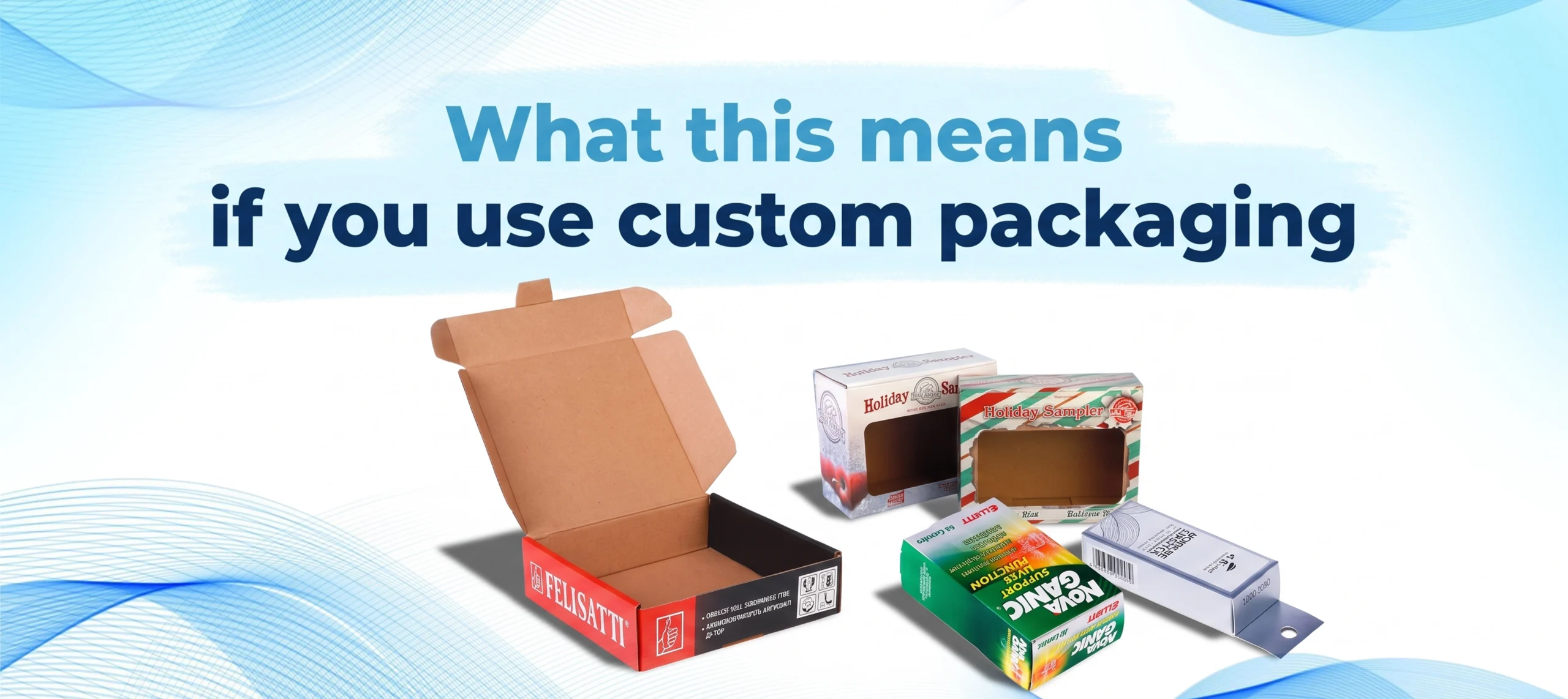
If your brand is nowhere near the thresholds yet, the practical answer today is simple: keep good records of your packaging tonnage and check your position as you grow, since both schemes are checked against a rolling period rather than a one-off registration. If you are approaching or over a threshold, the material and finish you specify becomes one factor in how your packaging is rated from year two onward, alongside everything else in your reporting.
What we will not tell you is that any particular material or supplier choice automatically lowers your EPR fees. It does not work that way: the recyclability rating depends on the full specification, not one material name, and your own EPR position depends on your business’s turnover and tonnage, not ours. An unlaminated paperboard construction may be easier to process through suitable paper-recycling streams than a heavily laminated alternative, but final recyclability depends on the full material and finishing specification and the facilities available locally, which is exactly the kind of detail the EPR rating looks at rather than the material name alone. Where recycled-content or lower-impact material options genuinely exist, such as our Sustainable Mailer Boxes line, available depending on the specification, they are one input worth discussing with your own compliance adviser, not a guaranteed fee reduction.
Frequently asked questions
Is EPR the same as the Plastic Packaging Tax?
No. EPR is a compliance fee that funds packaging recycling and disposal, administered separately from taxation. The Plastic Packaging Tax is a genuine tax, collected by HMRC, on plastic packaging containing under 30 percent recycled content. A business can owe both on the same packaging at the same time.
Does my small brand have to pay EPR fees?
Only once you clear both the turnover and tonnage thresholds. Below roughly £1 million turnover or 25 tonnes of packaging a year, EPR does not apply at all. Between roughly £1m-£2m turnover and 25-50 tonnes, you have reporting duties as a Small Producer but do not pay fees the way a larger business does. Fee-paying obligations in full start once you exceed £2m turnover and 50 tonnes a year.
Who pays EPR fees if I order custom packaging from a supplier?
Generally you, as the brand owner, not your packaging supplier. The obligation follows whoever sells the finished, branded product to the end customer, even when another business manufactures or prints the packaging on their behalf. Check your specific situation, since narrower exceptions exist around unbranded and distributor arrangements.
How much does EPR cost per tonne of packaging?
For the 2025 to 2026 base year, published rates run from £192 per tonne for glass up to £461 per tonne for fibre-based composite, with plastic at £423 per tonne. From the second year, fees are modulated by a recyclability rating rather than being flat by material, so the exact figure depends on the full specification, not the material name alone.
Does choosing a different packaging material lower my EPR fees?
It can be one factor, since recyclability rating is part of how modulated fees are calculated from year two, but it is never a guaranteed or automatic reduction. The rating depends on the whole specification, including finish and lamination, and your own obligation depends on your business’s turnover and tonnage. Treat material choice as one input to discuss with a compliance adviser, not a fixed saving.