
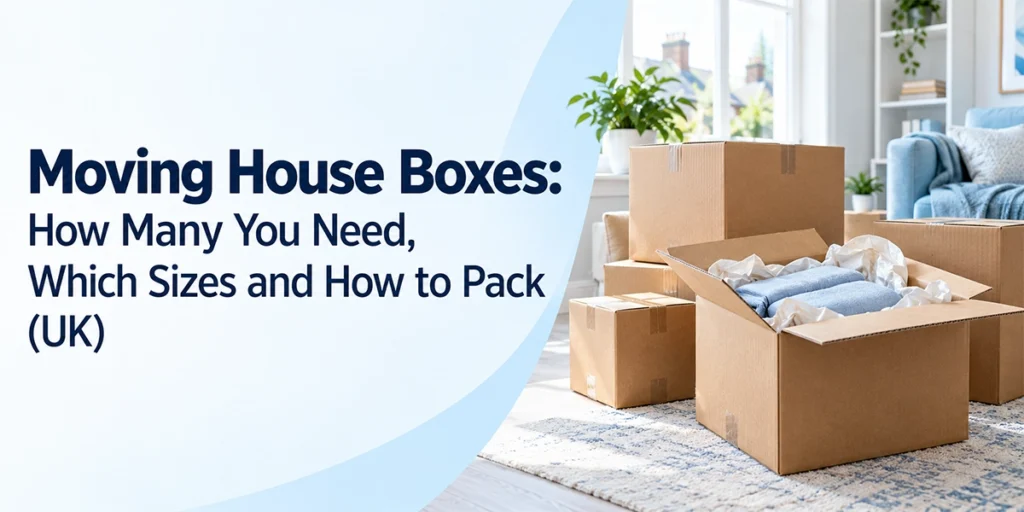
Moving House Boxes: How Many You Need, Which Sizes and How to Pack (UK)
Quick answer: For moving house boxes, most homes need a mix of three sizes (small, medium and large), not one size. Use small boxes for heavy things like books and kitchenware, medium for most general items, and large only for light, bulky things like bedding. As a starting point, one UK removals review site suggests about 18 boxes for a one-bedroom home and about 35 for a three to four-bedroom home, but count your own rooms, because homes differ a lot. Keep every box light enough to lift comfortably, label each one by room and contents, and use strong double wall boxes for heavy loads or long storage.
How many moving boxes do you need?
Published counts vary widely because homes vary. RemovalReviews, a UK removals comparison site, gives these starting estimates:
| Home | Small | Medium | Large | Total |
|---|---|---|---|---|
| 1 bedroom | 10 | 5 | 3 | 18 |
| 2 to 3 bedrooms | 10 | 10 | 5 | 25 |
| 3 to 4 bedrooms | 15 | 10 | 10 | 35 |
Treat these as a floor, not a target. A better method for your own home:
- Go room by room. Open cupboards and shelves and look at what you actually own.
- Sort by weight. Books, crockery, tins and tools go into small boxes. Clothes, toys and ornaments into medium. Bedding, cushions and lampshades into large.
- Estimate each room. A full bookcase or a busy kitchen takes far more boxes than a spare room.
- Add a margin. Buy a few more than your count. Running out on packing day is more expensive than a few spare boxes.
Which box size for what
| Box size | Use it for | Avoid |
|---|---|---|
| Small | Books, kitchenware, tins, tools, records, files | Anything light and bulky |
| Medium | Clothes, toys, small appliances, ornaments, shoes | Filling it with books |
| Large | Bedding, duvets, pillows, cushions, lampshades | Heavy items of any kind |
RemovalReviews quotes typical removal box sizes of about 318 x 268 x 318 mm (small), 457 x 330 x 330 mm (medium) and 457 x 457 x 499 mm (large). Sizes vary by supplier, so check before you buy. For how box sizes are measured, see our guide to standard box dimensions.
The rule behind the table is weight. A large box full of books is too heavy to carry safely and is likely to split. The Health and Safety Executive says there is no such thing as a “safe” weight: what is safe depends on the person and the way the load is lifted. Keep boxes light enough to lift close to your body without straining, and put heavy things in small boxes.
New or used boxes?
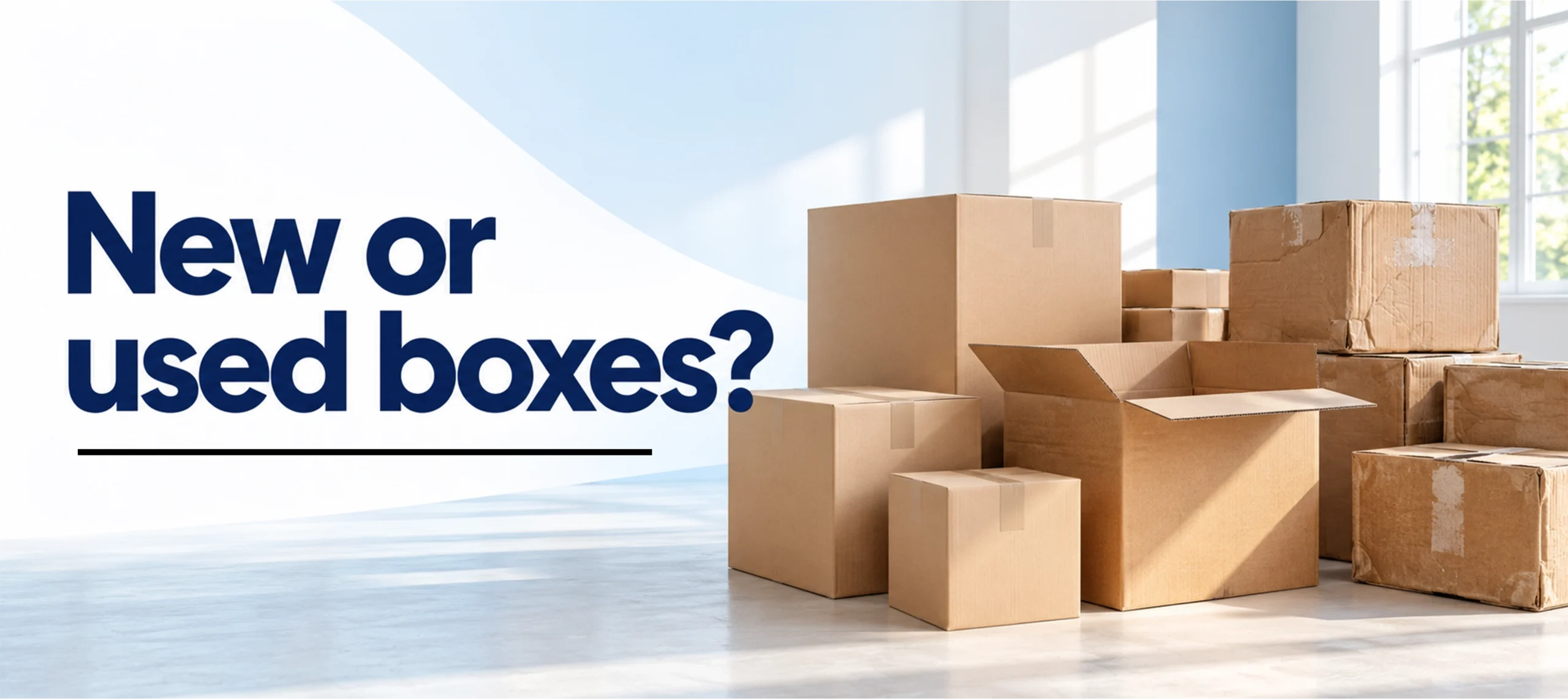
Free boxes from shops are tempting, but check them:
- Strength. Many shop boxes are single wall and have already been through a supply chain. Bases give way under heavy loads.
- Condition. Avoid damp, crushed or stained boxes. Damp board loses strength quickly.
- Size mix. Mixed shapes are harder to stack in a van and in storage.
Used boxes are fine for light items. For books, kitchenware and anything going into storage, new boxes are safer. Heavy loads suit double wall board; the difference between single and double wall is explained separately.
Plastic crates are another option. Some removal firms rent them, so there is nothing to build or dispose of, but you need to return them on time.
How to pack moving boxes
- Build and tape the base properly. Tape along the centre seam and across the edges. Our guide to packing tape types covers which tape to use.
- Heavy at the bottom, light on top. Inside each box, and in each stack.
- Fill gaps. Use towels, clothes or paper so things do not shift. A half-empty box crushes when stacked.
- Do not overfill. The lid should close flat. A bulging box will not stack.
- Wrap fragile items separately. Stand plates on edge, wrap glasses one by one, and mark the box fragile.
- Keep essentials apart. Pack an “open first” box with kettle, mugs, chargers, toilet roll, basic tools and bedding for the first night.
Labelling that saves time at the other end
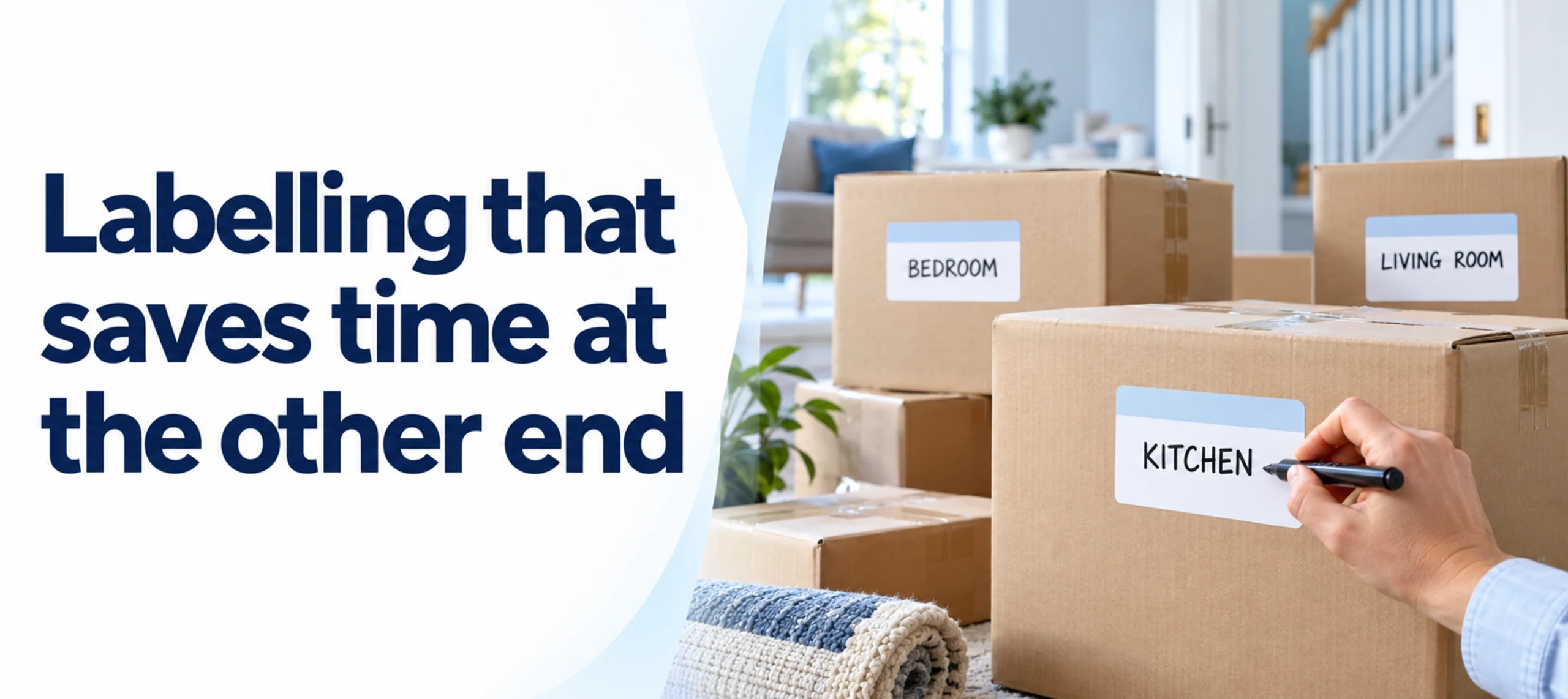
A good label tells the movers where the box goes and tells you what is inside:
- Room on the top and on two sides, so it can be read in a stack
- Contents in a few words
- Number each box and keep a list, so you know if one is missing
- Fragile and this way up where needed
- Heavy on boxes that are hard to lift
Some households use a colour per room, with a matching sticker on each room’s door in the new home.
Packing for storage
If boxes go into self-storage for weeks or months, they need to cope with stacking and time:
- use strong boxes of the same few sizes, so stacks are square and stable
- fill every box fully, so the one above does not crush it
- keep boxes off bare floors and away from damp. Moisture is corrugated board’s weak point, explained in our guide to the characteristics of corrugated cardboard.
- put the heaviest boxes at the bottom and leave a walkway so you can reach them
After the move
Unpacked boxes are still useful:
- Flatten and keep a few for storage or your next move.
- Pass them on to someone else who is moving, through local groups or neighbours.
- Dispose of the rest through your council collection. Remove tape and labels where you can. An unlaminated paperboard construction may be easier to process through suitable paper-recycling streams than a heavily laminated alternative. Final recyclability depends on the full material and finishing specification and the facilities available locally.
For removal companies, storage firms and letting agents
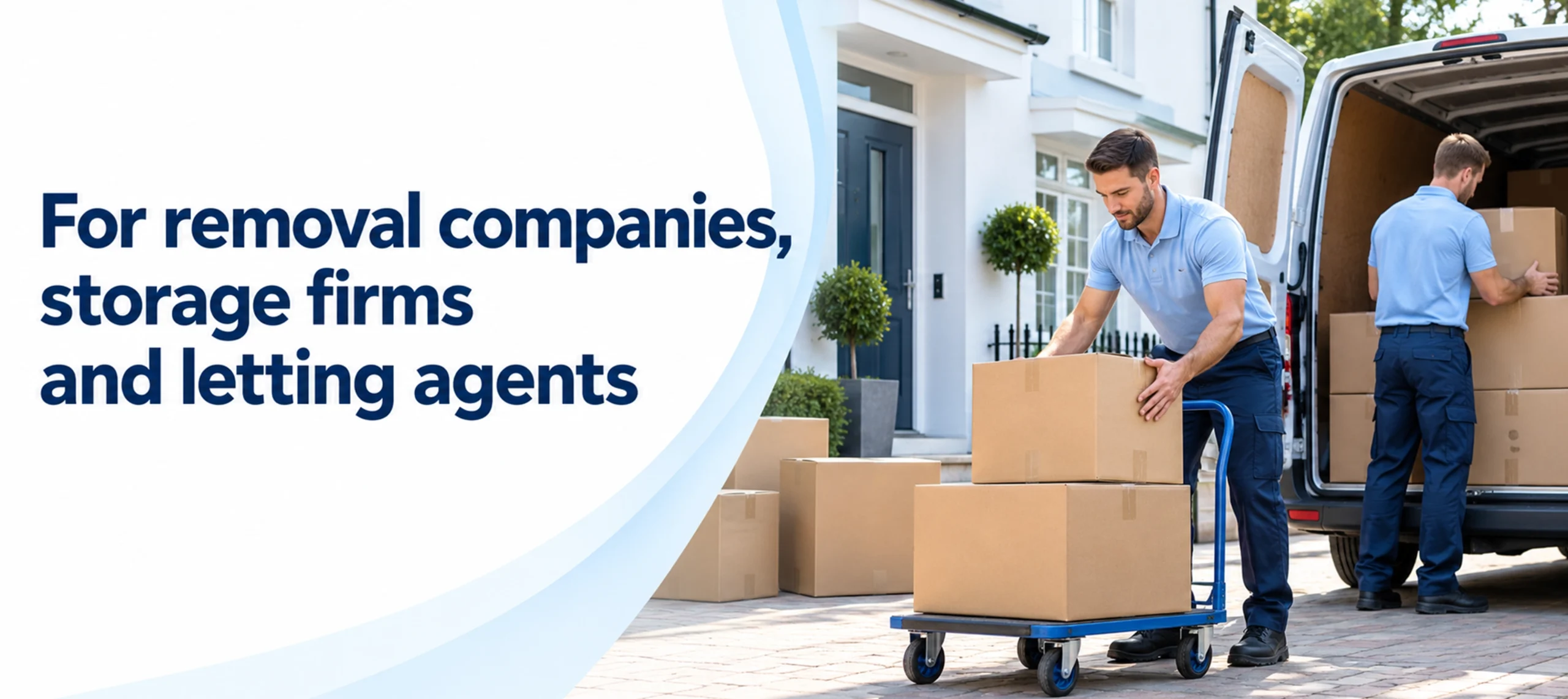
Businesses that hand out or sell moving boxes have different needs:
- Consistent sizes. A small set of fixed sizes stacks cleanly in vans and storage units, and makes it easier to quote how many boxes a job needs.
- Board to suit the load. Single wall for light, general boxes; double wall for heavy or long-term storage boxes.
- Branding. Every box sits on a customer’s doorstep and in a new neighbourhood for days. A printed logo and phone number turns each box into an advert.
- Flat stock. Boxes delivered flat take little space until needed.
- Load information. HSE guidance on labelling loads says employers should give information on the weight of loads, and mark heavy loads where there is a risk of injury and it is reasonably practicable. A “heavy” line printed on your boxes, or weight stickers, helps your crews.
- Customer packs. A starter pack of small, medium and large boxes, with tape, is easy to sell or include with a move.
Moving boxes made for your business
We make corrugated cardboard moving boxes to your sizes, in single wall, double wall or ripple wall board, plain or printed with your branding.
For other box types, see our cardboard boxes range. Tell us the sizes you need, how many of each, and whether you want them printed.
- Orders start from 100 units.
- UK delivery is free.
- Design support is free.
- A digital 3D mock-up is free.
Moving box questions
How many boxes do I need to move a two-bedroom house?
One UK removals review site suggests about 25 boxes for a two to three-bedroom home: 10 small, 10 medium and 5 large. Homes vary, so count room by room and add a few spare.
What size boxes are best for moving house?
A mix. Small for heavy items, medium for most things, and large only for light, bulky items like bedding.
How heavy should a moving box be?
Light enough to lift close to your body without straining. The HSE says there is no single safe weight, so keep heavy items in small boxes rather than filling large ones.
Are free supermarket boxes good enough for moving?
For light items, often yes. For heavy items or storage, choose new, strong boxes, because used boxes may be weakened or damp.
Should I use double wall boxes for moving?
For heavy items, fragile items and long-term storage, yes. Single wall is fine for light, general items.
What should I do with moving boxes afterwards?
Flatten and keep a few, pass the rest on to someone moving, or put them out for council collection with tape removed.
Running a removals or storage business? Send us the box sizes and quantities you use, and we will quote plain or branded moving boxes.