
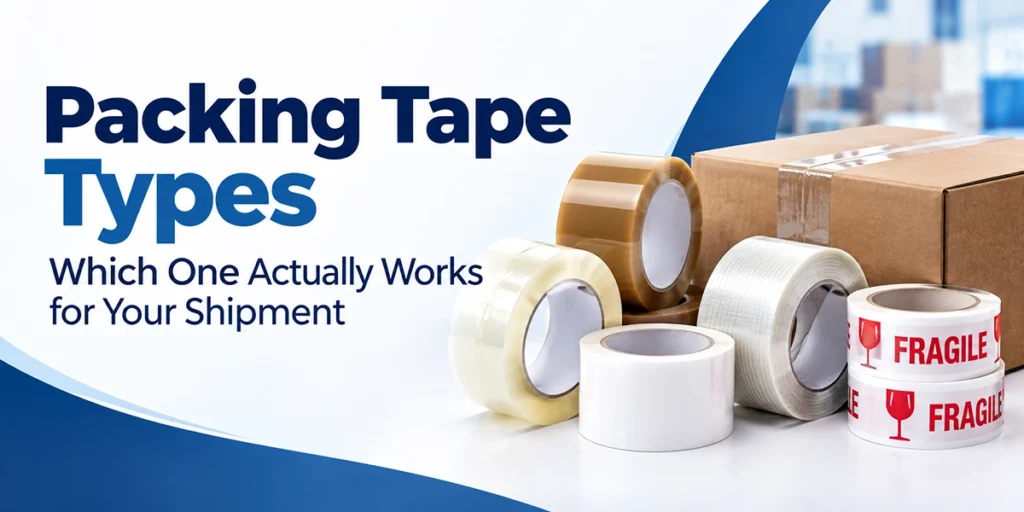
Packing Tape Types: Which One Actually Works for Your Shipment?
for most UK shipments, the real shortlist is five tape types. Polypropylene is the everyday brown or clear parcel tape and covers most standard e-commerce boxes. PVC is the heavier, wider-range option for awkward storage conditions. Paper or kraft gummed tape is the water-activated, plastic-free choice that travels through kerbside recycling with the box. Reinforced filament or strapping tape carries genuinely heavy or unbalanced loads. Custom printed tape adds branding and a visible tamper-evident layer on top of whichever base tape you choose. Which one is right for a given parcel depends on its weight, where it sits before dispatch, and whether the box needs to go straight in a recycling bin, not on whichever roll happens to be open on the packing bench.
This guide sticks to shipping and parcel tape. It does not cover electrical tape, masking tape or plumber’s PTFE tape, because a business trying to seal a cardboard box has no use for any of them, and folding all three into one long article is how a lot of tape guides end up thin on the part that actually matters. What follows is the decision that matters: which tape, which width, and why, with a buyer’s table you can use straight away.
What actually counts as shipping tape
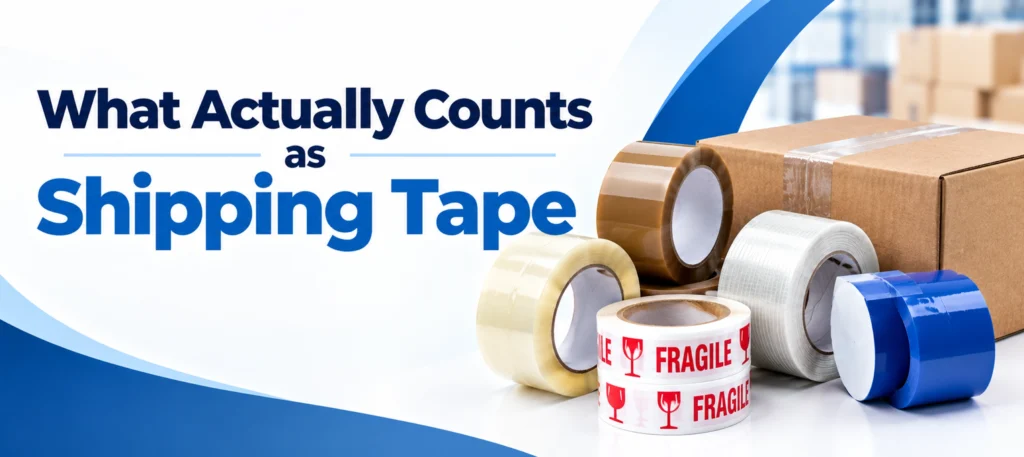
Shipping tape is any adhesive tape built to close a corrugated box and hold under the load, handling and storage conditions the parcel will meet before it’s opened. That rules out a lot of tape that shares a shelf with it in a hardware shop.
Electrical tape, gaffer tape, masking tape and PTFE thread tape solve different jobs entirely: insulating a wire, gripping a stage floor, protecting paint edges, sealing a pipe thread. None of them are built for the tensile pull of a loaded box travelling through a courier’s sortation belt, and using one on a parcel usually means the seal fails well before the box gets anywhere near its destination.
The five types worth knowing for actual shipping are polypropylene, PVC, paper or kraft gummed tape, reinforced filament or strapping tape, and custom printed tape (which is really one of the first two with print and, often, a tamper-evident layer added on top). Everything below is scoped to those five, because that’s the decision a packaging buyer is genuinely making.
The real shipping-tape shortlist
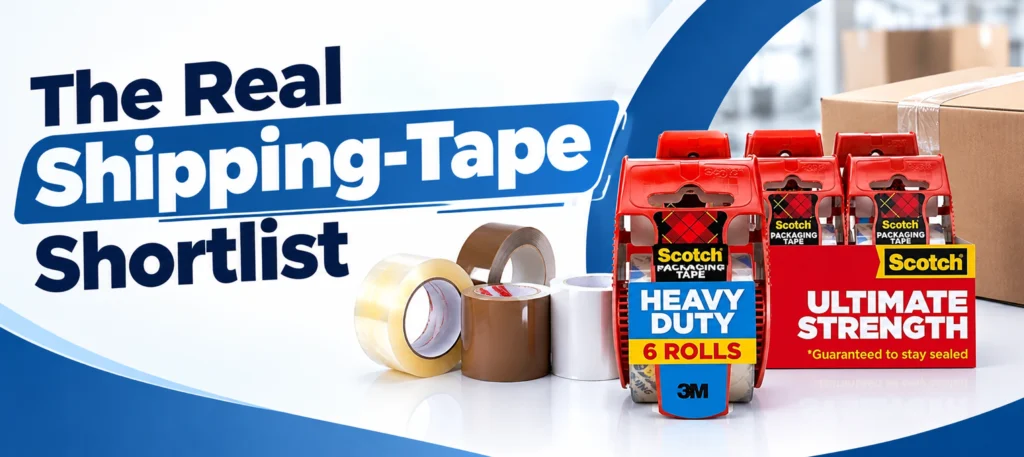
Polypropylene (PP) tape. This is the tape most UK businesses reach for by default, sold in brown, clear and coloured film, most commonly in 48mm and 75mm widths. It carries one of two adhesive types, and the difference matters more than the colour of the tape. Hot melt adhesive, a rubber-based compound applied molten and then cooled, grips fast and cheaply, which is why it’s the adhesive behind most budget-tier tape. Acrylic adhesive costs a little more but ages better, holds its tack for longer in storage, and behaves more predictably across a wider temperature range, according to UK supplier Swiftpak’s own technical comparison of the two chemistries. If you’re buying tape once a quarter rather than reordering a pallet a week, acrylic is usually worth the difference.
PVC tape. Denser and glossier than polypropylene, PVC tape is the heavier-duty option, used where a box needs to survive rougher handling, cold storage or a longer time in transit before it’s opened. It costs more than standard PP and most UK sellers don’t need it for everyday parcels, but it earns its place on pallet-level shipments, export cartons, or boxes that will sit in a cold store rather than move straight through a courier network.
Paper or kraft gummed tape. This is water-activated tape: a starch-based adhesive on a paper backing that needs wetting, either by hand or through a tape gun, before it bonds. Once it sets, the adhesive penetrates the cardboard’s own fibres rather than sitting on the surface, which is why gummed tape often grips harder than film tape once it’s fully cured, and also why it can’t be removed and reapplied the way plastic tape can. It’s the plastic-free option, and its recyclability with the box (covered in full below) is its main commercial selling point over polypropylene.
Reinforced filament or strapping tape. Built with embedded fibreglass filament running through a polypropylene or PVC backing, this is the tape for genuinely heavy, dense or awkwardly balanced loads, palletised cartons, and anything where the box itself, not just the seam, needs extra tensile strength across a strap line. It costs noticeably more per metre than standard PP and most single-item parcels never need it, but it’s the right call the moment a box’s contents outweigh its own structural rating.
Custom printed tape. This isn’t a sixth adhesive chemistry. It’s polypropylene or paper tape with your own artwork or a repeating brand mark printed across it, and increasingly with a tamper-evident layer built in as standard. What it changes is covered in its own section below, because the reasoning behind buying it has almost nothing to do with adhesive strength and everything to do with what happens to the box after it leaves your hands.
What actually differs between them
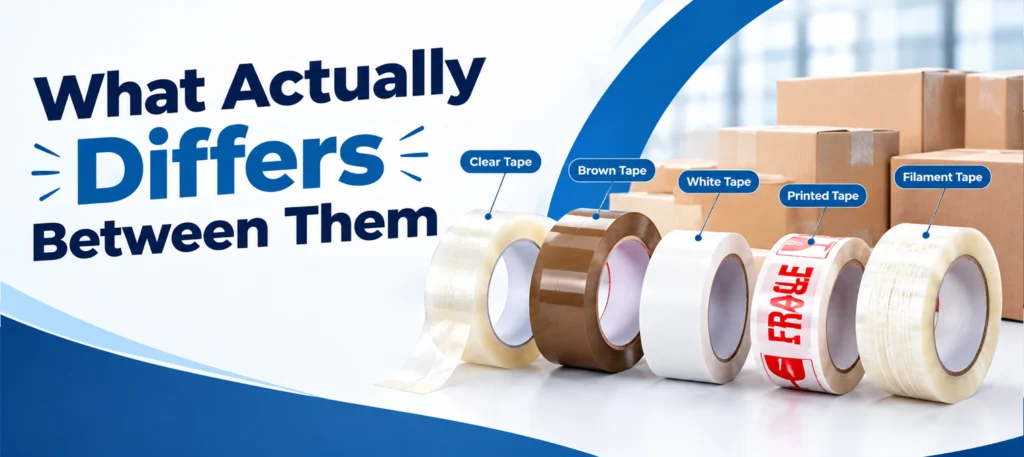
The marketing copy on most tape pages talks about “strong adhesion” and “reliable performance” without saying what changes in practice. Four things actually differ, and each one should change your decision.
| Factor | Polypropylene (acrylic) | Polypropylene (hot melt) | PVC | Paper/gummed |
|---|---|---|---|---|
| Working temperature range | Roughly 0°C to 65°C, per Swiftpak’s technical guidance | Roughly 5°C to 50°C; can lose tack in cold storage | Generally the widest range of the film tapes, suited to cold stores | Depends on humidity during application; performs poorly if applied and left damp |
| Noise on unwinding | Quiet to moderate; “low noise” variants widely sold | Louder, especially in budget-grade film | Similar to standard PP | Quiet by hand; a tape gun adds mechanical noise |
| Clarity vs opacity | Available clear or brown; clear lets a label show through | Usually brown, opaque | Usually opaque, often used coloured for warning tape | Always opaque kraft brown |
| Typical relative strength | Reliable, ages well in storage | Strong initial grip, degrades faster over time | Strongest film option for heavy or cold conditions | Bonds into the board itself once cured; reinforced grades add meaningfully more pull strength |
A word of honesty on that last row: tape manufacturers usually quote tensile strength in pounds per inch of width, a US convention that doesn’t translate cleanly across brands or into a single UK figure, and the numbers vary by reinforcement and adhesive batch in ways a blog post can’t responsibly certify. Treat the strength column as a comparative guide to which direction each tape leans, not as a lab spec you can quote back to a supplier.
The buyer’s decision table
This is the table Kite Packaging’s own guide doesn’t have, and it’s the part worth bookmarking. Match your box against the row that fits, then check the width against your own box weight before you commit to a pallet of the wrong one.
| Box weight and contents | Storage or transit conditions | Recommended tape | Width | Why |
|---|---|---|---|---|
| Light parcel, roughly up to 5kg | Ambient, standard courier network | Polypropylene, acrylic adhesive | 48mm | Standard bond strength, quiet unwind, holds up in normal storage without over-specifying |
| Standard e-commerce box, roughly 5 to 15kg | Ambient warehouse | Polypropylene, acrylic or hot melt | 48mm, H-taped both ends | Covers most retail parcels without paying for capacity you don’t need |
| Heavy or dense box, 15kg and over | Ambient or variable warehouse temperature | Polypropylene or PVC | 75mm | A wider bond line spreads the load across the flap and cuts the risk of a seam splitting under weight |
| Cold-chain or winter-transit goods (chilled items, candles, cosmetics in cold months) | Near or below 0°C | Acrylic-adhesive tape, not standard hot melt | 48 to 75mm | Hot melt adhesives can lose tack and peel as they cool; acrylic holds its grip at lower temperatures |
| Warehouse or shipment in high summer heat | Above roughly 30°C ambient | Acrylic-adhesive polypropylene | 48mm | Acrylic resists softening and creep in heat better than some hot melt formulations |
| Plastic-free priority, kerbside recycling matters to the customer | Ambient | Paper or kraft gummed tape | 48 to 75mm, reinforced for heavier boxes | Bonds into the board fibres and travels through the paper and card recycling stream with the box |
| High-value, resale-prone or return-fraud-sensitive goods (electronics, cosmetics, apparel) | Ambient | Custom printed or tamper-evident tape | 48 to 75mm | Makes any resealing attempt visible and carries your brand at the same time |
| Palletised, awkward or unbalanced heavy loads | Ambient | Reinforced filament or strapping tape | Varies by load; often 50mm+ filament tape or dedicated strapping | Fibreglass filament gives directional tensile strength standard film tape doesn’t have |
Two things this table deliberately doesn’t do. It doesn’t give you a single “best” tape, because the honest answer changes with the box, and any guide that hands you one universal winner is selling you a product, not an answer. And it doesn’t invent a precise kilogram-to-tape mapping the way some tape manufacturer pages do, because those figures come from a specific brand’s own lab testing on a specific reinforcement grade, and repeating them as a general rule would be exactly the kind of invented spec this guide is trying not to produce.
Can packing tape actually be recycled with the box?
Yes for paper tape, mostly yes for standard plastic tape, and it depends on the amount for both. This is worth separating properly, because “eco-friendly tape” gets used as a label far more often than it gets explained.
Paper or kraft gummed tape is fully part of the same recyclable material stream as the cardboard box it’s sealing. According to UK packaging retailer Mr Bags’ own recycling guidance, because the adhesive is starch-based and the backing is paper, there’s no need to remove it before the box goes in a paper and card recycling bin, and most UK councils accept paper-taped cardboard without any caveats.
Standard plastic tape (polypropylene, sometimes called BOPP) is a different story, but a less dramatic one than “not recyclable” implies. The same guidance notes that cardboard boxes can generally go in the recycling bin even with standard plastic tape still attached, because the cardboard recycling process is designed to filter small amounts of it out during pulping. What changes the answer is quantity: heavy tape build-up, particularly several overlapping layers used to reinforce a box, is worth removing where practical, since a significant amount of plastic film mixed into the pulping process is more likely to cause a genuine processing issue than a couple of standard sealing strips.
So the honest framing is material and disposal route, not a blanket claim. Paper tape: starch adhesive on paper backing, goes straight into kerbside card recycling with the box, no removal needed. Standard plastic tape: BOPP film with acrylic or hot melt adhesive, small amounts are tolerated and filtered out in processing, heavy reinforcement layers are worth stripping off first. Neither of those is “100% eco-friendly”, and neither claim should be made that way. Because recycling rules vary slightly by local authority, check your own council’s current guidance on gov.uk before assuming either applies to your bin day.
On the Plastic Packaging Tax, worth a brief mention since Kite’s guide skips UK compliance entirely: the tax applies to businesses that manufacture or import 10 tonnes or more of finished plastic packaging components in a 12-month period, and it’s the packaging component as a whole, not tape in isolation, that gets assessed. For the vast majority of small UK sellers, the tape used to seal outbound parcels is a rounding error against that threshold, but if you’re a larger operation building out packaging specifications at scale, check your position against the current GOV.UK guidance rather than assuming tape is automatically outside scope.
Custom printed tape: branding and tamper evidence in one strip
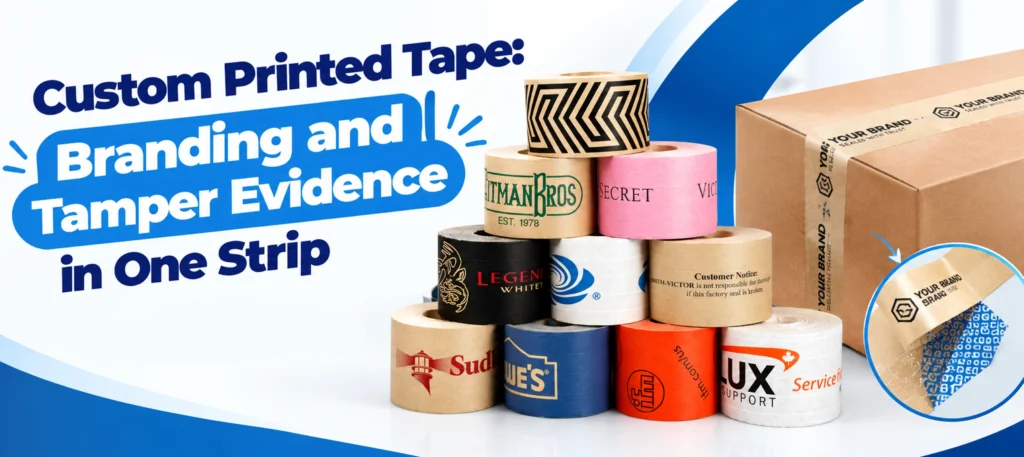
Custom printed tape does two jobs that plain tape can’t, and UK sellers increasingly buy it for the second one as much as the first.
The branding job is straightforward: your logo or pattern printed across polypropylene or paper tape turns the plainest part of a parcel into a recognisable one before the customer has opened the box. It’s the same logic behind the print finishes covered in our guide to packaging print finishes, where a foil stamp or spot UV detail earns its cost through what the customer notices in the first few seconds of an unboxing. Printed tape does that job on the outside of the box, at the point where the parcel is still sitting on a doorstep or being carried in from a locker.
The tamper-evidence job matters more than most sellers realise until they’ve had a returns-fraud problem. A growing range of custom tape now comes with a hidden void layer built in: peel it once, and a permanent “VOID” or “OPENED” pattern appears on the tape or the box surface, making any resealing attempt visible rather than invisible. That’s a genuinely useful defence against the specific version of returns fraud where a customer opens a parcel, swaps or removes an item, and reseals the box to claim the whole order arrived faulty or incomplete. Standard clear or brown tape gives a returning customer nothing to hide behind detection wise, and a would-be fraudulent return has no visible mark showing the box was opened before it reached the retailer.
Whether custom printed tape belongs on your own parcels depends on the value and return rate of what you’re shipping, not on whether it looks nice. It earns its cost fastest on higher-value items with a real resale market and a return channel that gets used, cosmetics, electronics accessories, apparel, than on low-value, low-return categories where the branding benefit alone has to carry the cost.
Common tape mistakes that cost you
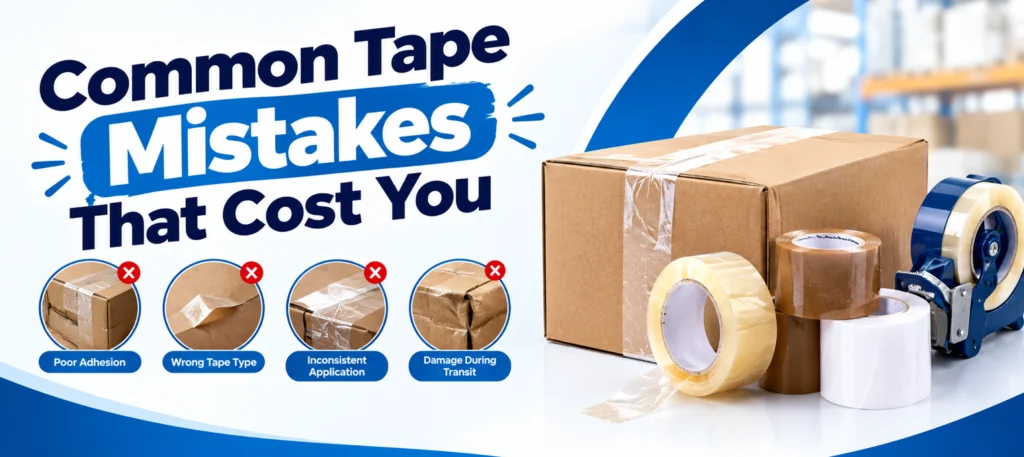
Most tape failures aren’t a tape problem. They’re an application problem, and the same handful of mistakes show up across UK warehouses of every size.
Taping only the top seam. A single strip along the centre seam looks finished but leaves both end flaps unsupported, which is exactly where a box splits open under its own weight in transit. Our own guide to stopping parcels arriving damaged covers the full H-taping method: one strip down the centre seam, then a strip across each end where the flaps meet, top and bottom. It takes twenty extra seconds per box and it’s the single change that fixes the most common damage-in-transit complaint.
Using a narrow tape on a heavy box. A 24mm or 25mm width belongs on small, light parcels or as reinforcement alongside a wider strip, not as the sole seal on a box carrying real weight. Step up to 48mm as the default and 75mm once the box gets genuinely heavy or awkward, per the decision table above.
Ignoring how the box itself closes. Not every mailer box needs tape at all. All Custom Packaging’s own mailer box range includes tab-lock and self-seal styles built to close without a separate strip of tape, though the same product guidance is honest that tape may still be worth adding for some products or delivery services, particularly anything heavier or higher-value than the format was designed for. Check what your box is actually built to do before assuming it needs the same tape routine as a plain corrugated carton.
Using old or degraded stock. Hot melt adhesive tape in particular loses tack over time, especially if it’s been stored somewhere hot or humid. If a roll has been sitting at the back of a shelf for a year and the adhesive looks dull or feels less tacky than a fresh roll, test it on a scrap box before trusting it on a real shipment.
Sealing over a gap instead of a flush join. Tape bridges a small gap between flaps without much complaint, but a genuinely misaligned or underfilled box puts stress on the tape at exactly the point it’s least able to take it. Right-sizing the box in the first place solves more sealing problems than any tape upgrade does.
Frequently Asked Questions

What is the strongest packing tape for shipping? For raw holding power once fully cured, reinforced gummed paper tape and filament strapping tape both outperform standard polypropylene, though “strongest” depends on the job: filament tape suits heavy or unbalanced loads, while reinforced paper tape suits sellers prioritising a fibre-based, kerbside-recyclable seal. For everyday parcels, acrylic-adhesive polypropylene at the right width is strong enough and considerably cheaper.
Is paper tape as strong as plastic tape? Non-reinforced paper tape is broadly comparable to standard polypropylene once cured, and reinforced grades can exceed it, because the adhesive bonds into the cardboard fibres rather than sitting on the surface. It needs to be applied properly with a tape gun or by hand to reach that strength, and it performs poorly if left damp before it’s stuck down.
What width packing tape should I use? 48mm is the default for most standard UK e-commerce parcels. Move up to 75mm for heavier, denser, or less predictable boxes, where the wider bond line spreads load across the flap and reduces the risk of the seam splitting.
Can packing tape be recycled with the box? Paper or kraft gummed tape can, since it’s the same fibre-based material as the box. Standard plastic tape in normal amounts is generally filtered out during cardboard recycling and doesn’t need removing, but heavy, multi-layered plastic tape is worth stripping off first. Check your local council’s current guidance, since acceptance can vary slightly by area.
Is packing tape the same as duct tape or masking tape? No. Duct tape, gaffer tape and masking tape are built for insulation, temporary fixing and paint-edge protection, not for holding a loaded box together under transit stress, and none of them are designed to bond reliably to corrugated cardboard the way polypropylene, PVC or gummed paper tape are.
Do self-seal or tab-lock mailer boxes still need tape? Often not for light, low-value contents, since these box styles are built to close using their own folding structure or an adhesive strip. For heavier products or where a courier’s handling is rougher than the box format assumes, adding a strip of tape across the main seam is still worth doing.
What is H-taping and when should I use it? H-taping means running one strip of tape down the centre seam of a box, then a further strip across each end where the flaps meet, so the finished pattern resembles the letter H. It’s worth doing on any box heavier than a very light parcel, and it’s the single most effective fix for boxes that split open at the ends in transit.
Does custom printed tape help prevent returns fraud? It can, specifically where the tape includes a built-in tamper-evident or void layer. Peeling tape like this once leaves a visible mark or message that a box has already been opened, which makes it harder for a customer to reseal a parcel after removing or swapping an item and claim it arrived that way. Plain tape offers no equivalent visible evidence.
Key takeaways
- Five tape types cover genuine shipping needs: polypropylene, PVC, paper or kraft gummed, reinforced filament or strapping, and custom printed.
- Acrylic-adhesive polypropylene at 48mm is the sensible default for most UK parcels; step up to 75mm or PVC once a box gets heavy, cold-stored, or awkward.
- Paper tape goes straight into kerbside card recycling with the box; standard plastic tape in small amounts is generally filtered out in processing, but heavy reinforcement layers are worth removing.
- Custom printed tape earns its cost through branding and tamper evidence together, and it’s most worthwhile on higher-value, higher-return categories.
- H-tape both ends of any box that matters. A single strip on the top seam is the most common and most avoidable cause of a parcel splitting in transit.
If you’re speccing packaging materials and finishes for a new product line, our team can talk through box construction and print alongside your tape choice; design support is free, and there’s no obligation attached to a conversation. Get in touch and tell us what you’re shipping.