Rigid Box Wrap Paper: Printed, Kraft, Coloured or Metallic? (UK Guide)
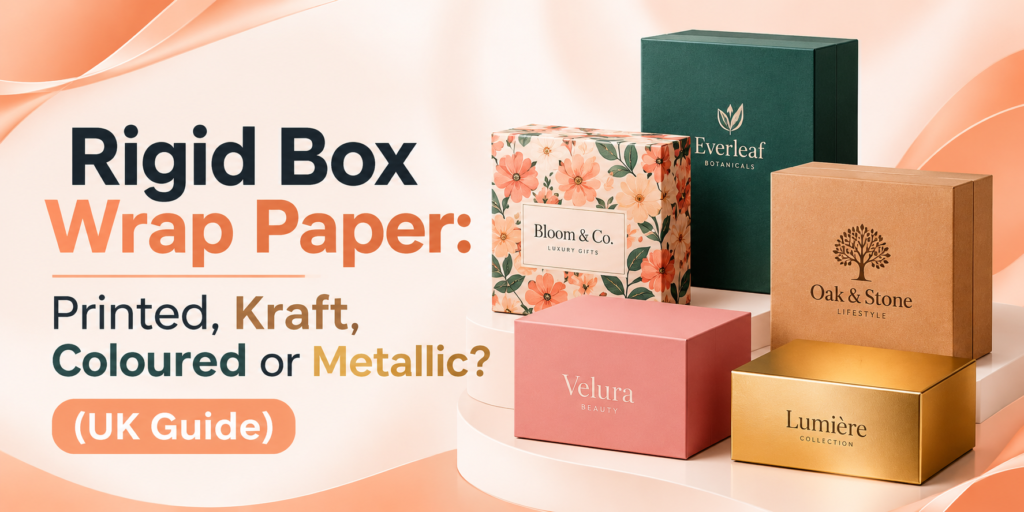
Rigid box wrap paper is the thin sheet glued over the board, and it decides how the box looks, feels and wears. The main choices are a printed coated paper finished with a laminate, kraft, one flat colour, and a metallic or holographic paper.
Choose it by the artwork, by how the box will be handled, and by what you want to say about recycling. A photographic or patterned design needs a printed coated wrap, while a plain luxury look can come from kraft or one colour, with the logo in foil or pressed into the lid.
The paper also decides what happens at the corners. A dark colour printed on white paper can show a thin white line where the wrap folds, which a laminate or a paper coloured all the way through helps avoid.
The wraps side by side
| Wrap | Suits | Watch for |
|---|---|---|
| Printed coated paper, laminated | Full-colour artwork, photography, patterns | Matt laminate can scuff on dark solids; gloss shows fingerprints |
| Natural or white kraft | A natural look, one- or two-colour artwork, foil or a debossed mark | Natural kraft’s brown base mutes the inks, pale tones most |
| One flat colour | A plain, quiet look with a foil or embossed logo | The lid, base and lining are wrapped separately, so the shade has to match |
| Black kraft | A black box that is black in the paper, not printed | Deep, flat surfaces show fingerprints |
| Metallic or holographic paper | A reflective, high-contrast look for gift and festive ranges | Fine or low-contrast detail can get lost; fingerprints show |
Printed and laminated
A coated paper has a smooth surface that takes full-colour print, so it is the usual wrap for photography, gradients and patterns. The wrap is printed and finished flat before it is glued on, as how rigid boxes are made explains.
The laminate on top protects the print and sets the feel. Matt is soft and low-glare, gloss is deeper and wipeable, soft-touch has a velvety feel and silk a satin-like one. Lamination also changes how the print reads, because matt flattens it and gloss deepens it.
A design that covers the whole box has to survive the seam and every fold. Custom Printed Rigid Boxes covers how the artwork is planned around them, and print-ready artwork explains the extra bleed a wrap needs.
Kraft
Kraft is unbleached paper with a brown, slightly fibrous look, and white kraft is its bleached version. Natural kraft’s brown base mutes the inks printed on it, pale tones most, so it suits one- or two-colour artwork, foil or a debossed mark better than photography.
Kraft Rigid Boxes starts from the kraft wrap, and kraft vs white boxes compares how the same artwork prints on each.
One flat colour, or black kraft
One colour all over gives a plain, quiet look, with the logo added in foil or as an embossed or debossed mark. The catch is that a rigid box is several separately wrapped pieces, so the shade has to match where the lid meets the base and where the lining shows. Single Colour Rigid Boxes covers how.
Pantone references and CMYK values can be used to manage colour consistency, subject to normal variation caused by the chosen board, ink, coating and production method.
For a black box, black kraft paper is black in the paper itself rather than printed, so there is no printed layer at the fold to crack and show white. Deep, flat surfaces show fingerprints, and an anti-scratch film helps to reduce visible marks, though it does not stop them.
Metallic and holographic papers
Metallic and holographic papers have a laminated reflective surface, in gold, silver or a rainbow-like shimmer. They suit a simple design with strong contrast, because fine or low-contrast detail can be lost on a reflective surface, and printing on them needs inks suited to it. We use them where the build supports them, and they show fingerprints.
A foil detail on a printed wrap is a different thing: foil is stamped on and reflects light, while metallic ink does not.
Textured papers, cloth and leatherette
Some rigid boxes are wrapped in textured papers with a linen, felt or leather grain, in book cloth or in leatherette. They are chosen for touch rather than print, and usually carry a foiled or debossed logo instead of full-colour artwork. Whether one can be used for your box is confirmed with the specification.
Corners, folds and the board underneath
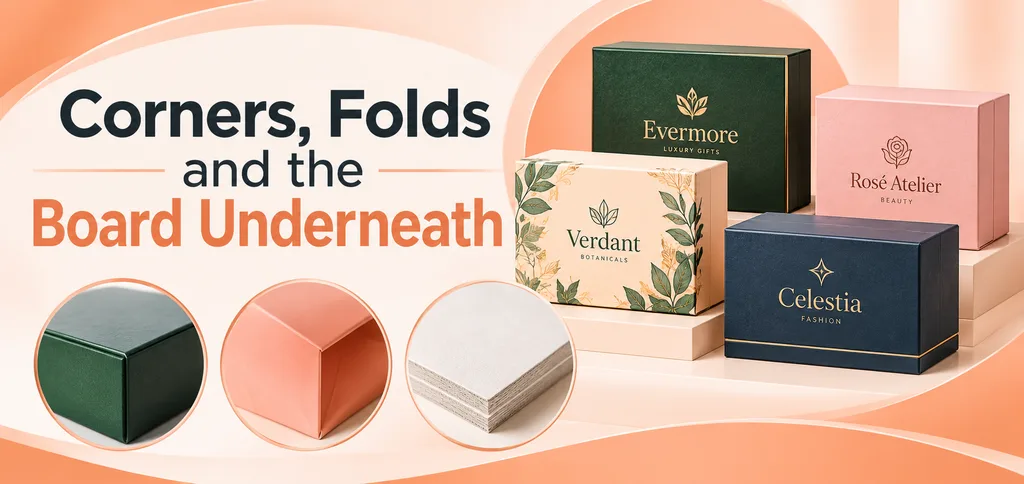
Many wrap problems show first at the corners and edges. Three are worth planning for.
- White at the folds. A dark colour printed on white paper can crack where the wrap turns a corner and show a thin white line. A laminate helps protect the print, and a paper coloured all the way through avoids the problem: James Cropper, a UK paper maker, says the dyed-through colour of its box cover papers rules out “break-white” on folds.
- Grey showing through. A thin or pale wrap can look greyer over grey board. A more opaque paper keeps the board from showing, which matters especially for white and pastel designs.
- Handling marks. Matt laminate can scuff on dark solids, while gloss and deep colours show fingerprints. An anti-scratch film or a varnish helps to reduce visible marks.
A rigid box should still travel inside an outer, but it is handled when it is packed, displayed and opened, so the surface has to suit that.
The inside
The lining is one of the first things seen when the box opens, so choose its paper and print with the wrap rather than after it. Finish and inside-print availability varies by box style, board, quantity and print process.
Where the outside wrap turns over the rim it meets the lining, so a contrasting lining leaves a visible band of the outer wrap around the opening. Plan that band into the design.
Recycling and the wrap
An unlaminated paperboard construction may be easier to process through suitable paper-recycling streams than a heavily laminated alternative. Final recyclability depends on the full material and finishing specification and the facilities available locally.
On a rigid box, that means the laminate, any metallic or holographic paper, the foil and the glue, and on a magnetic box the magnets too. Our guide to recycled vs recyclable packaging sets out how the UK assesses a pack, and EPR packaging fees explains how that assessment feeds into what producers pay.
Our guide to print finishes covers lamination in more depth. We can explain the general recyclability considerations of the selected material and finishing options, so you can make accurate claims on your own packaging.
Approval, repeats and timing
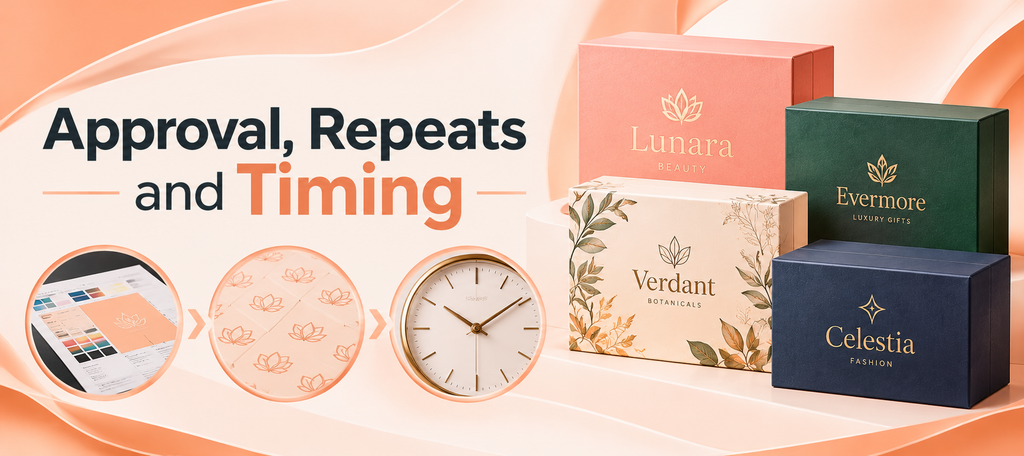
A screen cannot show how a laminate feels, and it shows texture and shine only roughly. Every order is approved before bulk production. Approval may be based on a digital 3D mock-up, a video of the physical sample, or a physical production sample, depending on the order.
For a wrap chosen for its look, a video of the physical sample shows how the paper and finish catch the light. For one chosen for its feel, only the physical sample shows it, and a physical production sample is paid, with its cost set out in the quotation.
Approved dielines, specifications and artwork are retained, so a repeat order can be matched to the specification already approved.
Standard production takes 6 to 8 business days after approval. Delivery time is additional to production. UK delivery usually takes around 4 to 5 business days after production is complete, depending on the delivery address and courier service.
What a laminate or a foil adds to the price is shown in how much custom rigid boxes cost.
Mistakes to avoid
- A dark printed wrap with no laminate.
- A thin, pale wrap over grey board.
- Fine, low-contrast detail on a metallic paper.
- A lining chosen after the wrap is signed off.
- An eco claim made before the laminate and foil are checked.
The wrap brief
- The artwork: photographic, patterned, one colour, or a logo only.
- The surface: matt, gloss, soft-touch, silk, natural kraft or metallic.
- The handling: how the box is packed, displayed and posted.
- The inside: plain, printed, or a contrasting lining.
- Any recycling claim you plan to make on the box.
- How many boxes, and when you need them.
Frequently asked questions
What paper is used to wrap a rigid box?
Most rigid boxes are wrapped in a coated paper that is printed and then laminated. Kraft, one flat colour, black kraft and metallic or holographic papers are the other usual choices, and the board underneath is usually greyboard, as what is a rigid box explains.
Which wrap suits a black rigid box?
A printed black wrap with a laminate, or a paper that is black all the way through, such as black kraft. Both help avoid the white line that printed black can show at the folds, and both show fingerprints, so consider an anti-scratch film.
Is soft-touch a paper or a finish?
A coating or film, not a paper: soft-touch goes over printed coated stock and gives it a velvety feel.
Will the grey board show through the wrap?
It can, with a thin or pale paper. A more opaque paper avoids it, which matters especially for white and pastel designs.
What weight is rigid box wrap paper?
There is no single figure. The weight is chosen for the paper and the size of the box, and the confirmed weight is written into the specification for your order.
Does a laminated rigid box recycle?
It depends on the whole box: the laminate, any metallic paper or foil, the glue and, on a magnetic box, the magnets, as well as what local facilities accept. Check the full specification before you make a claim on the box.
Choosing the wrap for a new rigid box? Get in touch with the artwork, the look you want and how the box will be handled. We make luxury rigid boxes in printed, kraft, single-colour and black kraft wraps, and in metallic or holographic papers where the build supports them.
Orders start from 100 units. Design support is free. A digital 3D mock-up is free. For the quote, send the artwork, the quantity, the delivery postcode and the date the order is needed by.